

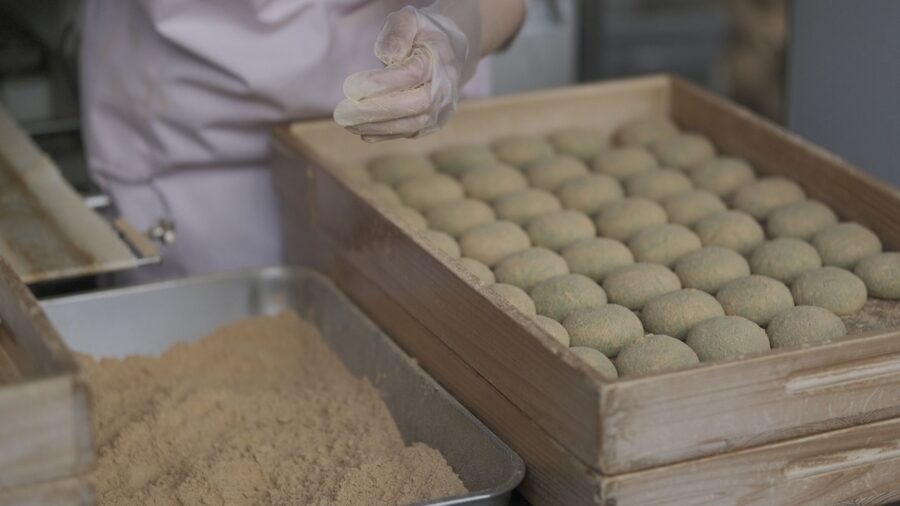
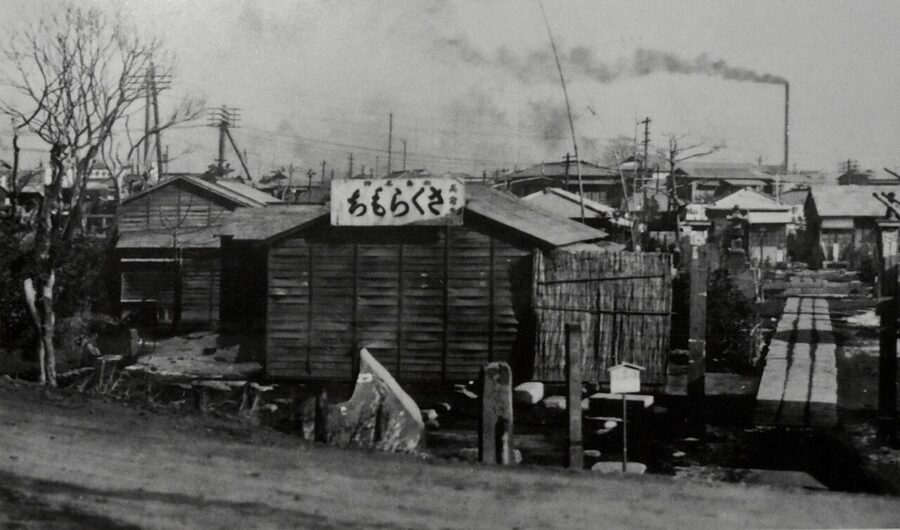
The shout comes first, then the thud. At Nakatanidou, at the foot of the Higashimuki shopping arcade five minutes from Kintetsu Nara Station, two men work a wooden mortar of steamed rice so fast that the mallet seems to bounce off the mochi, while a crowd watches. The point is what comes out at the end: a green, warm, barely set round of yomogi mochi (よもぎ餅, “mugwort mochi”) filled with bean paste and dusted in kinako, roasted soybean flour. It costs ¥180 (about US$1), and you can eat it on the pavement while it is still soft enough to stretch.
Mochi this fresh pulls apart instead of biting clean. For a short while after pounding it has a slow stretch and then a soft break, and the paste inside is still faintly warm. By evening the same piece will have firmed and dulled. That is why Nakatanidou will not ship anything: its own pages give a use-by of the day of purchase.
That is the case for eating mochi in Japan rather than anywhere else. The sweets have names, seasons and home towns, and nearly all of them are best within hours of being made.
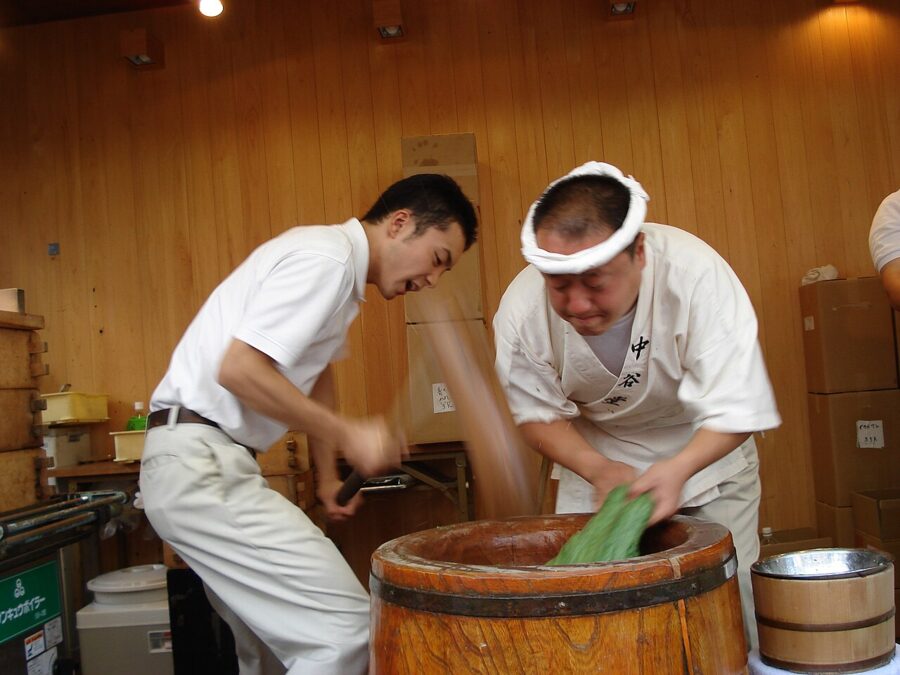

The shop says it pounds ten to fifteen times a day, and around thirty on busy Sundays and holiday weekends. There is no fixed schedule; your best chance of watching is from just after lunch to late afternoon. It is open 10:00 to 19:00, closing early if it sells out (as of 2026).


What mochi is, and how it is made
餅 (mochi) is glutinous rice worked into a dough. The rice is mochigome (もち米, “mochi rice”), a short-grain japonica whose starch is almost all amylopectin, the branched starch that turns sticky and elastic when cooked. Ordinary table rice, uruchimai, carries a share of amylose as well, which is why it cooks into separate grains. Raw mochigome looks chalky and opaque.
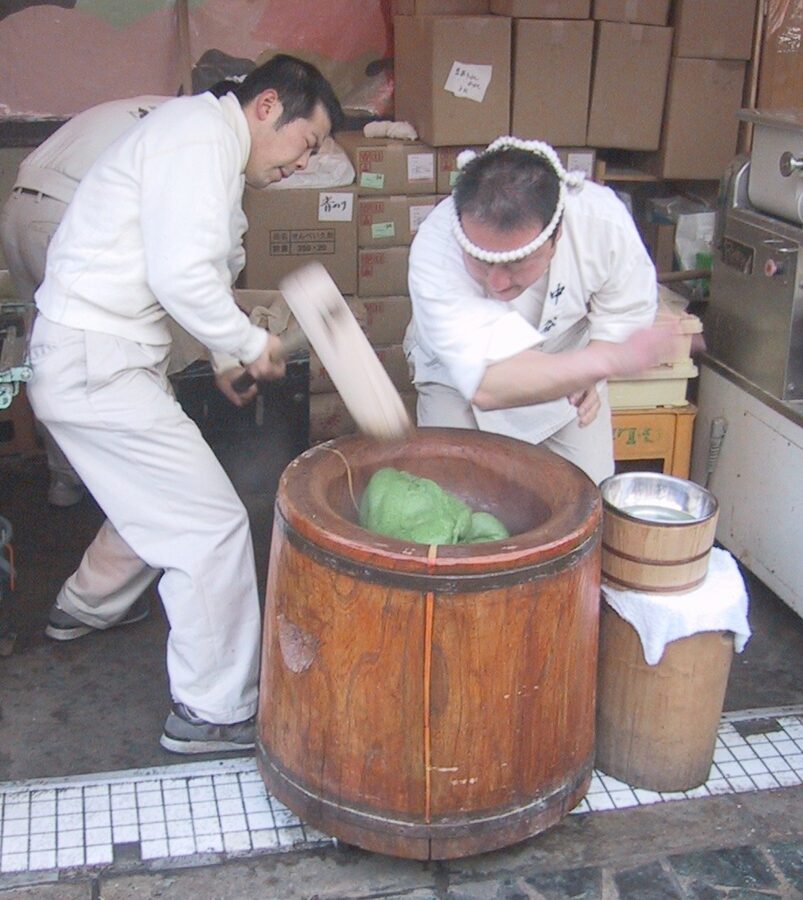
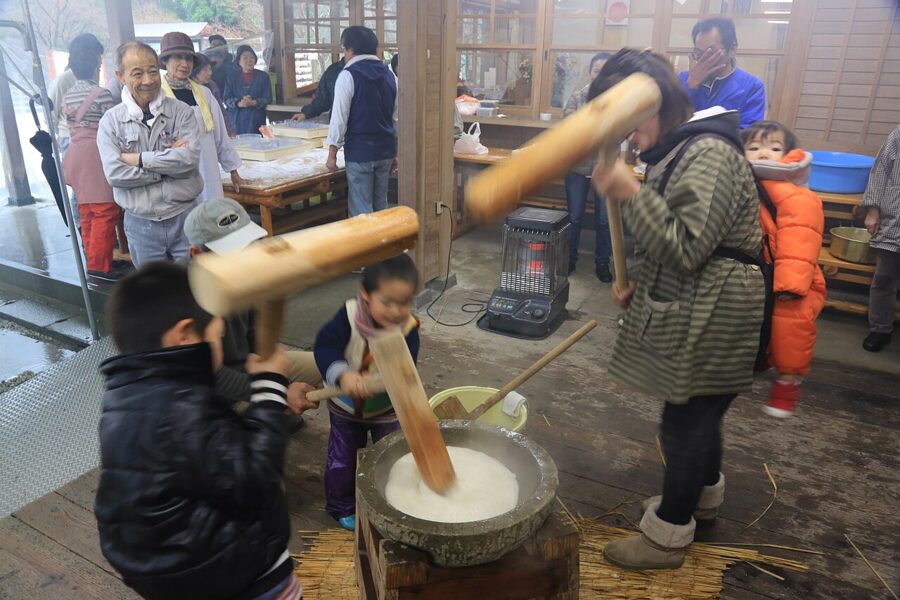
The classic method is mochitsuki (餅つき, “mochi pounding”). The rice is soaked overnight, steamed, mashed in a mortar called an usu (臼) and then pounded with a wooden mallet, a kine (杵), until no grains are left. It is then shaped or wrapped around a filling while still warm. A few shops like Nakatanidou still do this in front of you; most wagashi makers now use machines that copy the motion.
Flour mochi: mochiko and shiratamako
Plenty of mochi sweets start instead from glutinous rice flour. Mochiko is a plain flour milled from dry mochigome. Shiratamako is made by grinding soaked mochigome with water, leaving the slurry to steep for days, then pressing and drying it; it was once a cold-season product called kanzarashi-ko, “cold-exposed flour”, and a specialty of Kanshinji temple in old Kawachi province.
The Ministry of Agriculture’s guide to rice flours and their uses sets out the family. Shiratamako goes into daifuku, gyuhi (a soft sugared mochi) and shiratama dumplings. Domyoji-ko, mochigome that is steamed, dried and cracked into coarse grains, makes Kansai sakura mochi and ohagi. Joshinko, flour from ordinary rice, goes into dango and kashiwa mochi, which is why they chew differently from a daifuku.
Daifuku: the everyday mochi
大福 (daifuku, “great fortune”) is mochi wrapped around sweet bean paste, sold in every convenience store and old sweet shop in the country. The skin should be thin and soft, dusted with starch. The filling is usually tsubuan, chunky paste with the bean skins left in, or koshian, the smooth sieved kind.
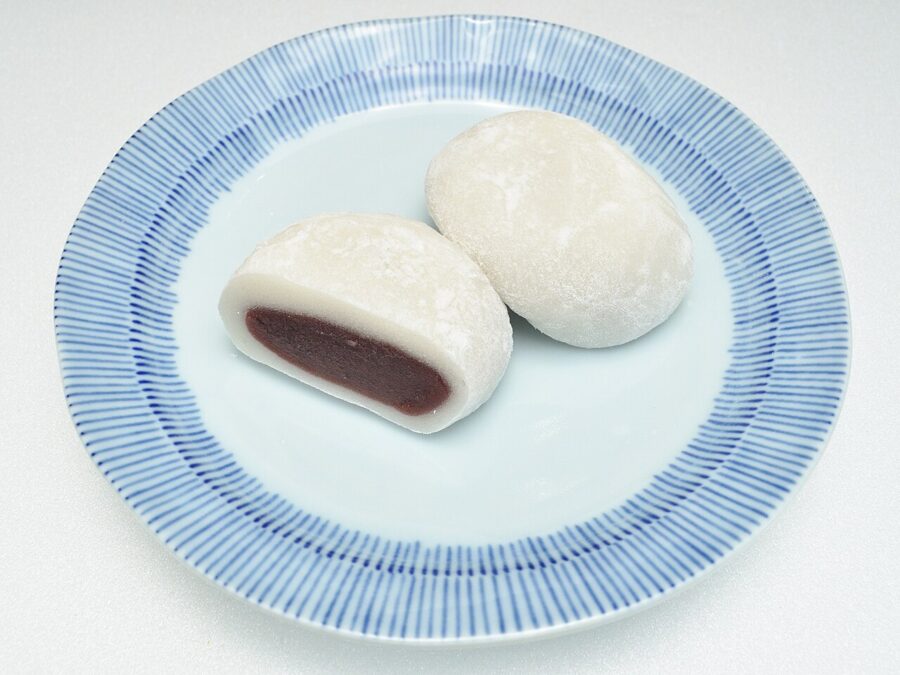
Its family tree is a little untidy, which I like. Japanese reference works trace daifuku to uzura mochi, “quail mochi”, sold from the late Muromachi period: a round, plump cake stuffed with salted bean paste, also called harabuto mochi, “fat-belly mochi”. A flatter version became daifuku, which was a craze by the 1790s, when vendors sold it grilled and hot on cold nights.
Mame daifuku
豆大福 (mame daifuku, “bean daifuku”) has whole salted red peas, aka-endo, pounded into the mochi. Their saltiness makes the paste taste of beans rather than of sugar. If you only eat one daifuku in Tokyo, I would make it this one, bought in the morning from a shop that sells out by lunch.
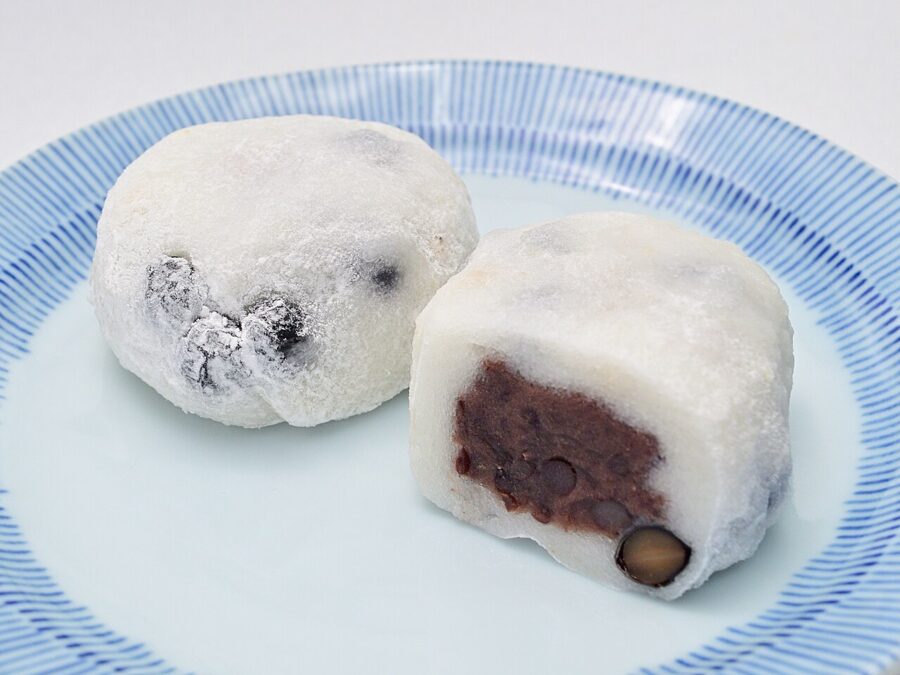
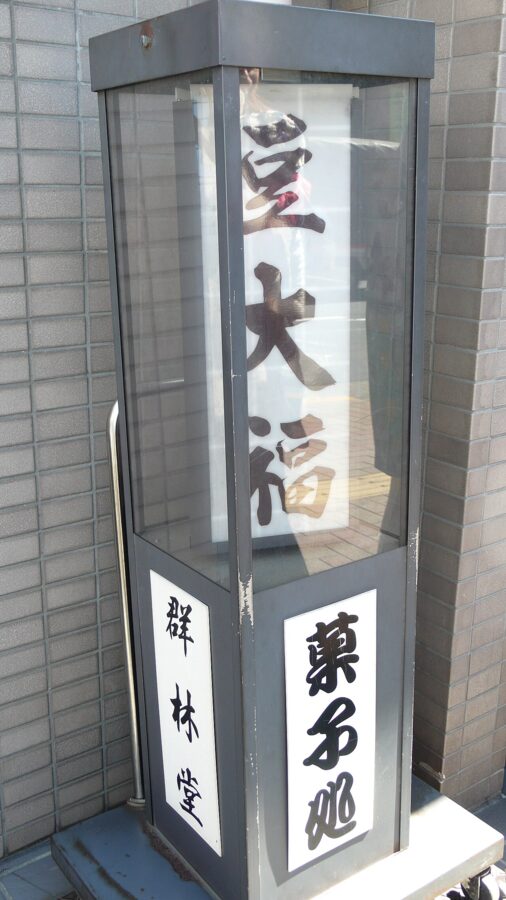
Tokyo has a short list it calls the city’s great mame daifuku. Gunrindo (群林堂), in Otowa near Gokokuji Station, opens to a line and is usually sold out by early afternoon. Matsushimaya (松島屋), founded in 1918 near Sengakuji in Takanawa, draws a queue before opening at weekends and makes kibi (millet) and kusa (mugwort) daifuku alongside the mame. Neither ships, so go in person, early.

Ichigo daifuku and the seasonal ones
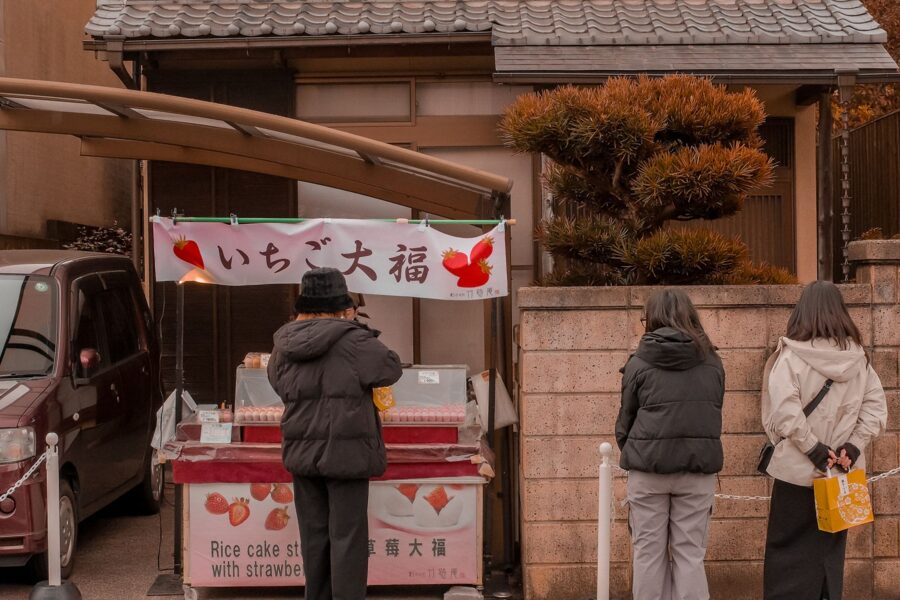
いちご大福 (ichigo daifuku, “strawberry daifuku”) hides a whole strawberry inside the bean paste. Ohsumi Tamaya (大角玉屋), a sweet shop in Sumiyoshi-cho, Shinjuku, founded in 1912, says its third-generation owner first made and sold ichigo mame daifuku in 1985. The main shop opens 9:00 to 19:30 on weekdays and 9:00 to 18:30 on weekends and holidays (as of 2026).
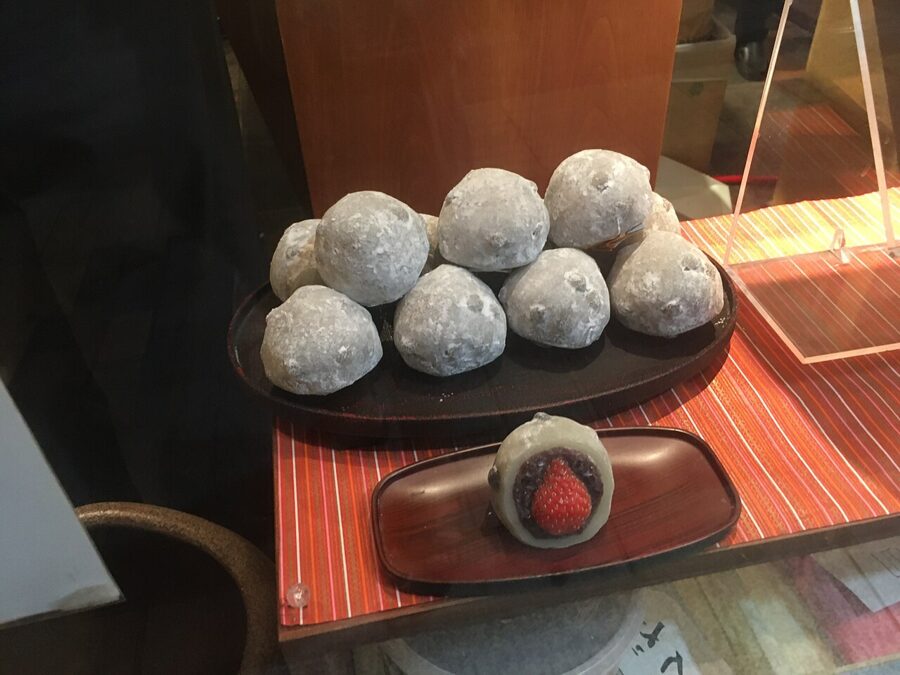

In most wagashi shops ichigo daifuku comes and goes with the domestic strawberry season, roughly winter into spring. I would skip the stall versions with the fruit perched on top: they are built for photos, and the mochi is an afterthought.
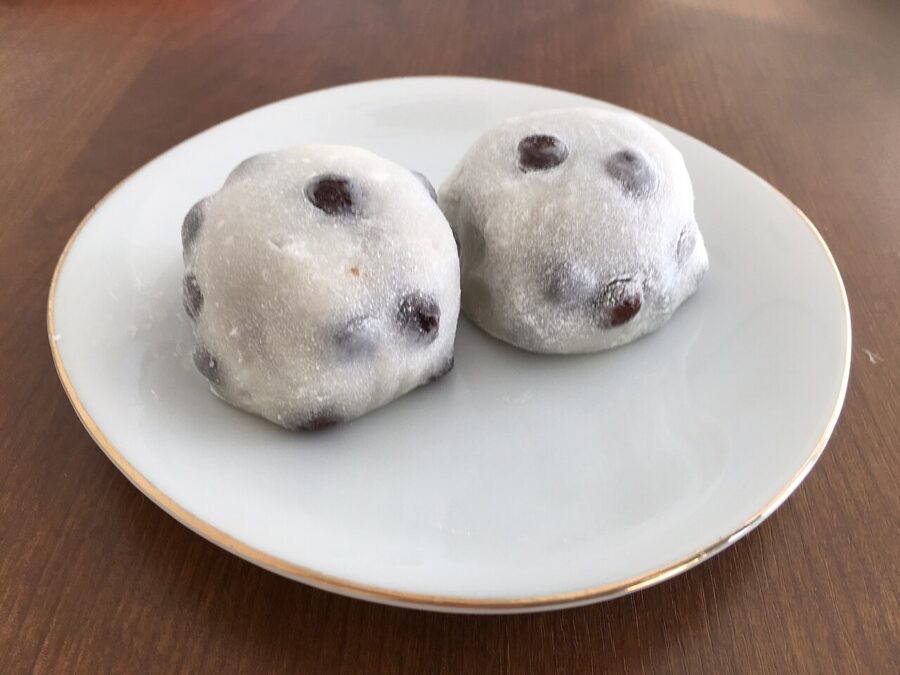
Kyoto has its own bean daifuku, and its own queue. Demachi Futaba (出町ふたば), near the Kamo River at Demachi, has made mame mochi (豆餅, “bean mochi”) since 1899: soft pounded mochi studded with black soybeans around smooth koshian. It is takeaway only and closes on Tuesdays (as of 2026); weekend lines of half an hour are normal.
Dango: rice flour on a skewer
団子 (dango) are small dumplings, usually three to five on a bamboo skewer. The difference from mochi is the start: dango are made from flour, often joshinko or a mix of joshinko and shiratamako, kneaded with water, boiled or steamed, then grilled or coated. The chew is firmer and bouncier.
Mitarashi dango
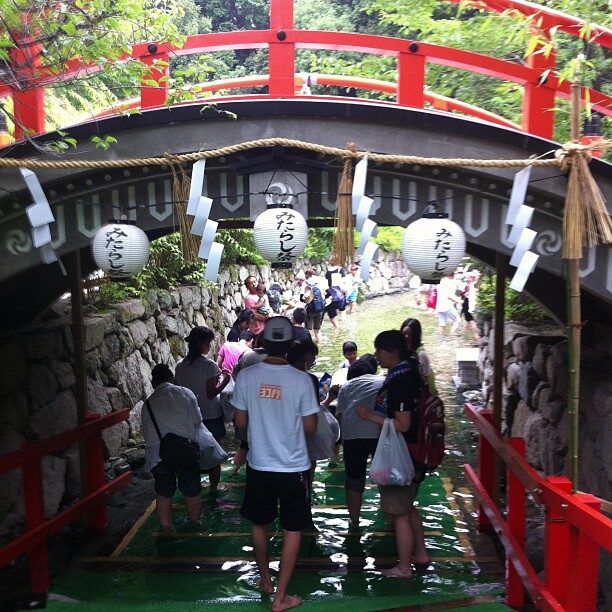
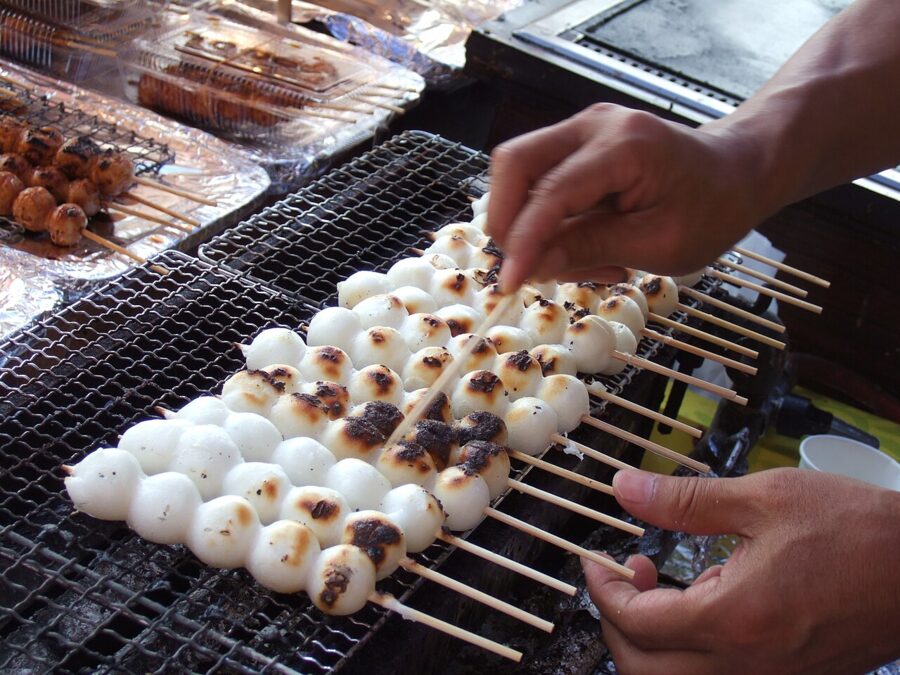
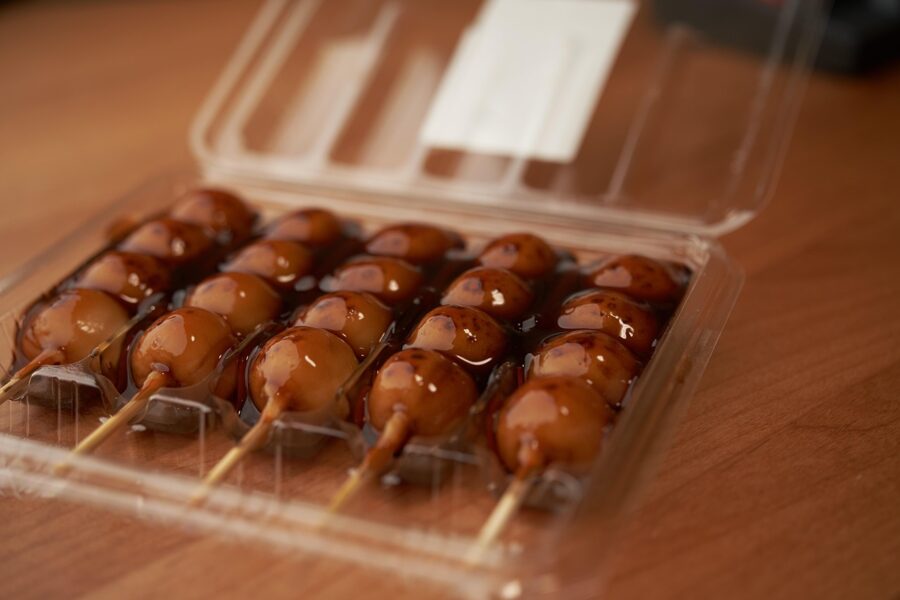
みたらし団子 (mitarashi dango) are grilled dango in a glossy sweet-salty soy glaze. They are named after the Mitarashi pond at Shimogamo Shrine in Kyoto, and the standard story is that parishioners skewered five dumplings to stand for the head and four limbs, offered them at the shrine’s summer purification festival, then took them home as a charm against illness. Another legend has Emperor Go-Daigo scooping water from the pond and seeing one bubble rise, then four more.

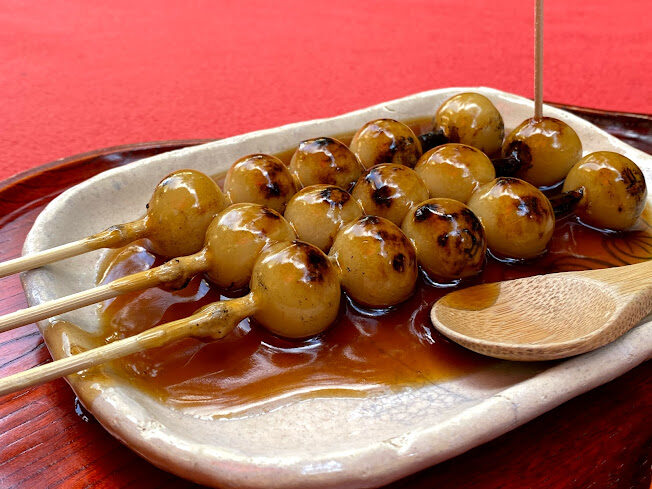
The early versions were simply brushed with soy sauce and grilled. The sweet, thickened sauce most of Japan now knows was worked out by the sweet maker Kameya Awayoshi, which opened Kamo Mitarashi Chaya (加茂みたらし茶屋) by the shrine in 1922. Three skewers with tea came to about ¥500 (about US$3) in autumn 2026, and the shop closes on Wednesdays.

Hanami dango, botchan dango and kusa dango
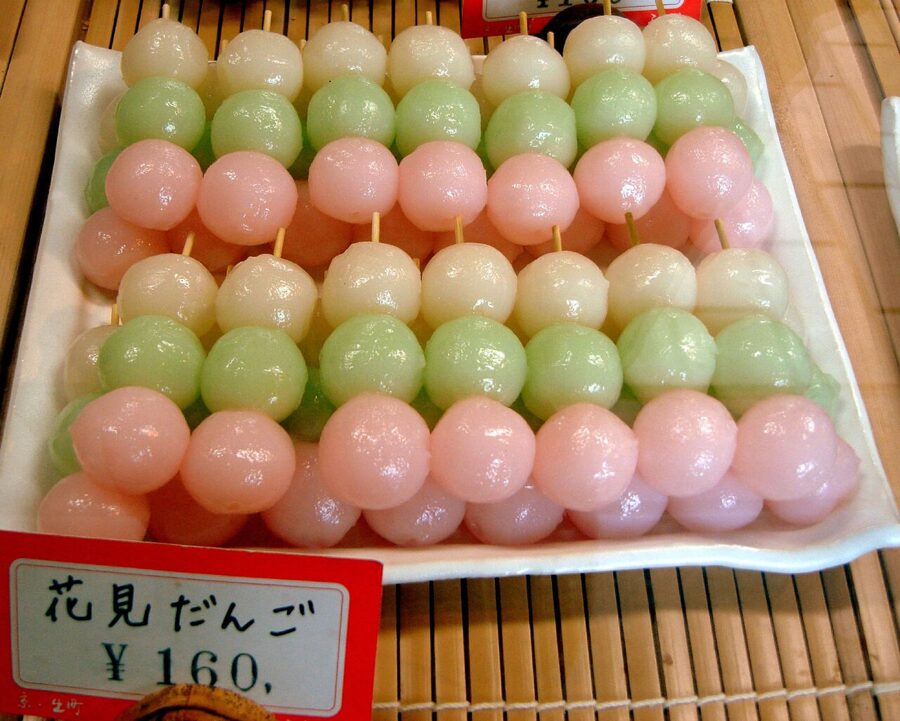
花見団子 (hanami dango, “flower-viewing dango”) are the pink, white and green skewers sold in spring for cherry-blossom picnics. They taste of little beyond rice and sugar; they are about color and the season.

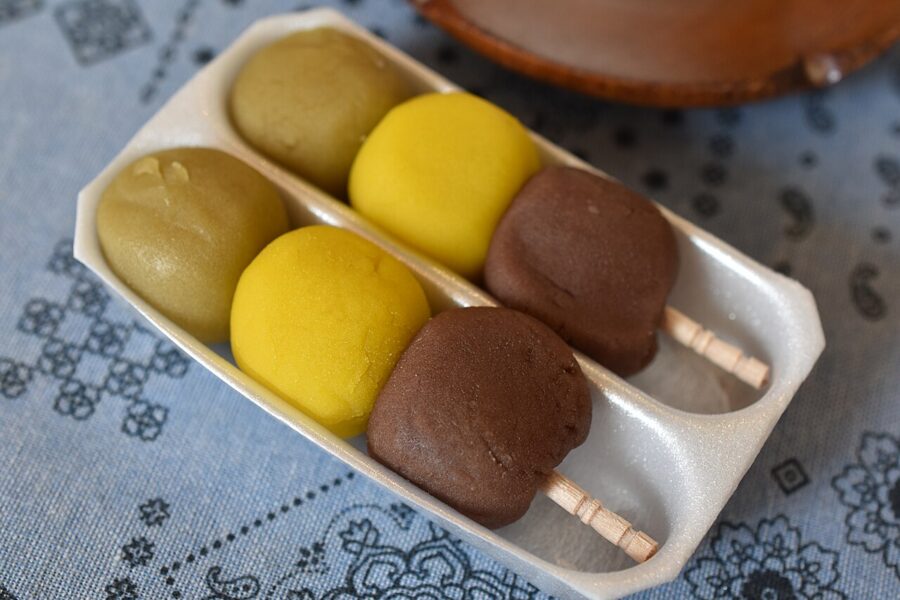
Matsuyama, in Ehime, is known for botchan dango (坊っちゃん団子): three small balls of mochi, each wrapped in a different bean paste, green with matcha, yellow with egg yolk and brown with azuki. They are named after Natsume Soseki’s novel Botchan, which is set in the city. Several makers sell them, and Tsuboya in Dogo is often named as the original.

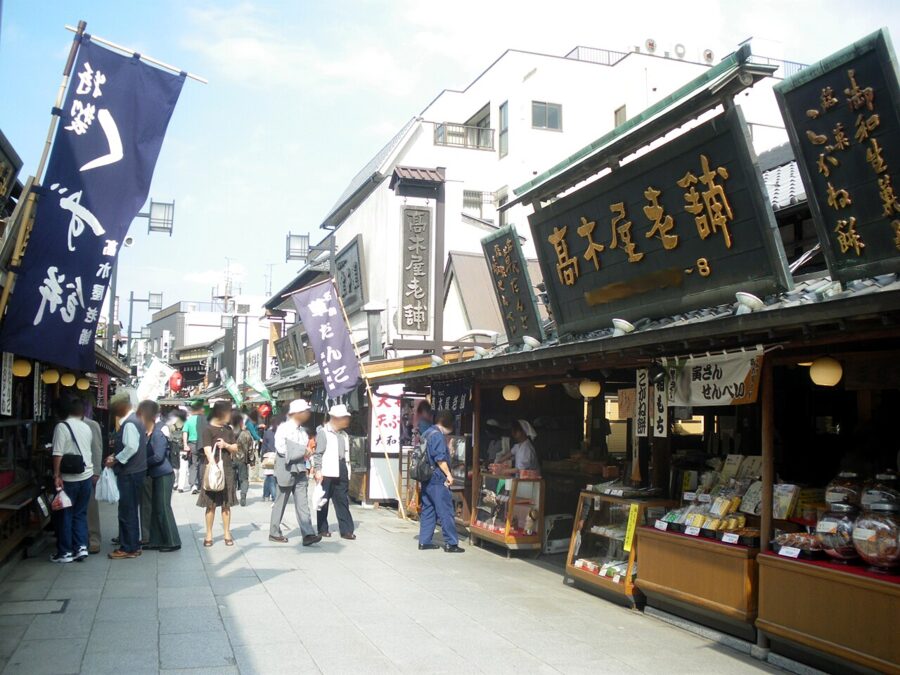
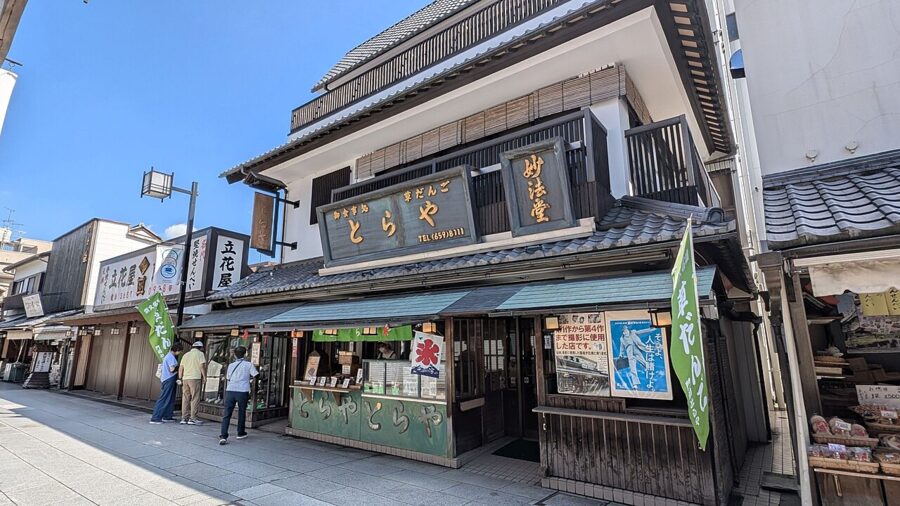
In Tokyo, the old town of Shibamata on the Edogawa River is lined with shops selling kusa dango, mugwort dumplings with a scoop of tsubuan. Takagiya Roho (髙木屋老舗), on the approach to Shibamata Taishakuten temple and known from the Tora-san films, was still serving them in autumn 2026.


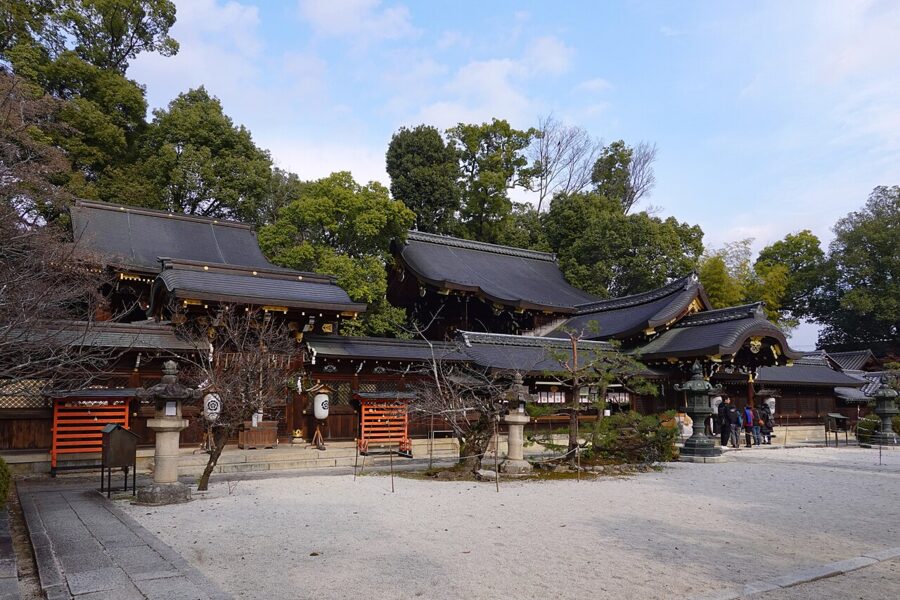
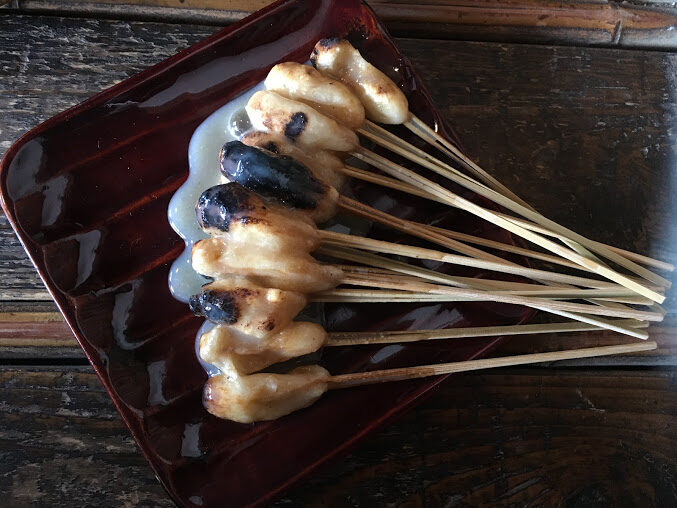
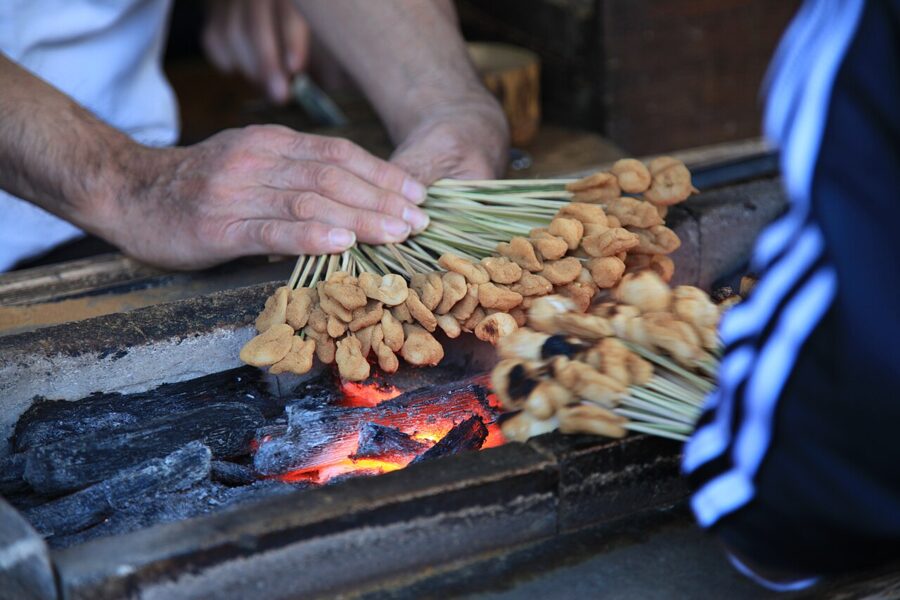
Kyoto has one more that sits between dango and mochi. Aburi mochi (あぶり餅, “grilled mochi”) are thumb-sized pieces of mochi on split bamboo skewers, dusted with kinako, grilled over charcoal and served in a sweet white miso sauce. Two teahouses face each other at the east gate of Imamiya Shrine: Ichiwa (一文字屋和輔), which dates itself to the year 1000, and Kazariya (かざりや), which goes back to the Edo period. Both were open in 2026, and the custom is to eat them as a charm against illness.


Mochi by the calendar
Spring: kusa mochi and sakura mochi
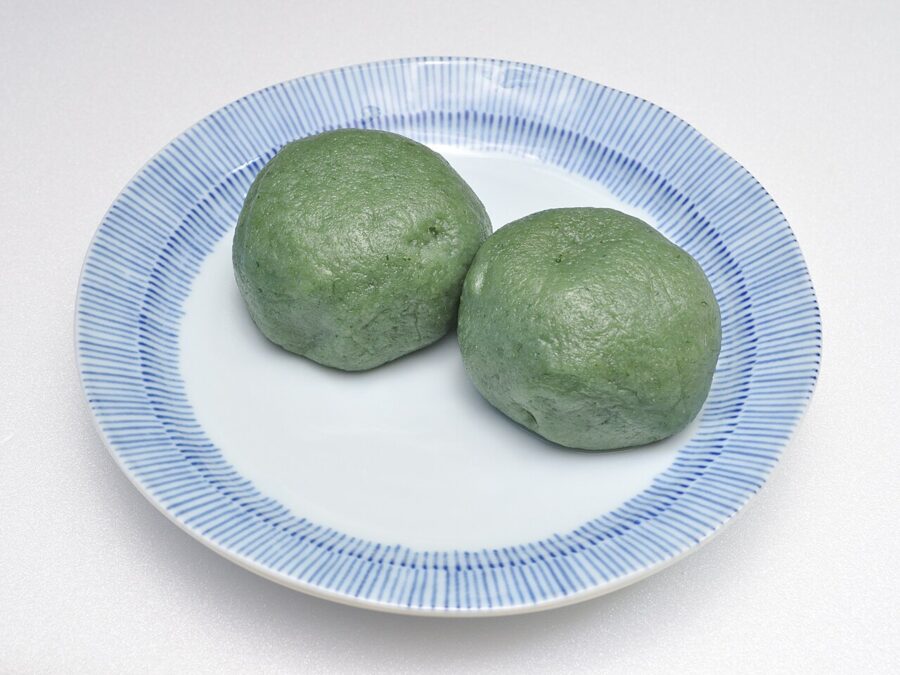
草餅 (kusa mochi, “grass mochi”) is mochi pounded with young mugwort, yomogi, which turns it green and gives it a grassy, faintly bitter smell. It belongs to Hinamatsuri, the Doll’s Festival on March 3. The oldest kusa mochi used a different herb, hahakogusa (cudweed), and mugwort took over in the late medieval period. In the Edo period, Edo called it kusa mochi while Kyoto and Osaka said yomogi mochi.
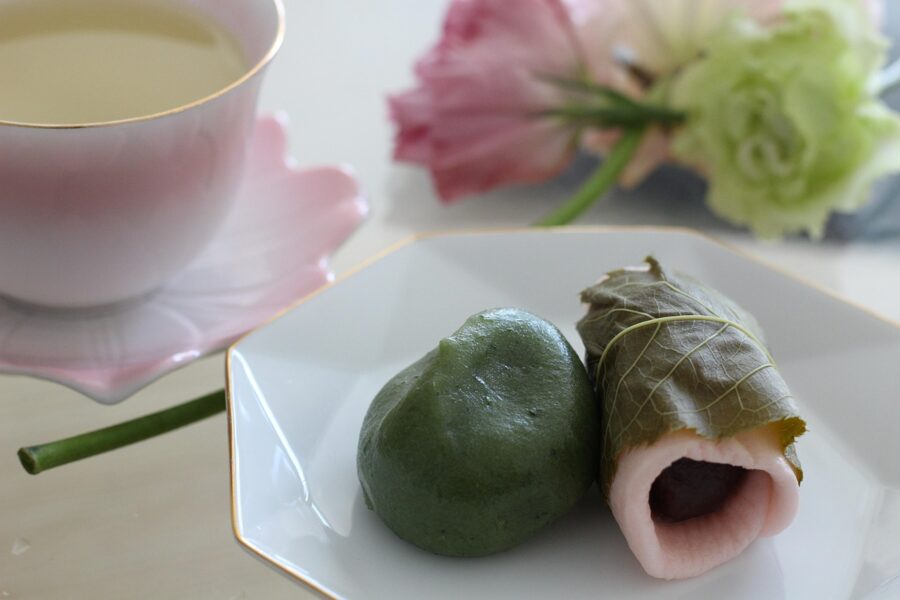
桜餅 (sakura mochi, “cherry-blossom mochi”) wraps a filled cake in salted cherry leaves, in two quite different forms. Tokyo’s is the Chomeiji style: a thin, flat cake of batter rolled around koshian. The original is still made by Chomeiji Sakuramochi Yamamotoya (長命寺桜もち 山本や) in Mukojima, on the bank of the Sumida River. Its founder, Yamamoto Shinroku, a gatekeeper at Chomeiji temple, began salting leaves from the riverbank cherries and selling the cakes at the temple gate in 1717.
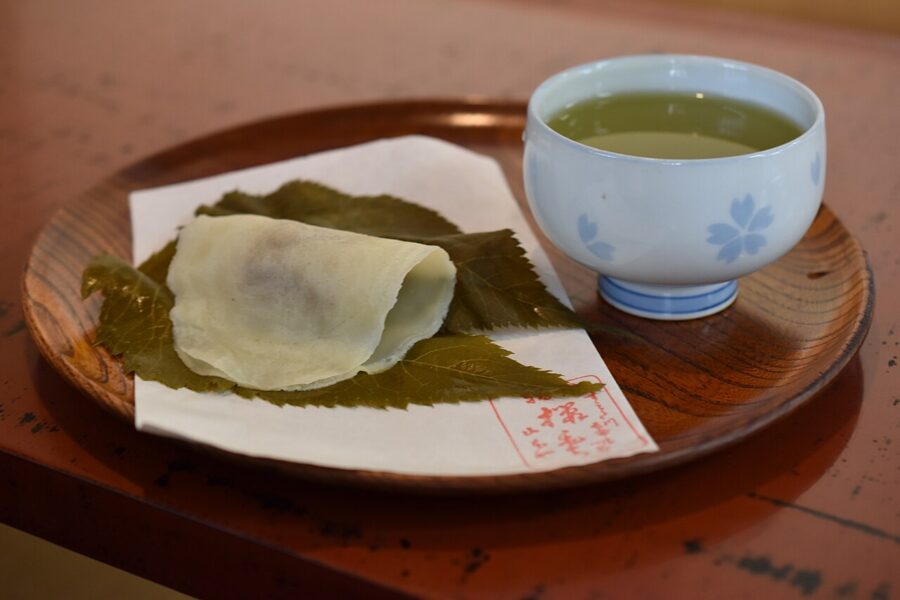

Strictly, the Chomeiji kind is not mochi: the shop says its skin is only wheat flour and water, so it hardens through the day; eat it the day you buy it. One costs ¥300 (about US$2), or ¥500 with a cup of tea at the tables inside. It opens 8:30 to 18:00 and closes on Mondays and Tuesdays (as of 2026).
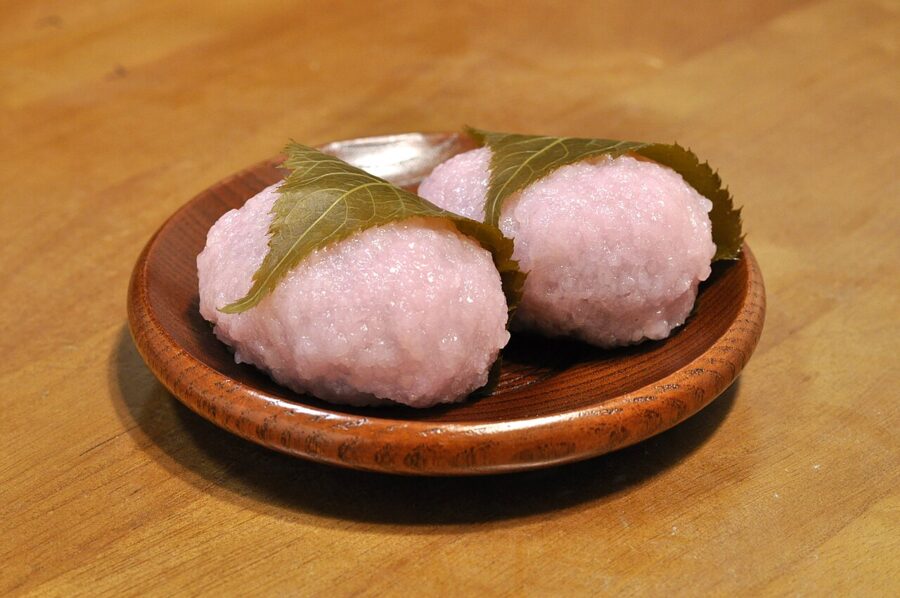
Kansai’s sakura mochi is called Domyoji, after the coarse mochigome flour it is made from. The grains are steamed, tinted pale pink and shaped around the paste, then wrapped in the leaf. An Osaka shop was copying Edo’s sakura mochi by the 1830s, and the Domyoji version is now the usual one in the west of Japan.
May: kashiwa mochi
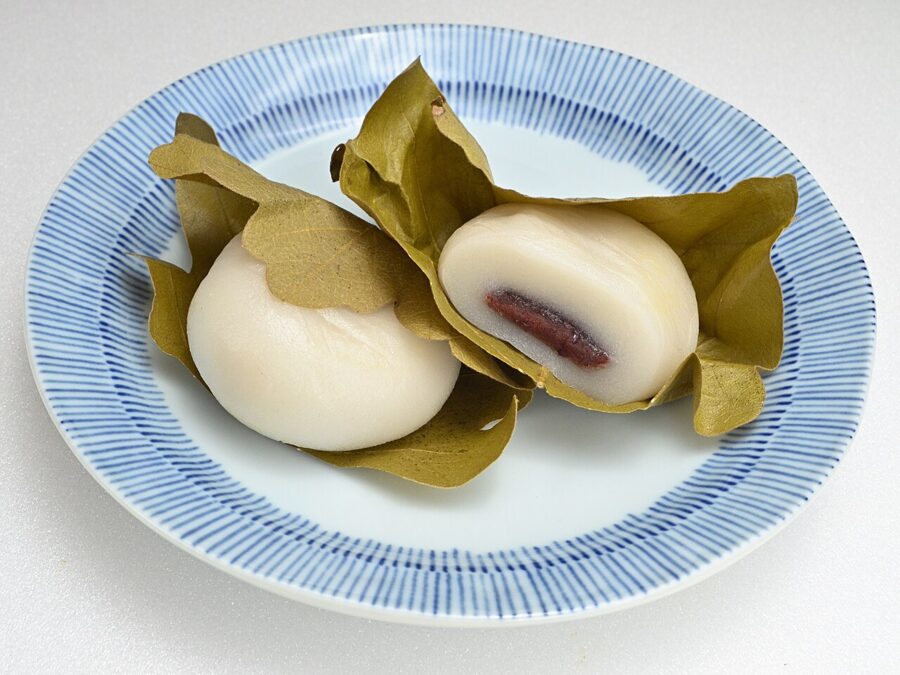
柏餅 (kashiwa mochi, “oak mochi”) is for Children’s Day on May 5. It is a flat round of joshinko dough folded over a filling and wrapped in an oak leaf, which you do not eat. Oak keeps its old leaves until the new ones bud, so the leaf stands for a family line carrying on. Look at the leaf before you bite: by old convention, the smooth upper side faces out on miso-paste ones and the veined underside on azuki ones.
New Year: kagami mochi and ozoni
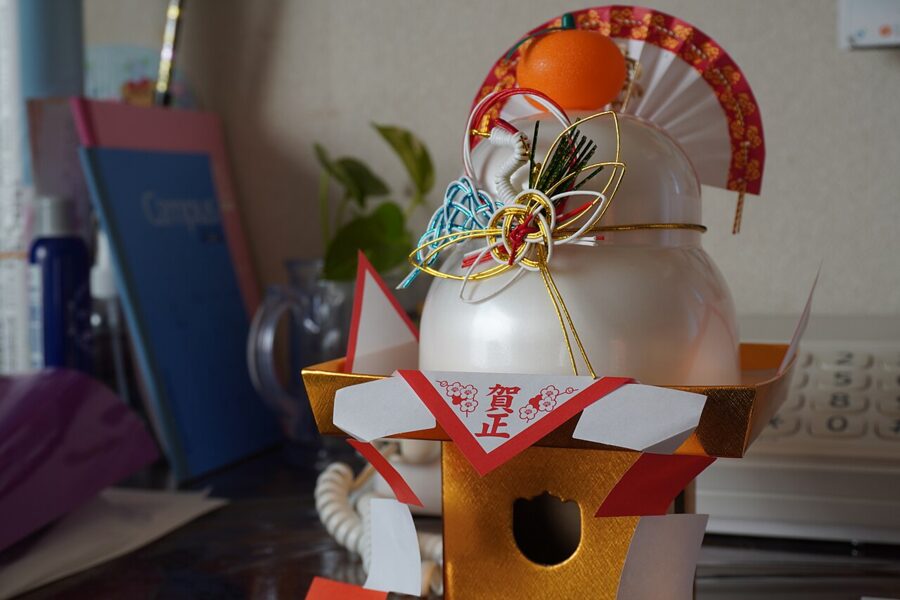
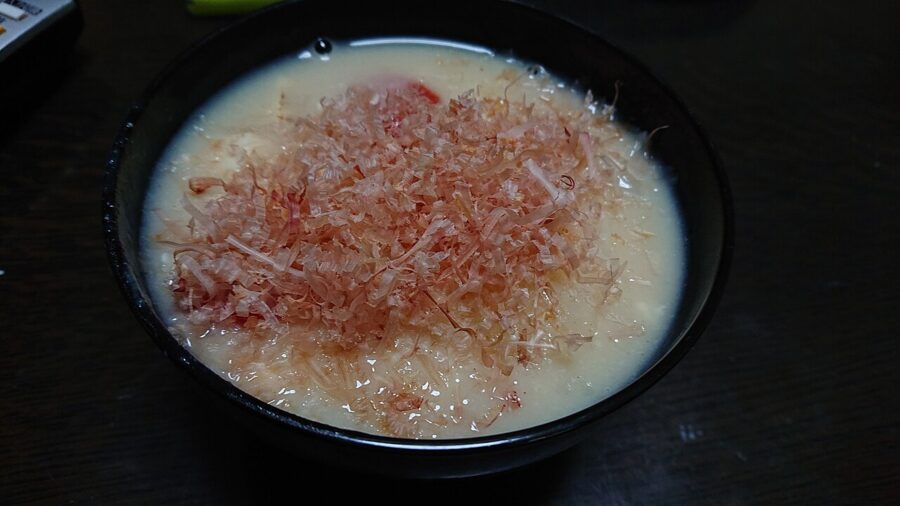
Mochi is above all a New Year food. 鏡餅 (kagami mochi, “mirror mochi”) is two stacked rounds topped with a bitter orange or a mikan, set out in homes and shrines from late December. On January 11, kagami biraki, the dried mochi is broken by hand or with a mallet, never cut, and eaten in soup or in sweet bean soup. The date used to be the 20th; the usual story is that it moved because the third Tokugawa shogun died on the 20th.
雑煮 (ozoni) is the New Year soup with mochi in it, and every region argues about it. The Ministry of Agriculture’s map of mochi shapes draws the line around Sekigahara in Gifu: east of it, square cut mochi is the norm; west of it, round mochi, which in Kyoto goes into a white miso soup. There are exceptions on both sides. Ichinoseki in Iwate, which eats freshly pounded mochi on more than sixty days a year, uses round mochi.

Mochi on the savory side
Plain cut mochi, kiri mochi (切り餅), is sold in wrapped blocks in every supermarket. Grilled, it puffs and splits, crisp outside and molten inside, and that is how most people in Japan eat it at home.
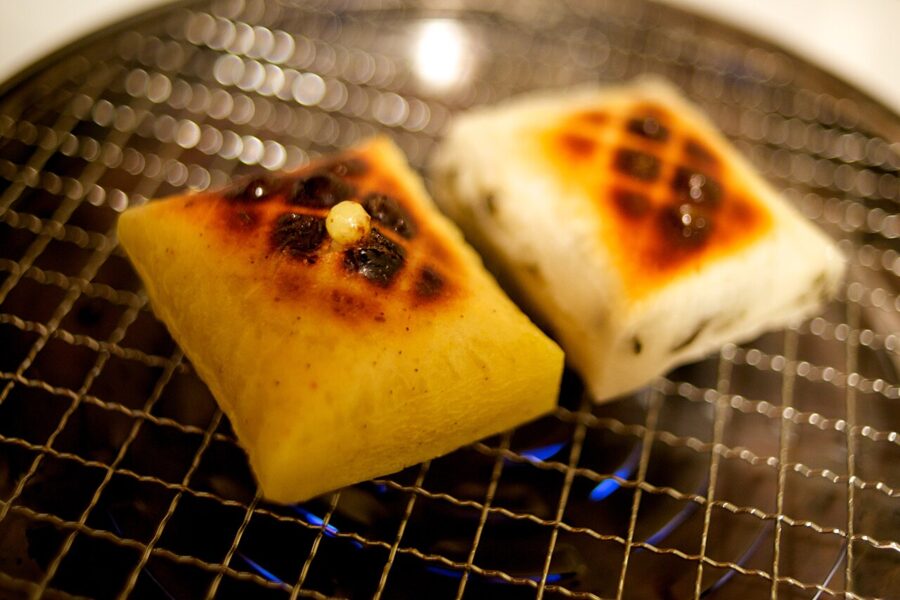

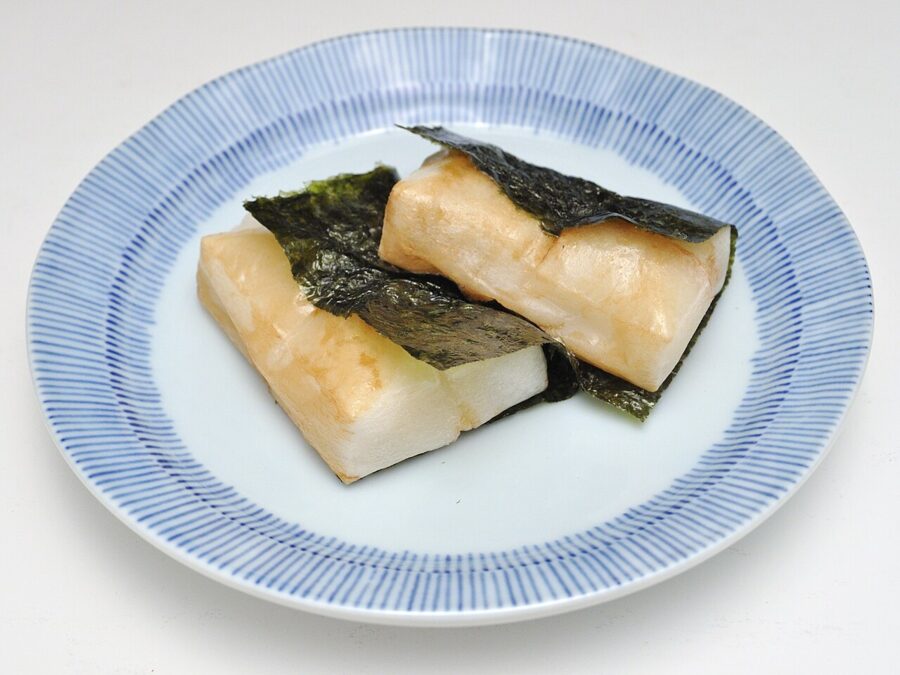
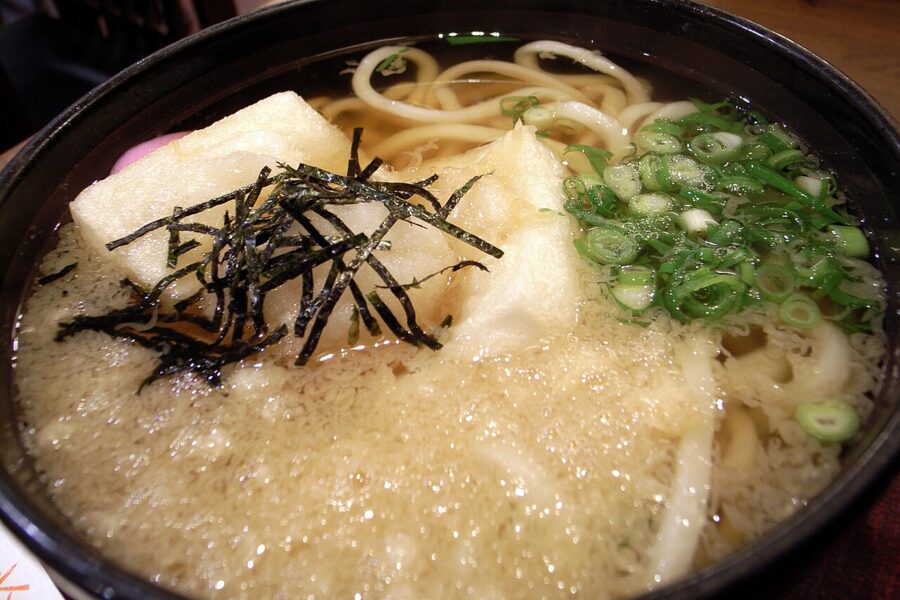
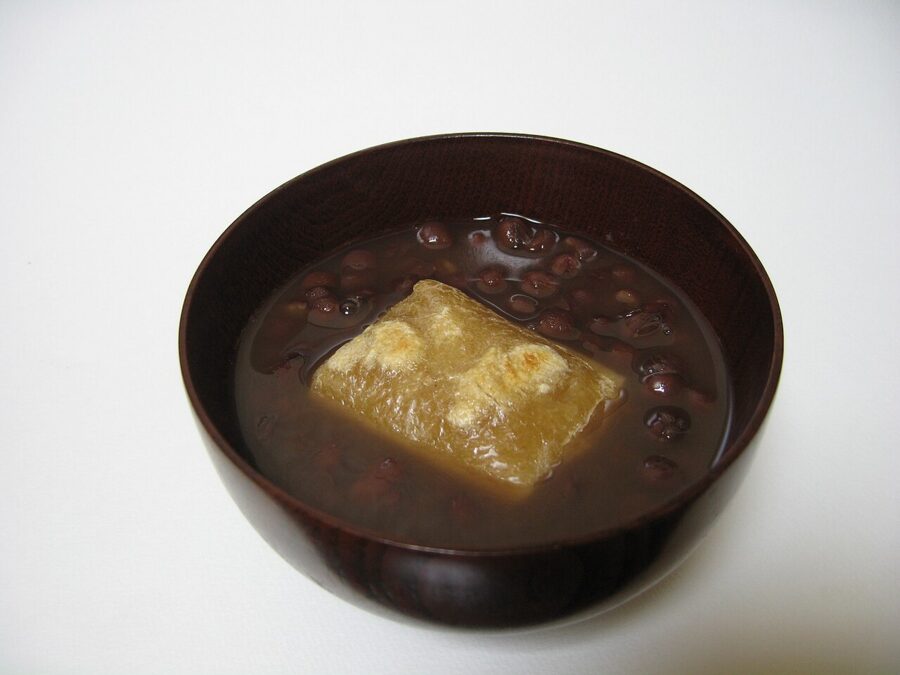
Isobeyaki (磯辺焼き) is the simplest dish: grilled mochi dipped in soy sauce and wrapped in a strip of nori. Chikara udon (力うどん, “power udon”) is kake udon topped with mochi, a filling cold-weather lunch. Oshiruko and zenzai are sweet azuki soups with mochi or shiratama floating in them, and they are what teahouses sell when the weather turns.


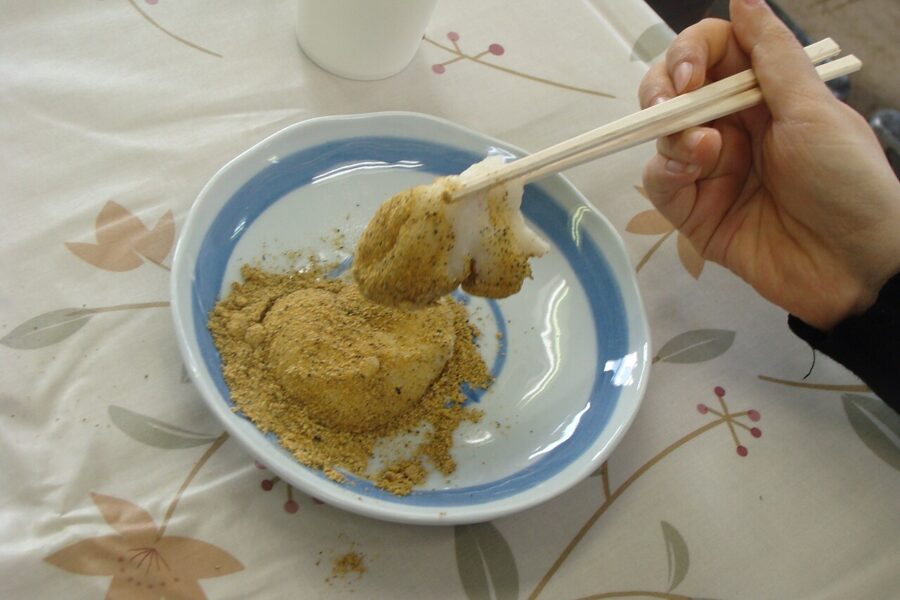
Kinako mochi is the other home classic: soft mochi rolled in kinako and sugar. It tastes of toasted nuts.
Not quite mochi
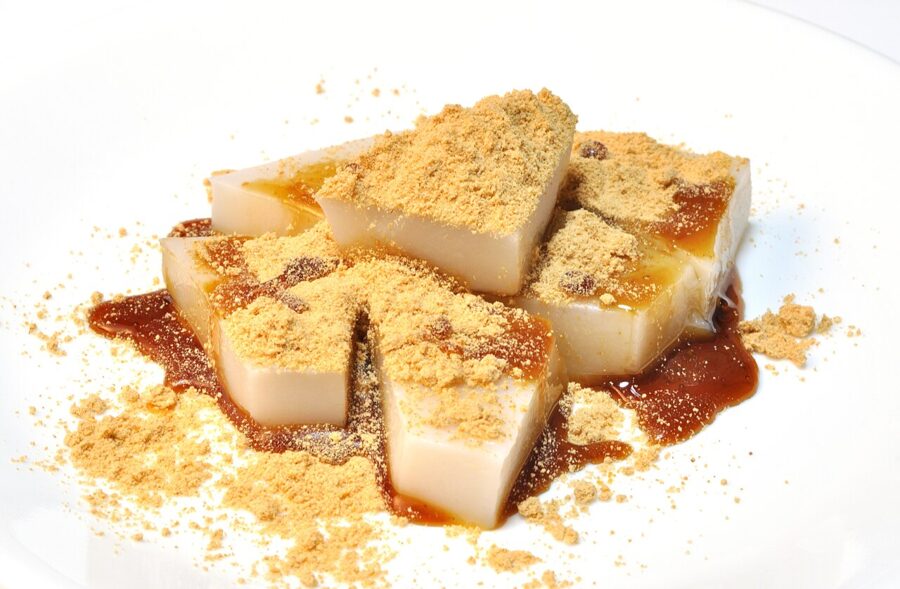
Several sweets with “mochi” in their names are not rice at all. Warabi mochi (わらび餅) is a jelly made from the starch of bracken root, cooked until clear, cooled, cut and rolled in kinako, often with brown-sugar syrup. Real bracken starch is now produced in tiny amounts, so most warabi mochi uses sweet potato or other starches. The pure kind is darker, almost gray-brown, and it has a wobble the cheap clear kind lacks.
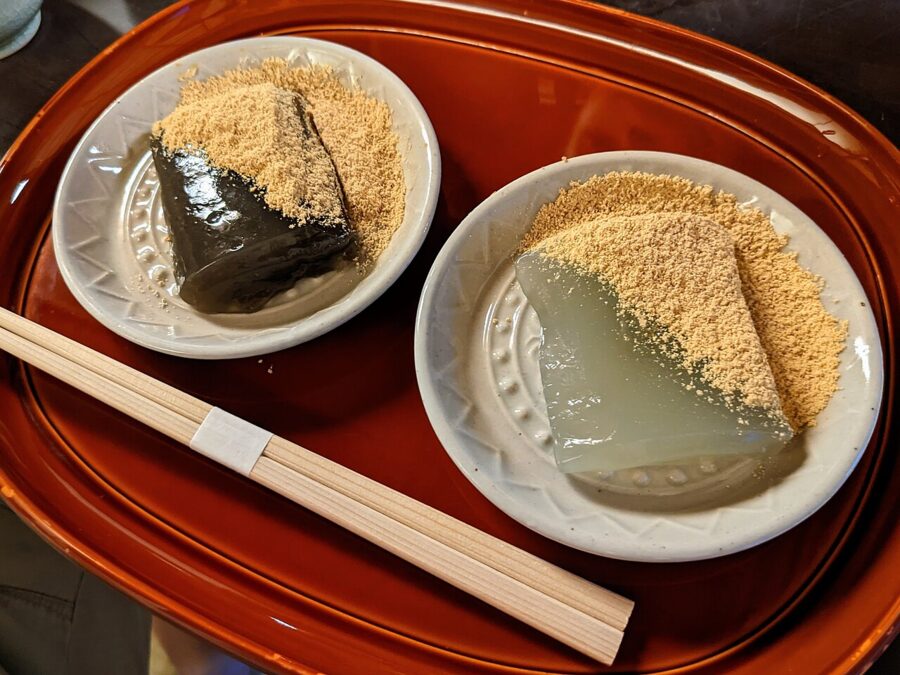

Kuzu mochi is the same idea made with kudzu starch. Gyuhi is glutinous rice flour cooked with sugar and syrup, so it is mochi-like but stays soft for days. Manju are steamed buns of wheat or other flours, not mochi.
Eating it safely
Mochi is a choking risk, and the numbers are not small. The Tokyo Fire Department reports that 338 people in its area were taken to hospital by ambulance after choking on mochi and similar sticky foods in the five years from 2020 to 2024. More than nine in ten were 65 or older, and about seven in ten were judged moderate or worse on arrival. January alone accounted for 135 of them and December for 42; its warning page was last updated on December 12, 2025.
Its advice is plain: cut mochi into small, easy pieces, chew slowly before swallowing, drink tea or soup first to wet your throat, and keep an eye on small children and older people at the table. If you share ozoni with an older friend, cut their mochi for them; nobody will think it odd.
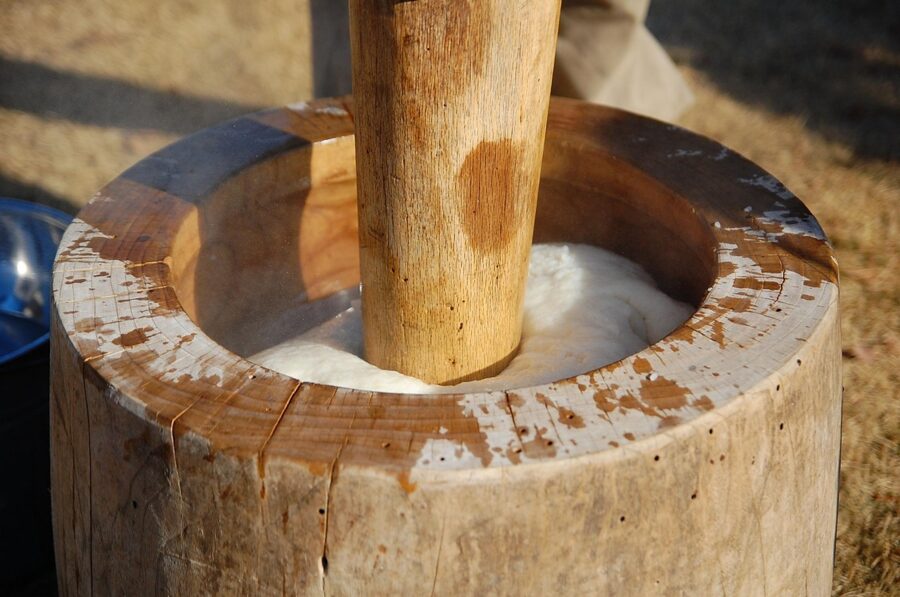
How long fresh mochi stays soft
Not long. As cooked starch cools, its molecules regroup and squeeze out water, and the mochi firms; the fridge speeds this up. Freshly pounded mochi is at its best in the first few hours and noticeably firmer by evening. Handmade shops label it for the same day.
So buy fresh mochi sweets close to when you will eat them, keep them at room temperature in the box, and do not put a daifuku in the hotel fridge overnight. For plain mochi, the Ministry of Agriculture suggests freezing it or keeping it under water, changing the water daily, to keep off mold. A single cut block heats through in 20 to 30 seconds at 600 watts in the microwave.
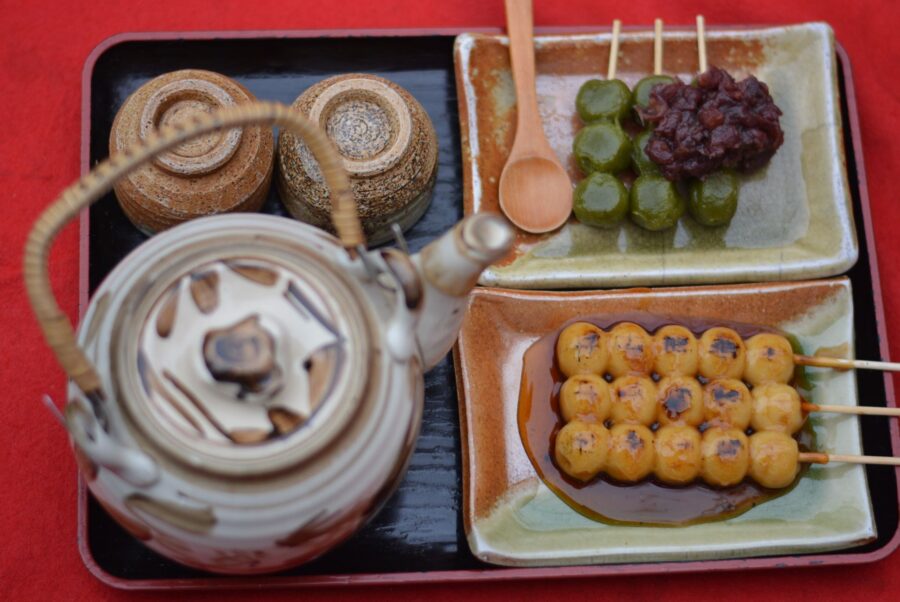
Where to eat it fresh, as of 2026
Every shop below was trading in 2026. Small family shops close at short notice, so check before a special trip, and carry cash.
| Shop | Where | What to order | Notes (as of 2026) |
|---|---|---|---|
| Nakatanidou (中谷堂) | Nara, 5 minutes from Kintetsu Nara Station | Yomogi mochi, ¥180 | 10:00–19:00, closes early if sold out; same-day only |
| Gunrindo (群林堂) | Otowa, near Gokokuji Station, Tokyo | Mame daifuku | Takeaway; often sold out by early afternoon |
| Matsushimaya (松島屋) | Takanawa, near Sengakuji Station, Tokyo | Mame, kibi and kusa daifuku | Takeaway; queues before opening at weekends |
| Ohsumi Tamaya (大角玉屋) | Sumiyoshi-cho, Shinjuku, Tokyo | Ichigo mame daifuku | Main shop 9:00–19:30 weekdays, 9:00–18:30 weekends and holidays |
| Chomeiji Sakuramochi Yamamotoya | Mukojima, Sumida, Tokyo | Sakura mochi, ¥300 | 8:30–18:00, closed Mondays and Tuesdays; ¥500 with tea inside |
| Takagiya Roho (髙木屋老舗) | Shibamata, Katsushika, Tokyo | Kusa dango | On the Taishakuten approach; tea room |
| Demachi Futaba (出町ふたば) | Demachi, Kyoto | Mame mochi | Takeaway; closed Tuesdays |
| Kamo Mitarashi Chaya | By Shimogamo Shrine, Kyoto | Mitarashi dango | Closed Wednesdays; about ¥500 for three with tea |
| Ichiwa and Kazariya | East gate of Imamiya Shrine, Kyoto | Aburi mochi | Two teahouses facing each other; seats inside |
| Akafuku Honten | Oharai-machi, Ise | Akafuku mochi with tea | 5:00–17:00, hours vary in peak periods |
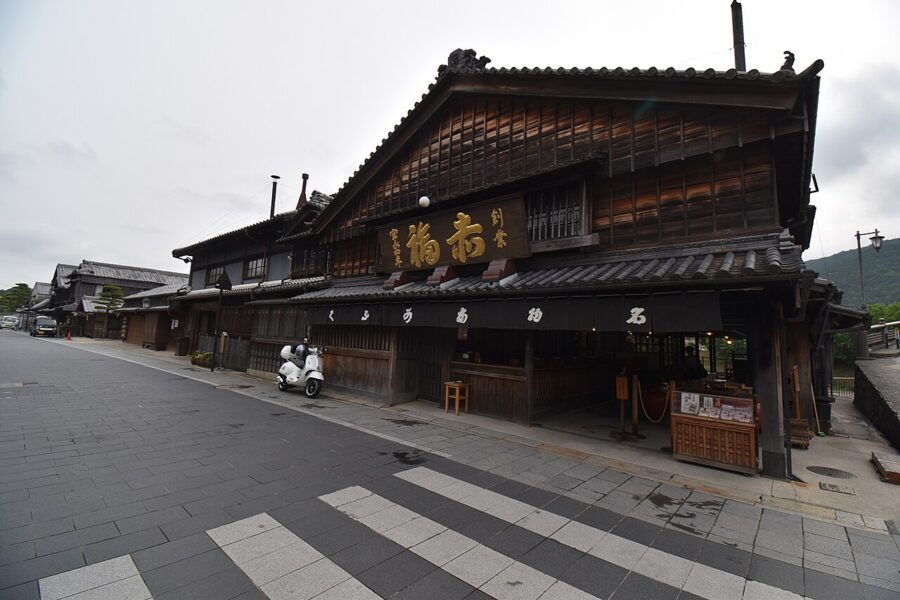
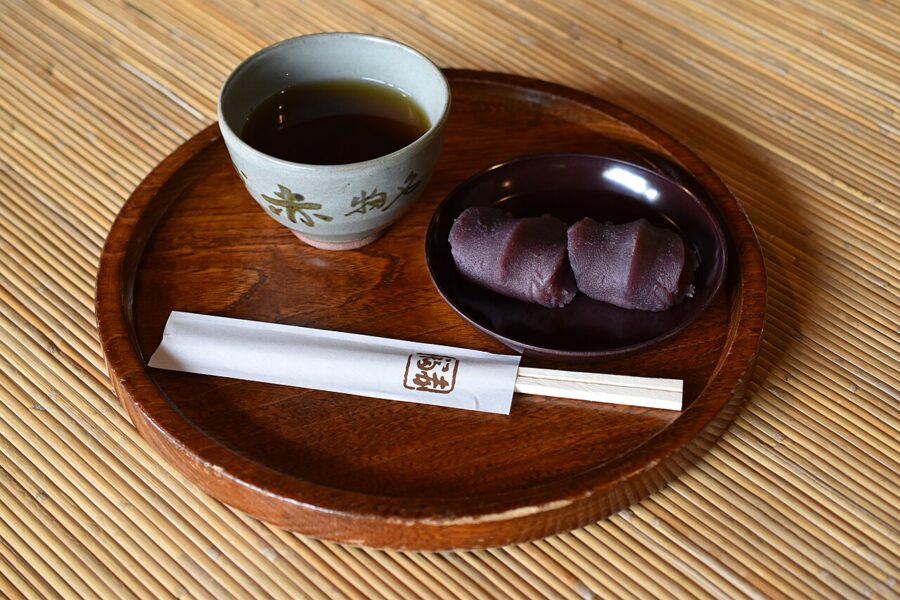
If you are in Ise for the shrine, the early start at Akafuku is the best mochi breakfast in Japan. The teahouse by the Isuzu River has made its mochi under smooth bean paste since 1707, and its main shop opens at 5:00, in time for people walking back from the inner shrine at dawn. Inside, it serves only akafuku mochi, except on the first of each month outside January, when the month’s tsuitachi mochi is served too.


Mochi is the simplest thing on a wagashi counter, rice and water and work, and the freshest is almost never the fanciest. Buy it in the morning, eat it before dinner, and keep the box out of the fridge. When a piece stretches before it breaks, it was pounded that day.