
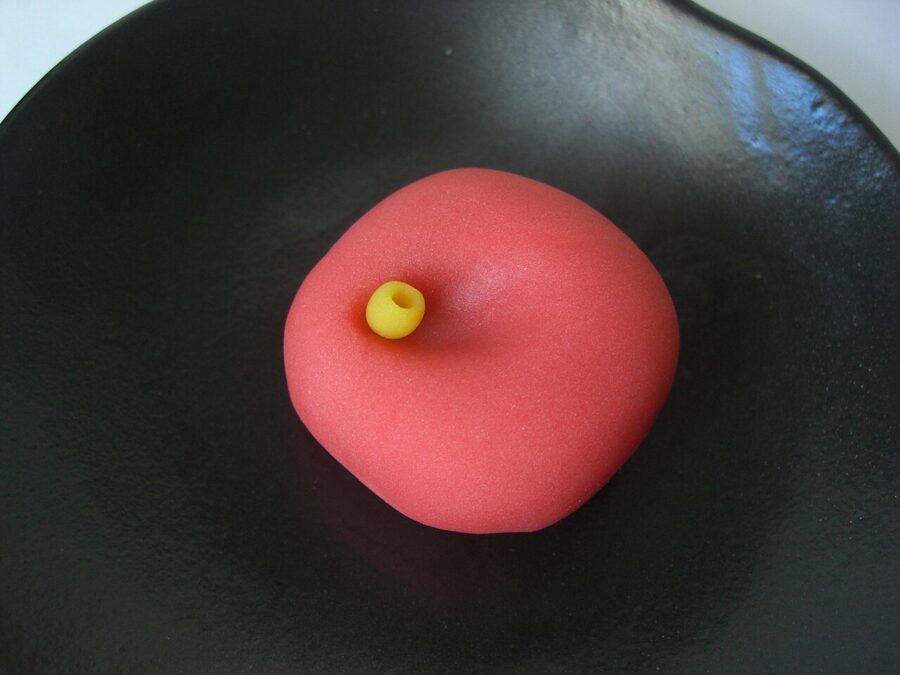
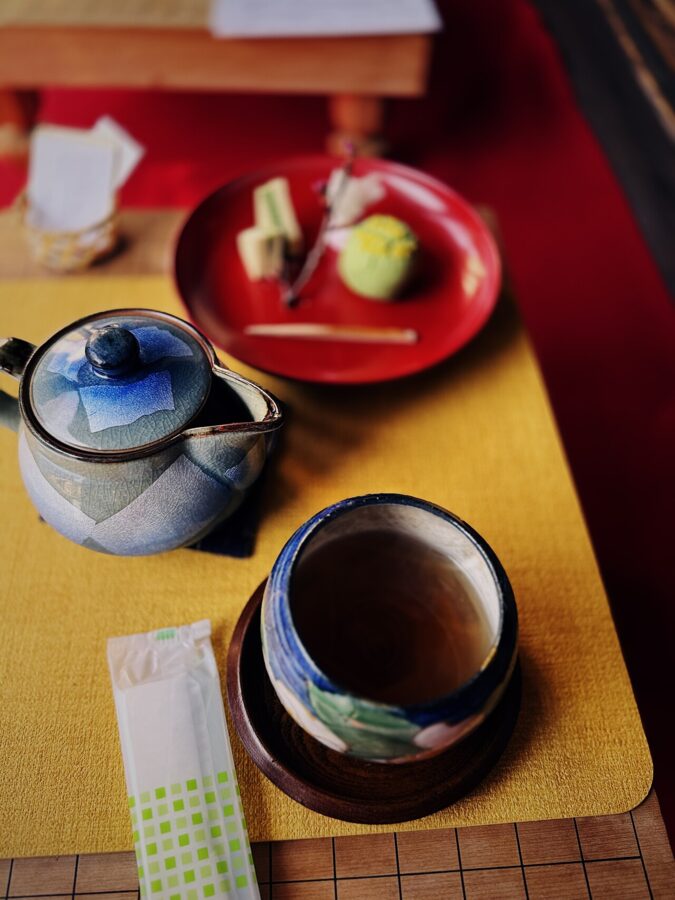
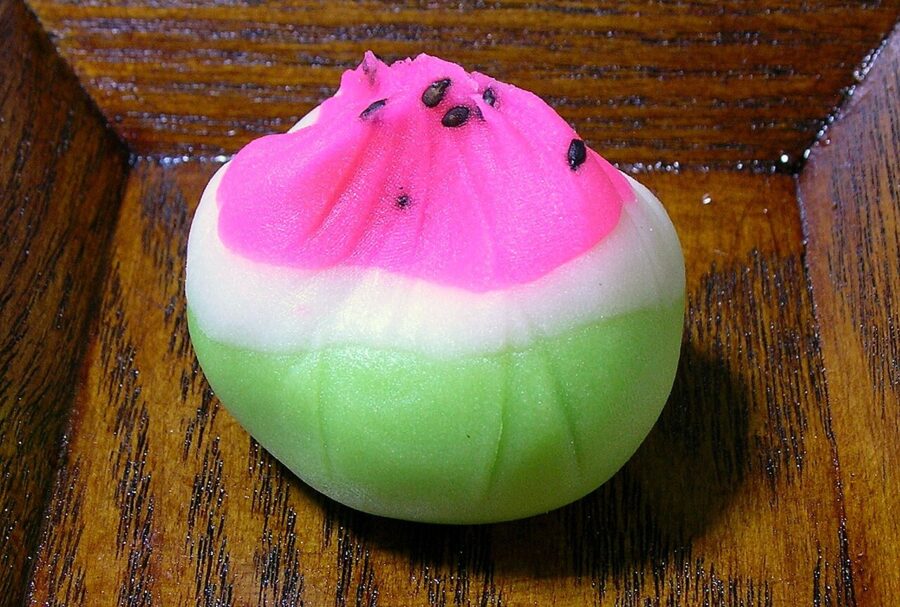
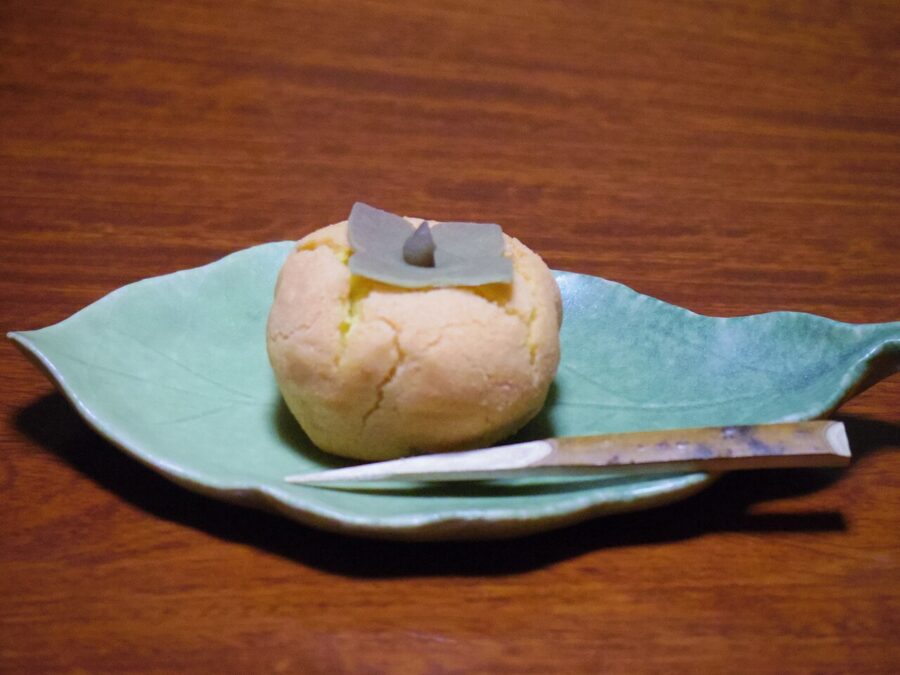
For the second half of November, the Toraya counter in the basement of Isetan Shinjuku sells an apple. It is shaped by hand from a dough of white bean paste and flour, it has more white bean paste inside, and the design dates from 1840. On December 1 it is gone, and the tray fills with sweets named for winter seclusion, layered pine and frosted leaves.
That apple, 林檎形 (ringo-gata, “apple shape”), costs ¥540 (about US$3.50). It shares the tray with a handful of other fresh sweets, each with a name, a season and a use-by date of today.
This is wagashi, Japanese confectionery, at its most deliberate. It is also the dorayaki in a convenience-store bag, the taiyaki burning your fingers on a winter street and the bar of yokan that will outlast your trip by a year. Learn the families, the bean pastes and the calendar, and a sweet counter in Japan stops being a row of pretty objects and becomes a menu.

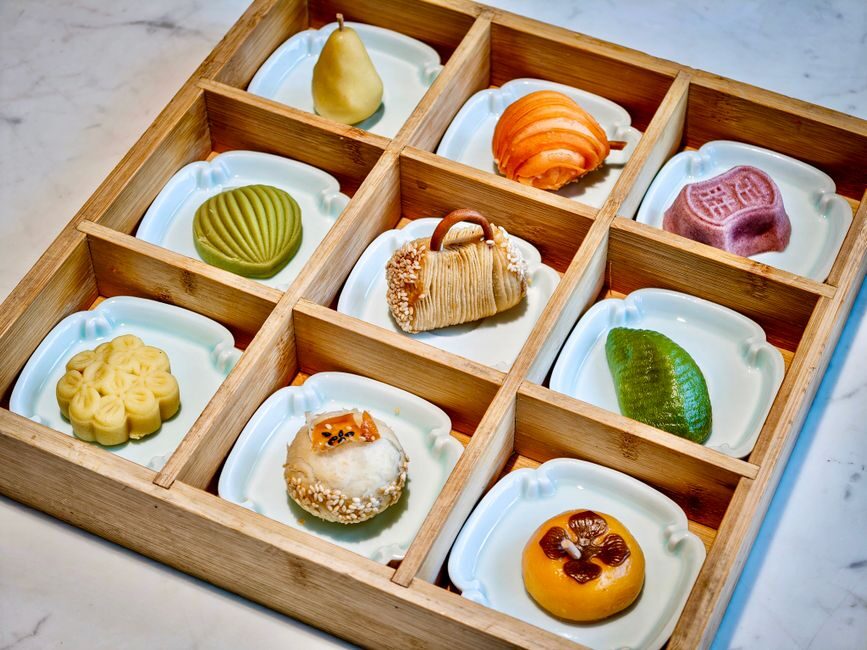
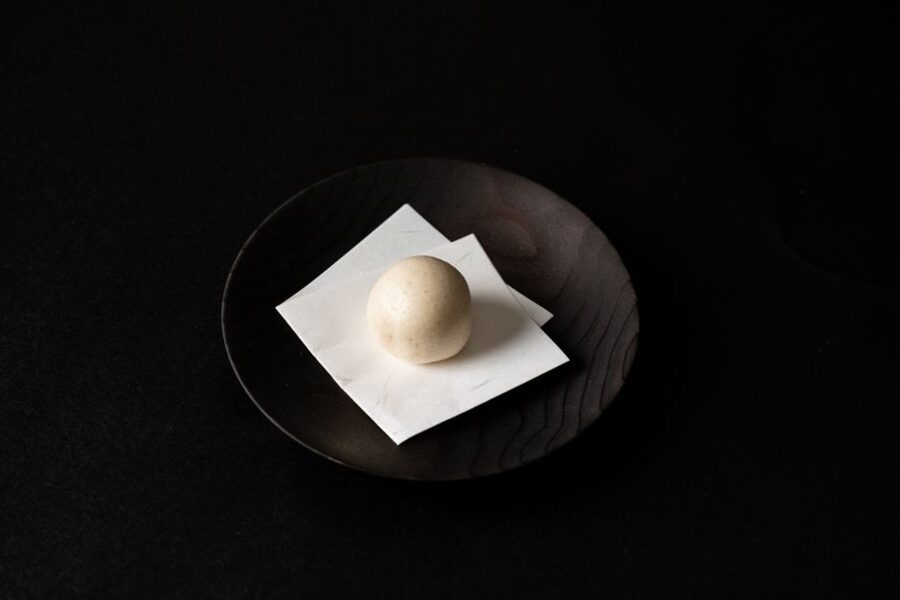
What wagashi are, and how they differ from Western sweets
Wagashi means “Japanese sweets”, and Japan’s Ministry of Agriculture admits in its guide to Japanese sweets that there is no standard definition. What holds them together is the pantry. Beans, rice, rice flour, wheat flour, sugar, agar and kudzu starch do almost all the work, and animal ingredients are rare apart from eggs. There is no butter, no cream and no chocolate in a traditional piece.
That changes the eating. The sweetness is clean and stops quickly, and texture does the work richness does elsewhere: the drag of smooth paste, the chew of rice dough, the snap of a wafer. Most pieces are two or three bites, made to sit next to tea.
The trade sorts sweets by water. Under the Food Sanitation Act, a 生菓子 (namagashi, “fresh sweet”) holds 40% water or more right after it is made, or 30% or more if it uses bean paste, agar or jam. 干菓子 (higashi, “dry sweets”) usually sit at 10% or less and keep for months, and 半生菓子 (han-namagashi, “half-fresh”) such as monaka fall in between. The water figure is also your shelf-life guide.
The highest form has its own status. On November 17, 2022, the craft of named fresh sweets made from nerikiri and konashi was registered as an intangible cultural property. Those are the sculpted seasonal pieces in the best shop windows, and every one carries a 菓銘 (kamei), a poetic name chosen by the maker.

Anko and the short list of ingredients
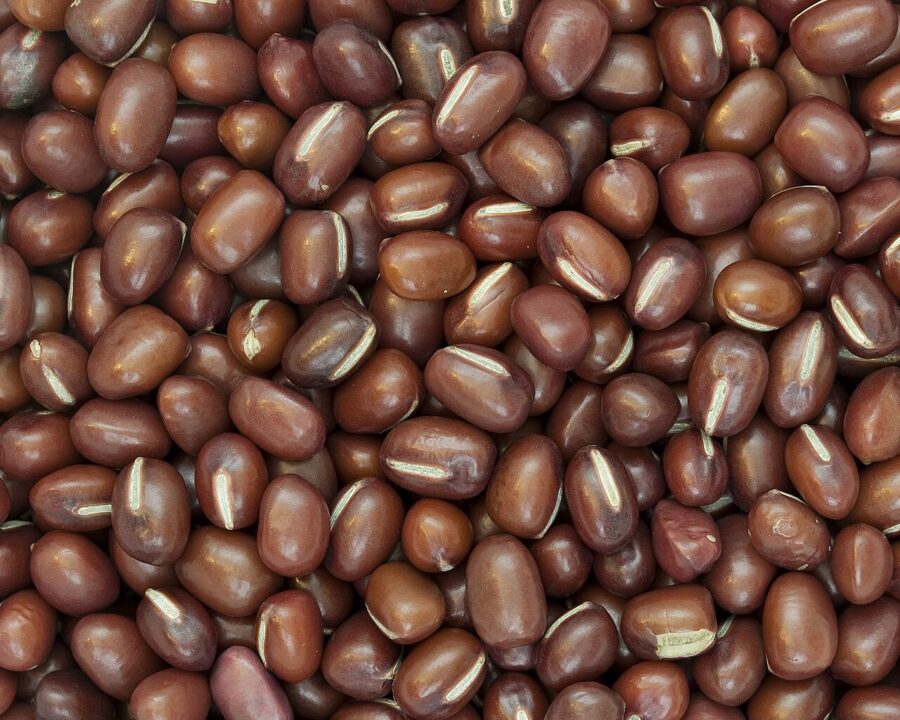
Almost everything comes back to 餡子 (anko), sweet bean paste: azuki beans boiled soft, sweetened and kneaded over heat until dense enough to hold a shape. What happens to the skins decides the kind.
Tsubuan, koshian and shiroan
- つぶあん (tsubuan, “whole-bean paste”): the skins stay in, so the paste is coarse, with broken beans and a slightly earthy edge.
- こしあん (koshian, “strained paste”): the skins are removed and the paste is pushed through a sieve. It is smooth, deeper in flavor and the standard filling for refined pieces and manju.
- 白あん (shiroan, “white paste”): made the same way as koshian from white kidney beans. It tastes milder and takes color, so it is the base for almost every sculpted sweet.
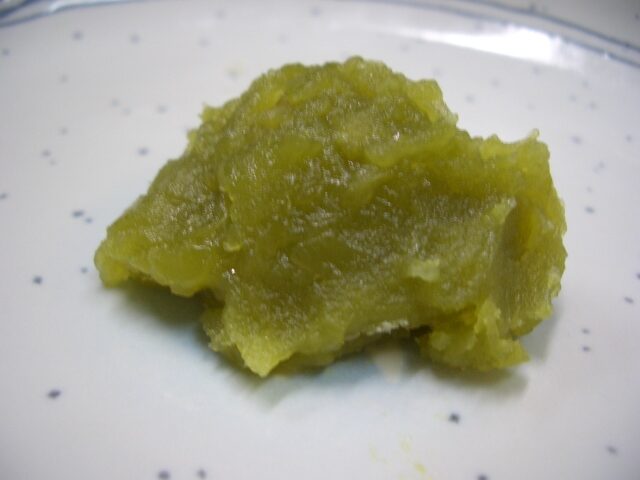
- うぐいすあん (uguisu-an, “bush warbler paste”): the green version, from green peas, named for a spring bird.
Nerikiri dough is shiroan worked with yam or a little gyuhi rice dough until it handles like modeling clay. I would pick koshian for anything delicate and tsubuan for dorayaki, where the texture has room.


Agar, kudzu and the rice flours
寒天 (kanten, agar) is seaweed jelly frozen and dried outdoors in cold winters, in places like Chino in Nagano. It does not melt in the mouth, which is why yokan stays firm on a warm shelf. 葛 (kuzu), kudzu-root starch, sets softer and clearer.
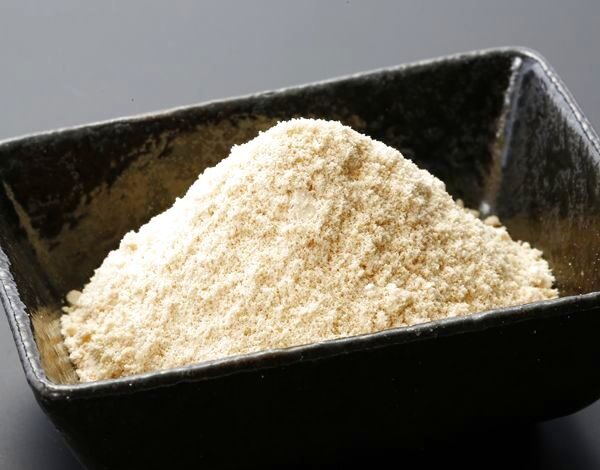
Rice comes as flour: glutinous shiratamako for chew, joshinko for a firmer bite, and roasted shinbikiko (mijinko in Kyoto) for a dusting that reads as mist on a design.
Sugar, and wasanbon
The prestige sugar is 和三盆 (wasanbon). Nearly all of it comes from Kagawa and Tokushima, and the name records the method: the raw cane sugar is kneaded and polished on a tray, traditionally three times, with the molasses pressed out between rounds. Sanuki producers made their first white sugar this way in 1799. The result is pale, very fine and melts on the tongue with almost no aftertaste.

The families, from tea-room art to the street griddle
The ministry sorts sweets by technique, steamed, griddled, poured, pressed and so on, but the names below are the ones on shop signs.
| Sweet | What it is | Where you meet it | Keeps |
|---|---|---|---|
| 上生菓子 (jo-namagashi) | Sculpted nerikiri or konashi around bean paste, named for the season | Old shops, depachika, tea rooms | The day you buy it |
| 干菓子 (higashi), 落雁 (rakugan) | Pressed or molded dry sugar and rice-flour sweets | Tea ceremonies, gift boxes | Months |
| 羊羹 (yokan) | A bar of bean paste set with agar | Gift shops, konbini, depachika | About a year, unopened |
| 最中 (monaka) | Crisp rice wafer shells around bean paste | Old shops, souvenirs | About three weeks |
| どら焼き (dorayaki) | Two honey pancakes around bean paste | Specialists, konbini | Best the same day |
| たい焼き (taiyaki), 今川焼き (imagawayaki) | Batter and bean paste baked in iron molds | Street windows, station shops | Eat hot |
| 饅頭 (manju) | A steamed or baked bun around bean paste | Every town, every souvenir shop | A day or two, fresh |
| 煎餅 (senbei) | Rice crackers, mostly savory | Specialists, supermarkets | Weeks, sealed |
Mochi is one branch of wagashi, not another word for it. The rice-cake family, daifuku, dango, sakura mochi and the rest, is a world of its own, from how mochi, dango and daifuku are made to where they are best eaten fresh.
Namagashi and jo-namagashi
Fresh sweets run from 朝生 (asanama, “morning fresh”) manju and rice-cake sweets, eaten the day they are made, to 上生菓子 (jo-namagashi, “superior fresh sweets”), the hand-shaped pieces on the top shelf.
Two doughs make most of them. Nerikiri is the Tokyo standard, with a soft, almost fudgy bite. Konashi, Kyoto’s choice, is white bean paste mixed with flour, steamed and kneaded again, a little firmer and less sweet; Toraya calls it 羊羹製 (yokan-sei).

Higashi and rakugan
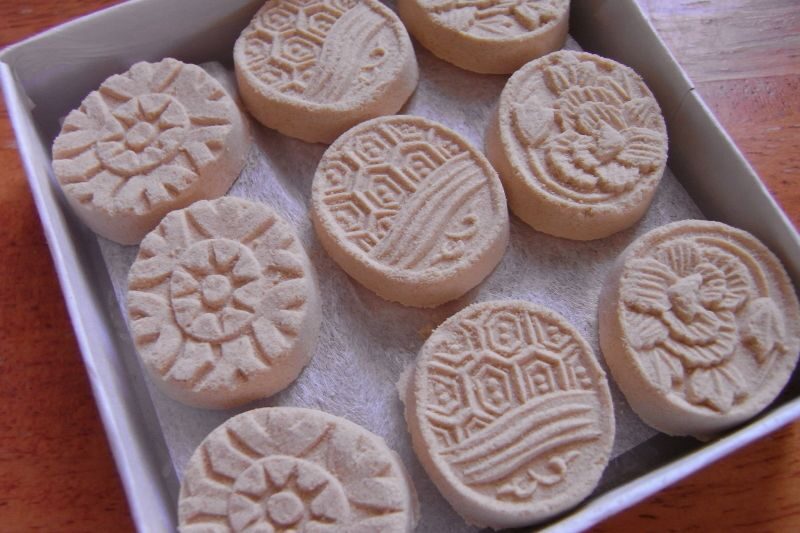
Dry sweets are the opposite: sugar, a little starch, almost no water. 落雁 (rakugan) is rice flour and sugar pressed into carved wooden molds and dried, so it crumbles and melts at once. Wasanbon higashi is the purest version, small pieces shaped as flowers, waves or fans. They suit thin tea, and they are the sweets to carry home.

Yokan
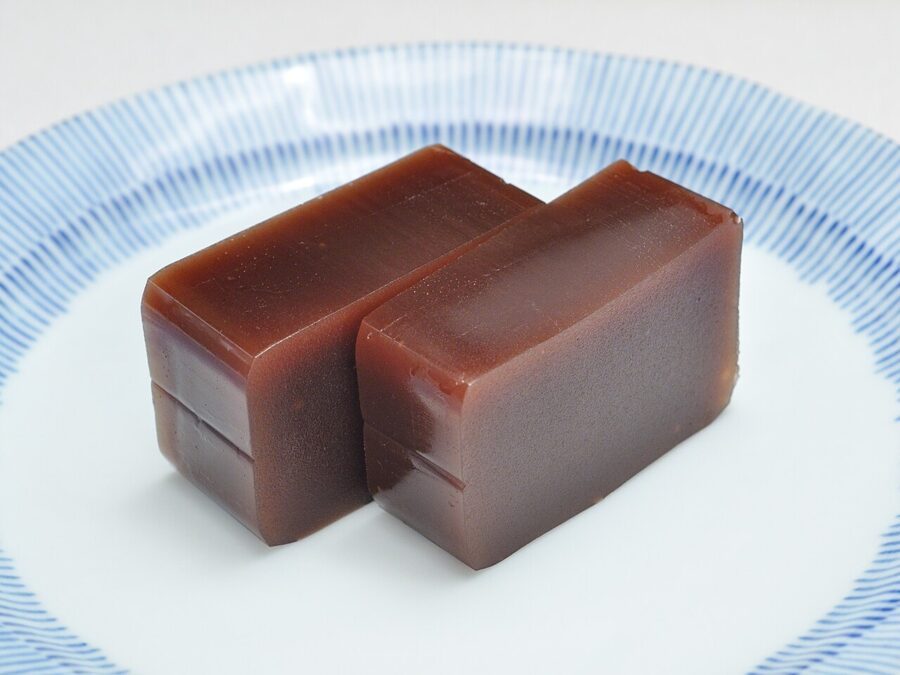
Yokan began as a Chinese mutton soup, and the name still carries the character for sheep. Three types matter: 練り羊羹 (neri-yokan) is cooked down hard with agar until dense and glossy; 水羊羹 (mizu-yokan) uses more water and less agar for a soft summer version; 蒸し羊羹 (mushi-yokan) is steamed with flour and has a softer, cakier set.
Toraya’s 夜の梅 (Yoru no Ume, “plum blossom at night”), first sold in 1819, is the reference neri-yokan. The name comes from the cut face, where pieces of whole bean show against the dark paste like plum flowers at night. A small 50-gram bar costs ¥324 (about US$2) and keeps a year. Cut it thin and pair it with green tea or black coffee.
Monaka
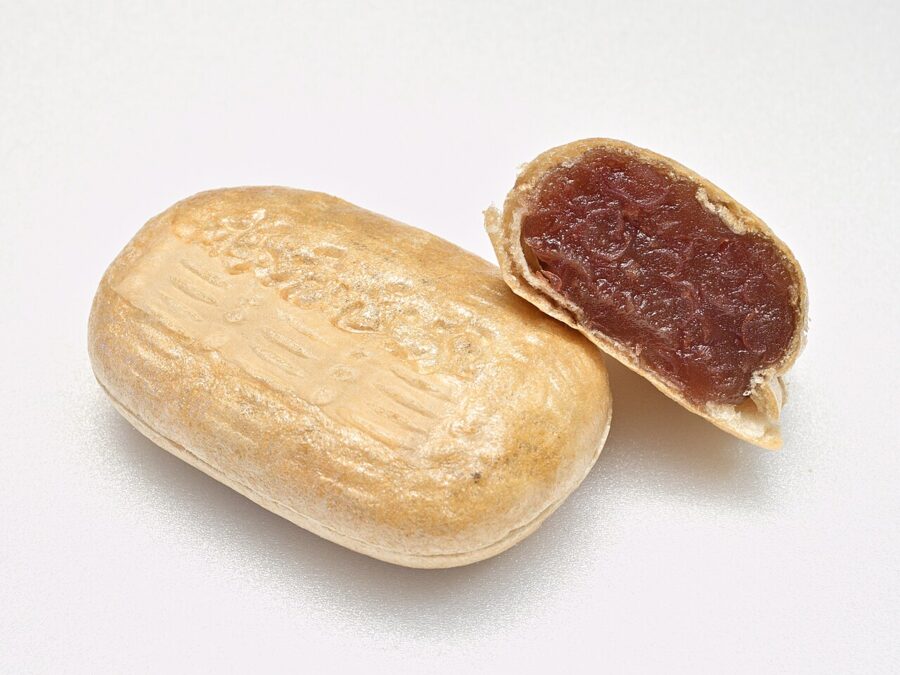
最中 (monaka) is two shells of crisp, toasted rice wafer, pressed in molds shaped as flowers, crests or rice bales, around a stiff bean paste. The paste is cooked with extra sugar and less water so it will not soften the wafer. Some shops sell shells and filling separately for you to assemble; take that option, because the snap is the point.
Dorayaki
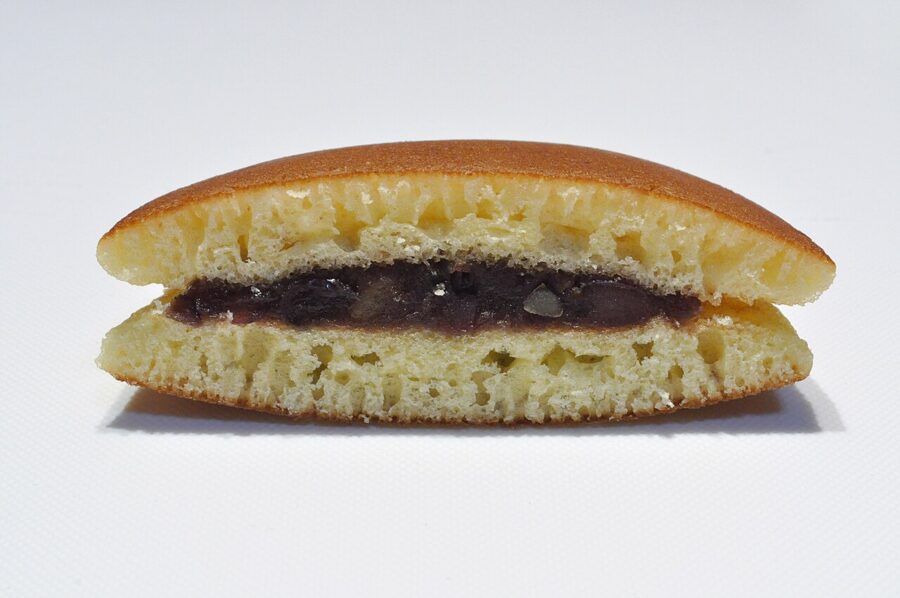
どら焼き (dorayaki) is two small, honey-sweetened pancakes around a layer of anko, named, most likely, after the 銅鑼 (dora), a gong it resembles. It is the sweet most visitors already know from Doraemon, and the one I would buy warm whenever I can.
The Tokyo benchmark is Usagiya in Ueno, across Chuo-dori from the Matsuzakaya department store. Its dorayaki has cost ¥270 (about US$1.80) since April 10, 2026, payment is cash only, and the shop closes on Wednesdays. The griddle runs until 4 p.m., so after that you should reserve by phone. Usagiya will not ship dorayaki, because it counts them as fresh sweets.

Taiyaki and imagawayaki
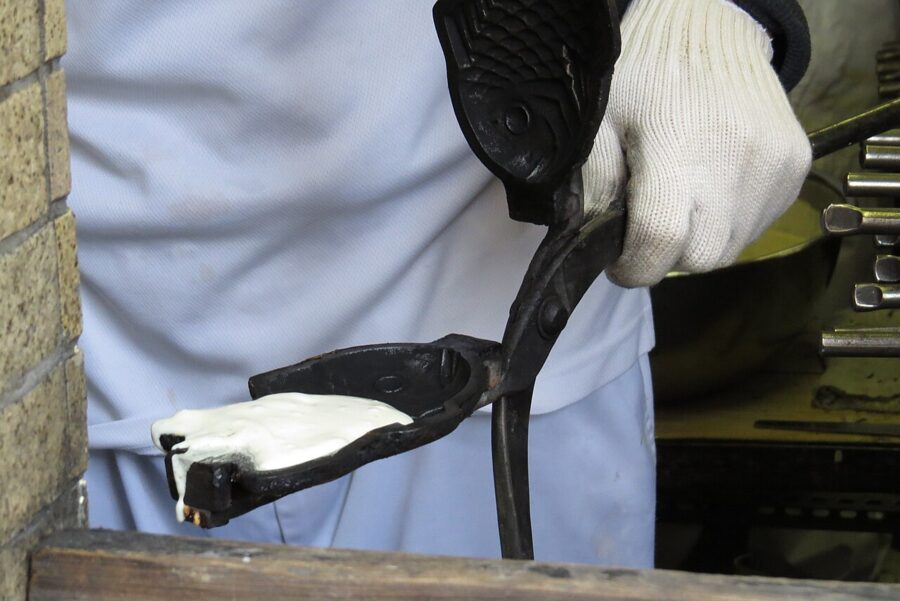
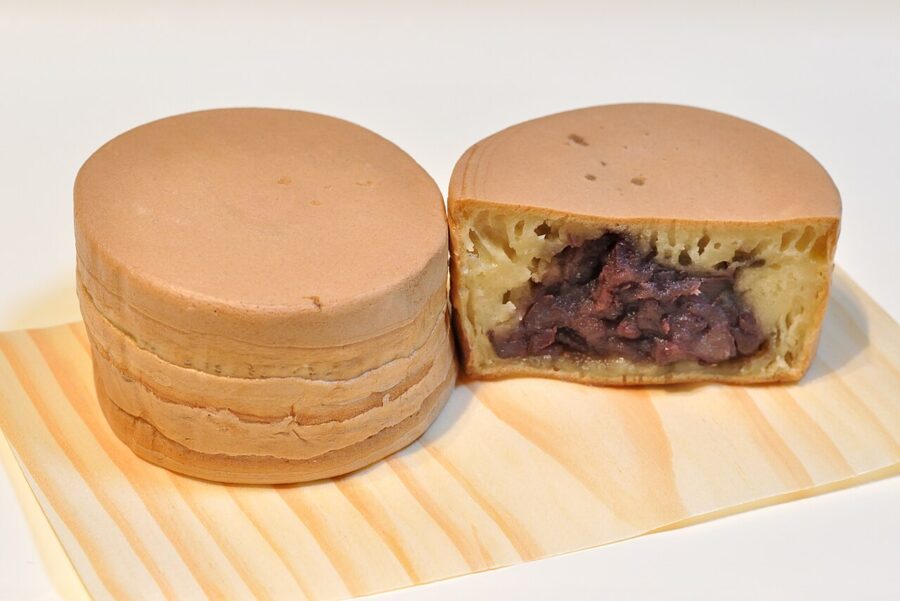
たい焼き (taiyaki, “baked sea bream”) is batter and anko baked in a fish-shaped iron and sold hot from street windows. The sea bream, tai, is the fish of celebrations, and putting it on a cheap snack was the joke. 一丁焼き (itcho-yaki), one fish per long-handled iron turned by hand, gives a thin, crackling skin; fans call it “wild” and the plate-baked kind “farmed”.
A Tokyo shop founded in 1909 is usually credited with the first taiyaki. Its parent is 今川焼き (imagawayaki), a round cake of the same batter and filling first recorded in Edo in 1777. It has more than a hundred regional names, among them 大判焼き (obanyaki) and 回転焼き (kaitenyaki).

Manju
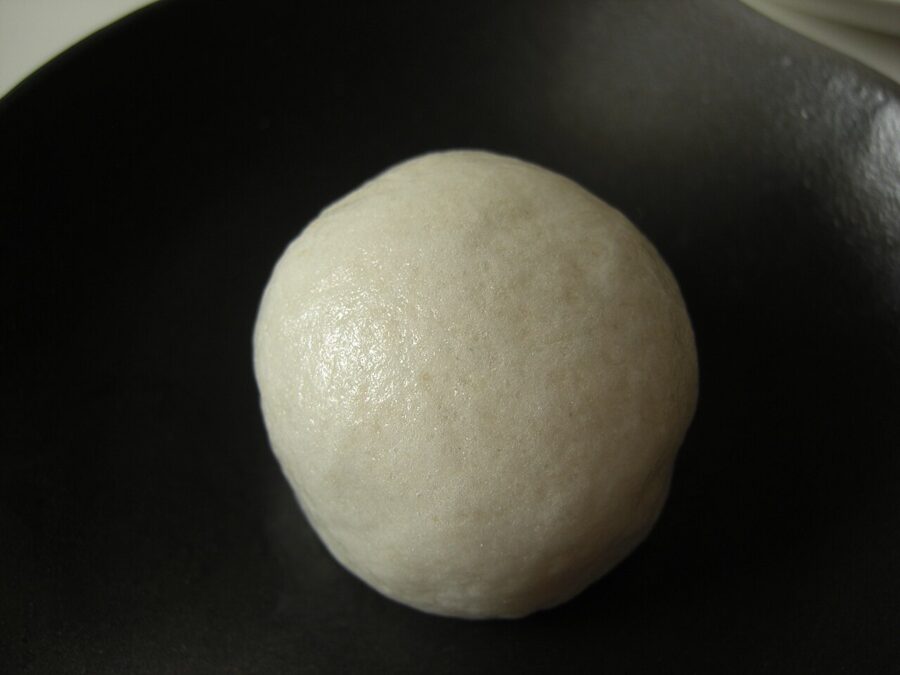
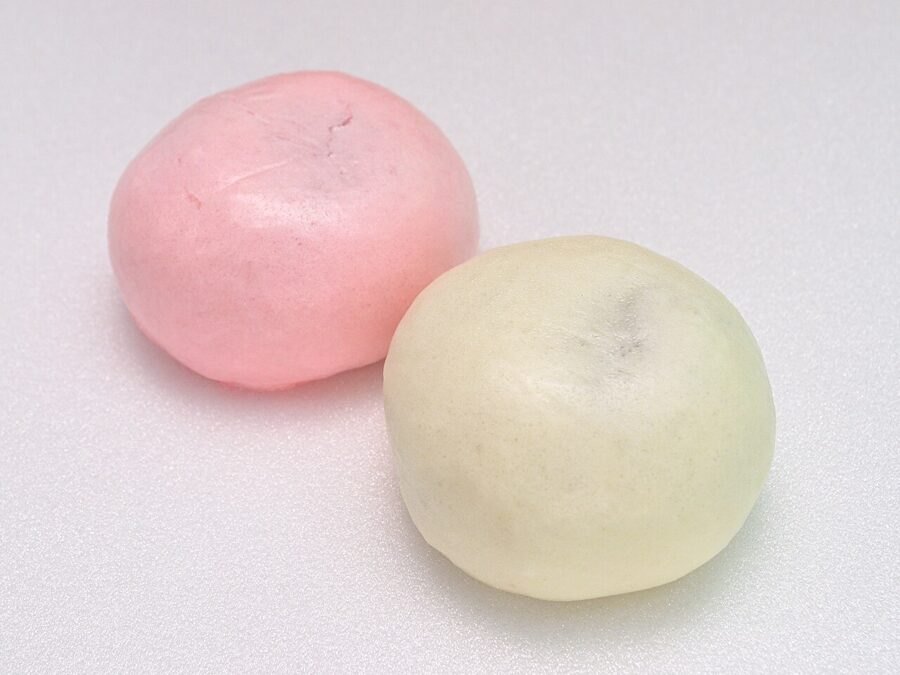
饅頭 (manju) is a bun of wheat or rice dough wrapped around bean paste, steamed or baked. It came from China in the medieval period, by one account with the monk Enni returning to Fukuoka. The refined version, 上用饅頭 (joyo manju), has grated yam in a snow-white dough; the everyday one is the souvenir of half the towns in Japan.

Senbei, the savory cousin
煎餅 (senbei) is the cracker of the family, mostly rice dough pressed flat, grilled and brushed with soy sauce. It is salty where everything else is sweet. Soka, in Saitama just north of Tokyo, is the senbei town.

Kakigori and kuzukiri, the summer sweets
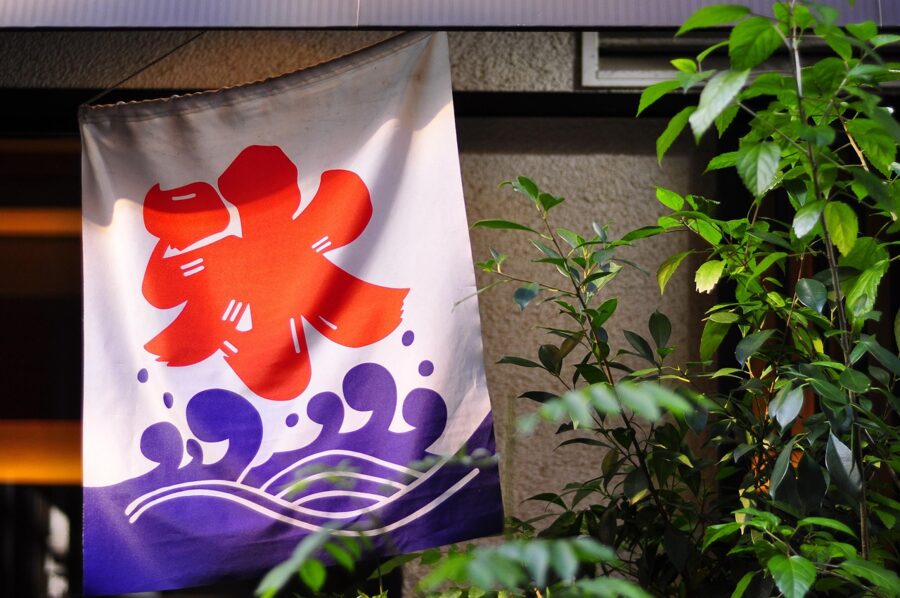
かき氷 (kakigori) is shaved ice with syrup, and older than it looks. Sei Shonagon, writing around the year 1000, listed shaved ice with a sweet vine syrup in a new metal bowl among the refined things. Today a white flag with the red character 氷 (kori, “ice”) means a shop is selling it. The wagashi version is 宇治金時 (uji kintoki), matcha syrup over sweet azuki, sometimes with rice dumplings.
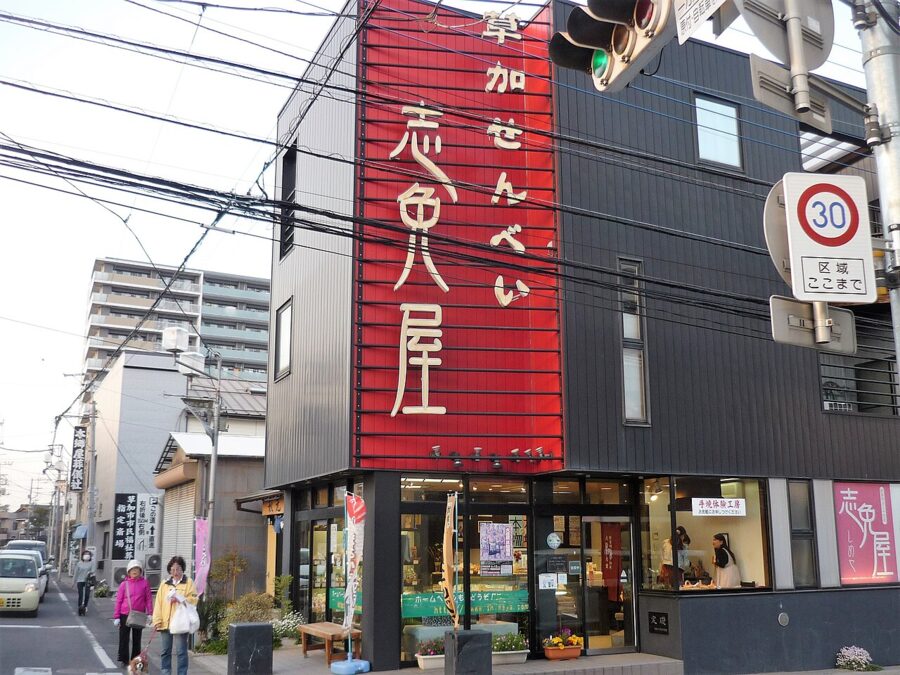
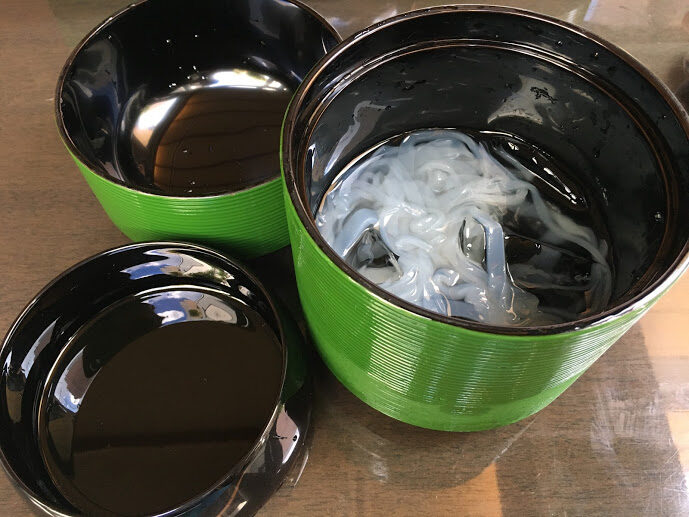
Old wagashi houses add kakigori in summer; Tsuruya Yoshinobu in Kyoto served it in four shops in July and August 2026. Kuzukiri is the quieter option: clear kudzu noodles in ice water, dipped in kuromitsu, a dark brown-sugar syrup. Kagizen Yoshifusa, by the gate of Yasaka Shrine in Gion since the mid-Edo period, is the name for it.
Wagashi and the seasons
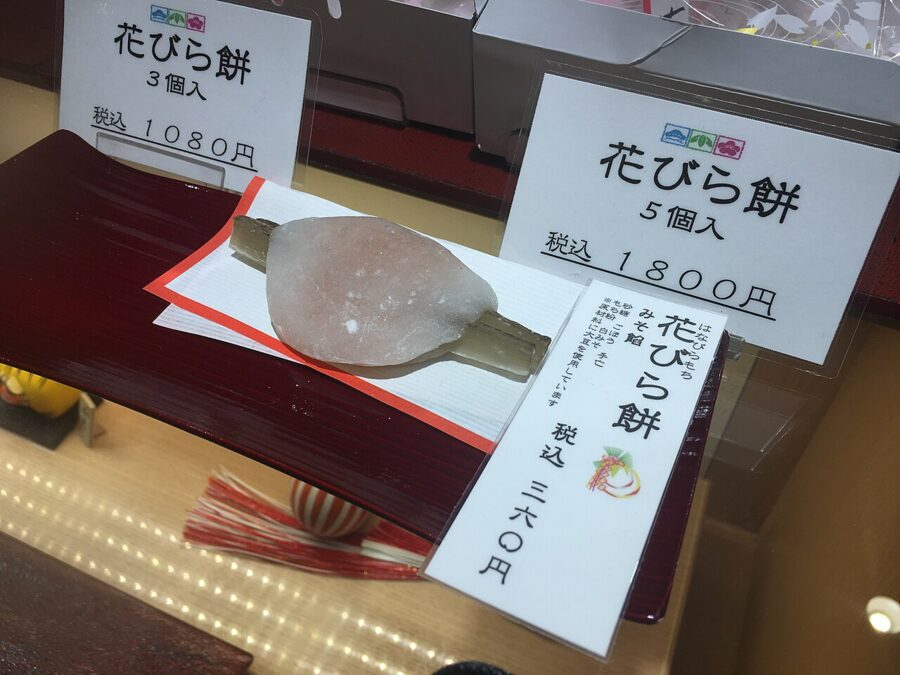
A wagashi case is a calendar. The ministry lists the sweets that follow the months: hanabira mochi in January, sakura mochi in March, kashiwa mochi wrapped in oak leaves in May, kuzu-zakura and mizu-yokan in July, mitarashi dango and ohagi in September, chestnut steamed yokan and kurikinton in October, sweet potato yokan and kintsuba in November, and zenzai, sweet bean soup, in December.
The sculpted pieces follow the same rhythm in shape and color: pine, plum and cranes for the New Year, fireflies and swirling water for summer, persimmons, red leaves and snow for the end of the year. Toraya changes most of its fresh sweets every two weeks. Its late-November tray in 2026 includes the apple and 木の間の錦 (ko no ma no nishiki, “brocade between the trees”), ivy turning from yellow to red behind a mist of roasted rice flour, first made in 1918.
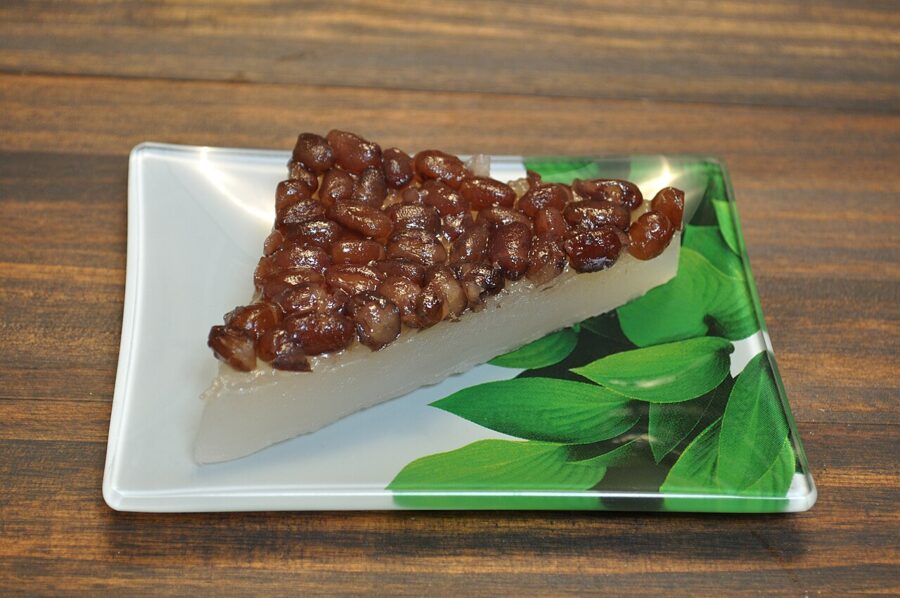
Some sweets belong to a single day. In Kyoto, 水無月 (minazuki), a triangle of white uiro rice cake topped with azuki, is eaten on June 30 to see out the first half of the year. June 16 is Wagashi Day, set by the Japan Wagashi Association in 1979 after a court custom of offering sixteen sweets that goes back to 848. In November, 亥の子餅 (inoko mochi) marks the opening of the tea room’s winter hearth.


Wagashi and the tea ceremony
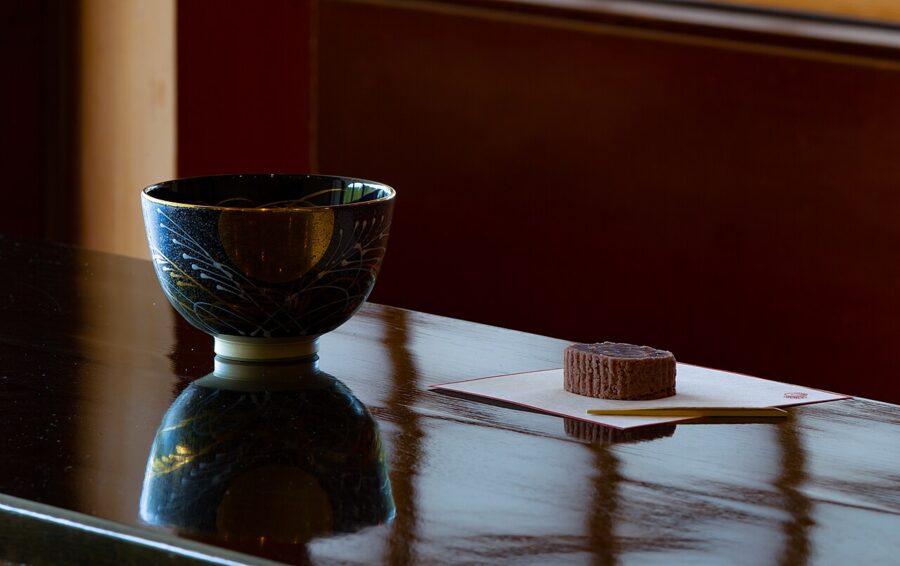
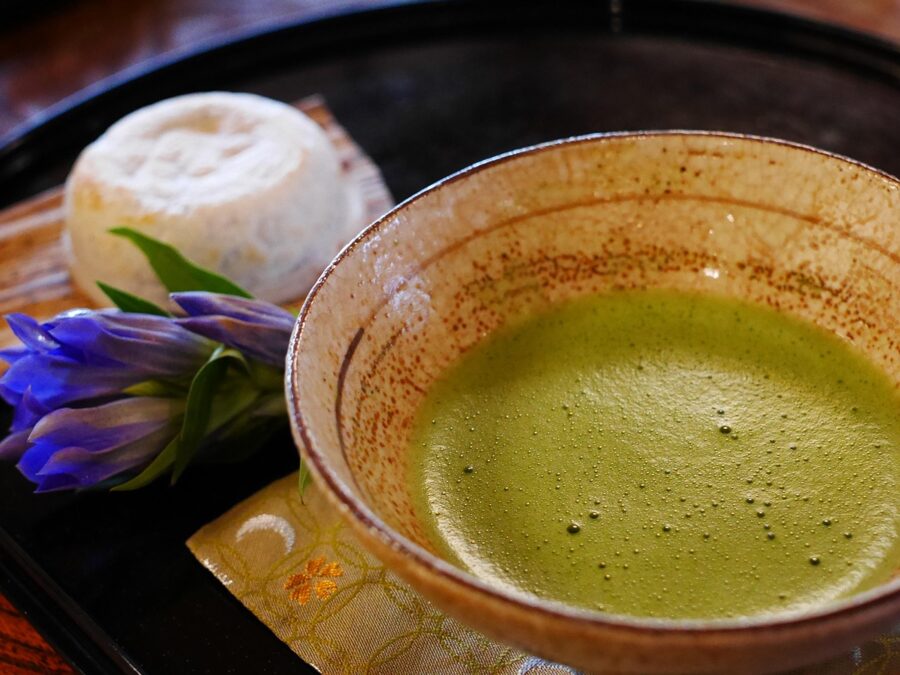
Many of these sweets exist because of tea. As the tea ceremony grew in the 15th and 16th centuries, confectioners began making pieces to serve with it. In a formal tea, the moist 主菓子 (omogashi, “main sweet”) comes with 濃茶 (koicha, thick tea), and dry higashi, usually two kinds on a shared tray, come with 薄茶 (usucha, thin tea).
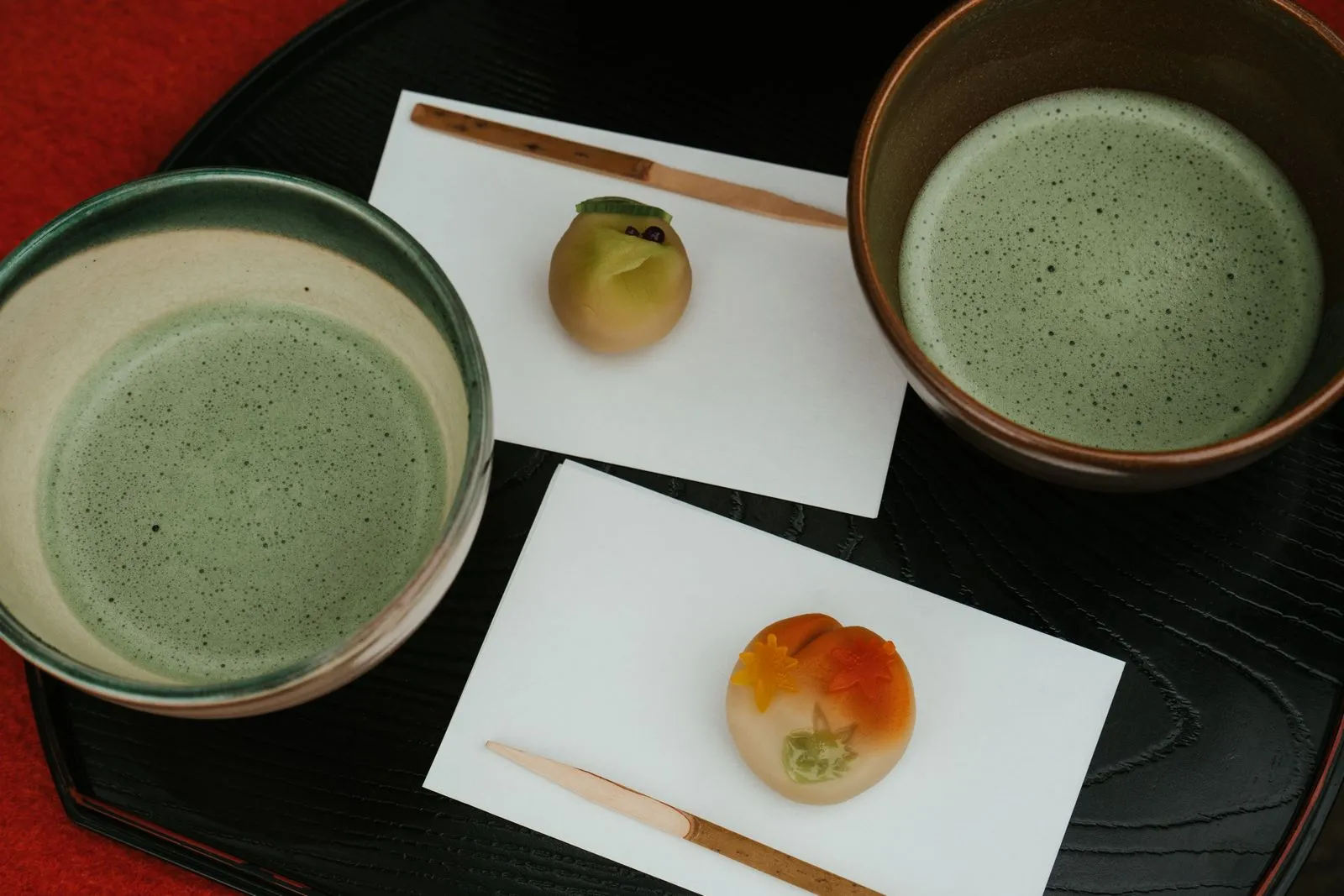
The order matters more than any other rule: you finish the sweet before the tea arrives, so its sweetness meets the bitterness of the matcha. A casual tea room works the same way.

How to eat namagashi with a kuromoji pick
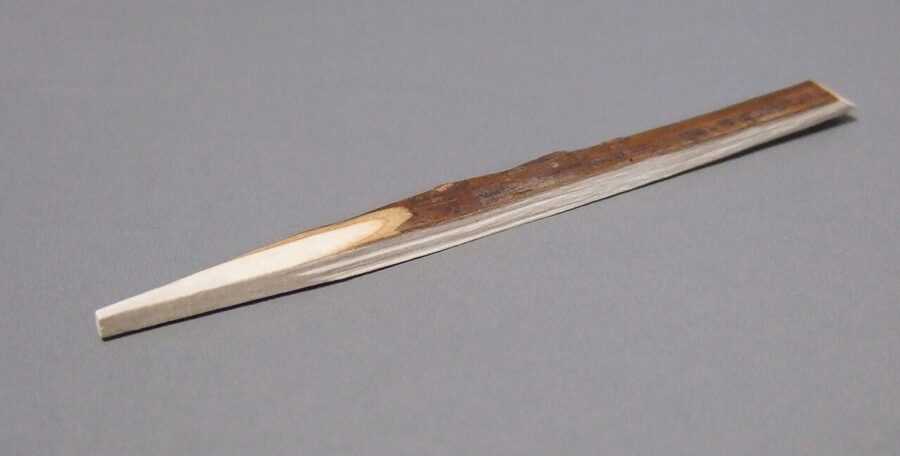
Fresh sweets come with a 黒文字 (kuromoji), a pick cut from spicebush, Lindera umbellata. The wood is aromatic, and good picks keep a strip of bark. You use it as a small knife and fork in one.
- Lift the plate, or the sheet of folded 懐紙 (kaishi) paper, to chest height with your left hand.
- Cut a bite from the near edge with the side of the pick, pressing straight down.
- Spear the piece and eat it. Three or four bites is normal for one sweet.
- Finish before the tea arrives. Dry sweets you take by hand.
Nobody minds if you get it slightly wrong, and sitting cross-legged is fine. What matters is eating promptly: a piece left on the plate while you take photos is a piece past its best.

Buying wagashi: old shops, depachika, and how long each keeps
Toraya and the old houses
Toraya started in Kyoto in the late Muromachi period and has supplied the imperial court since the reign of Emperor Go-Yozei (1586–1611). When the capital moved in 1869, it opened in Tokyo too.
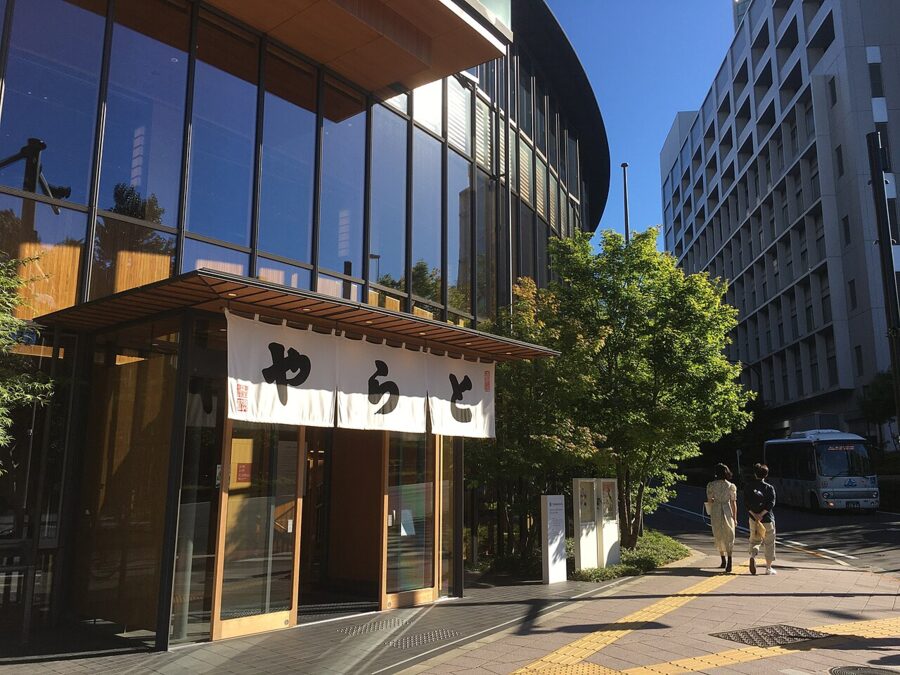
Toraya Akasaka, rebuilt in 2018 as a low wood-and-glass building, opens 9:00 to 18:00 on weekdays and 9:30 to 18:00 on weekends and holidays, and closes on the 6th of each month except December. Its tea room runs 11:00 to 17:30 (last order 17:00) and takes no bookings; anmitsu is ¥2,090 (about US$14). Zangetsu, a ginger-scented baked sweet made in the shop that day, goes on sale at 13:30 for ¥346 (about US$2.30). Walk seven minutes from exit A of Akasaka-mitsuke Station.
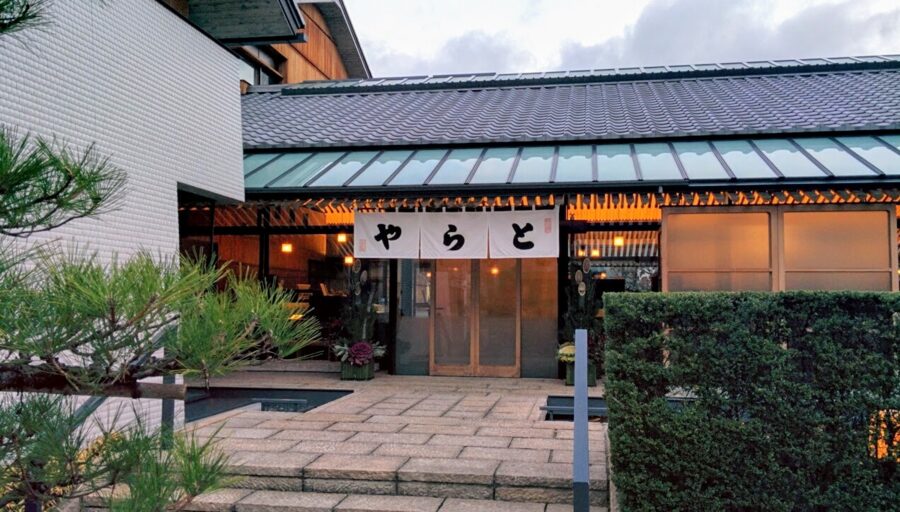
In Kyoto, Toraya Kyoto Ichijo stands on Karasuma-dori near the Imperial Palace, on a site the company has occupied since before 1628. The shop opens 9:00 to 18:00; the tea room just west along Ichijo-dori opens 10:00 to 18:00 (last order 17:30), with a garden, an old storehouse and about 600 books to read. Both close on January 1 and on the last Monday of each month, except holidays and December. Walk five to seven minutes from exit 6 of Imadegawa Station.


Depachika counters
You do not need a flagship. The food basements of department stores, depachika, carry the big Kyoto and Tokyo houses side by side. Toraya alone has counters in Isetan Shinjuku (basement 1), Nihonbashi Mitsukoshi, Ginza Mitsukoshi, Daimaru Tokyo and a dozen more stores around Tokyo, open whatever hours the store keeps.
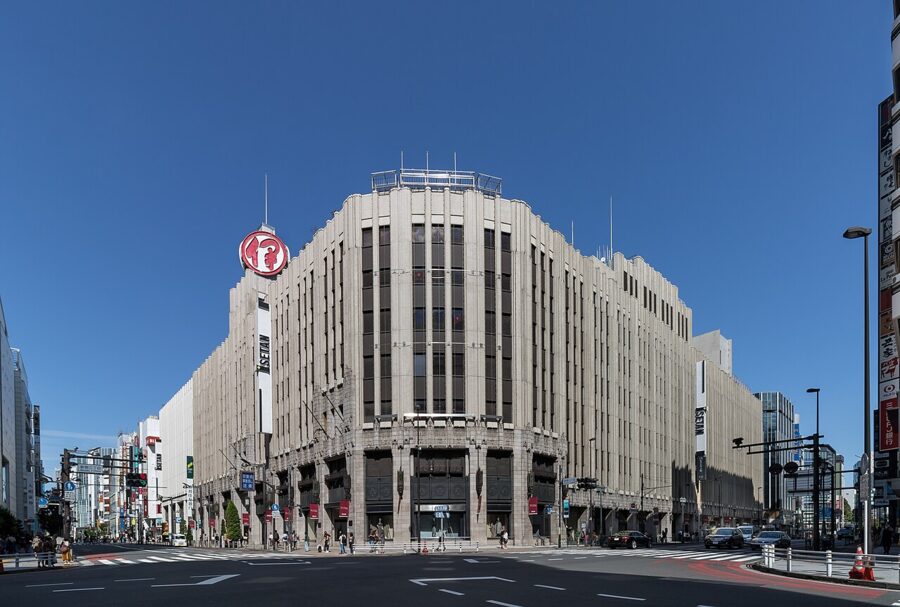

Buy fresh sweets last, and say how long you will be carrying them; counters may add a cold pack.
How long each keeps
Japanese labels give two kinds of date. 消費期限 (shohi kigen) is a use-by date for perishable food, and fresh sweets carry it; 賞味期限 (shomi kigen) is a best-before date for things that keep. Both assume the pack is unopened. Toraya’s own figures make a useful scale:
| Sweet | Keeps (Toraya, from manufacture) |
|---|---|
| Fresh sweets (namagashi) | Sold for the day; eat it today |
| Monaka, Miyo no Haru (¥238, about US$1.60) | 24 days |
| Mizu-yokan (sealed, sold April to late August) | 120 days |
| Wasanbon higashi, Suiko (12 pieces, ¥1,296, about US$9) | 180 days |
| Neri-yokan such as Yoru no Ume | 1 year |
Toraya goes further in its notes on yokan shelf life: tests show an unopened bar is still safe a year after the best-before date, though syrup may bead on the surface. Once opened, eat it within a week. For a gift to carry home, choose yokan, higashi or boxed monaka, and leave the sculpted pieces for eating in Japan.
Regional sweets and where to go for them
Every prefecture has its sweets, but Kyoto, Kanazawa and Matsue are often called Japan’s three great sweet towns, and all three grew their confectionery around tea.
Kyoto: yatsuhashi, kuzukiri and the old houses
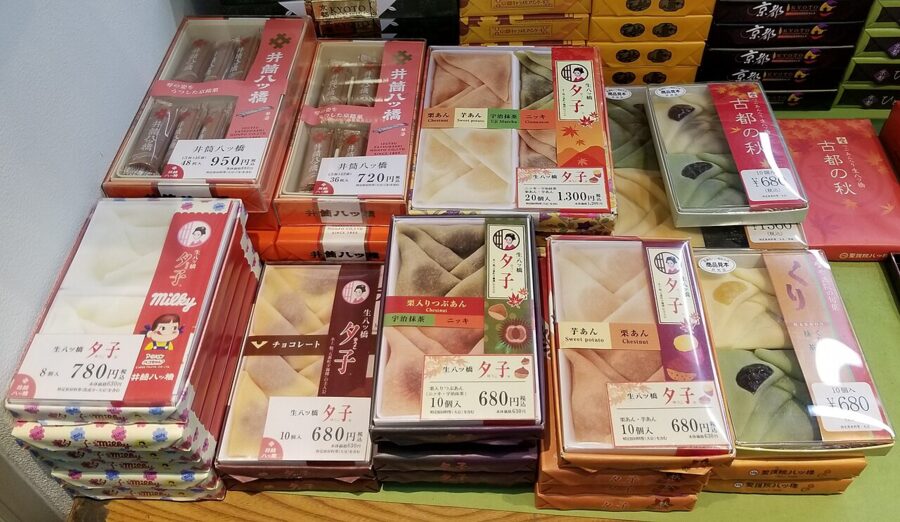
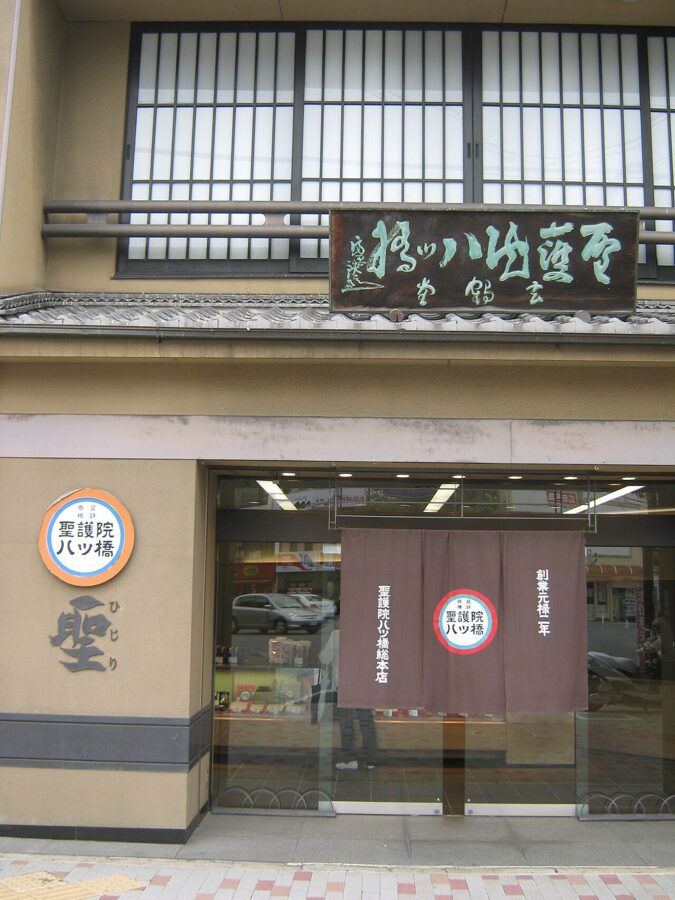
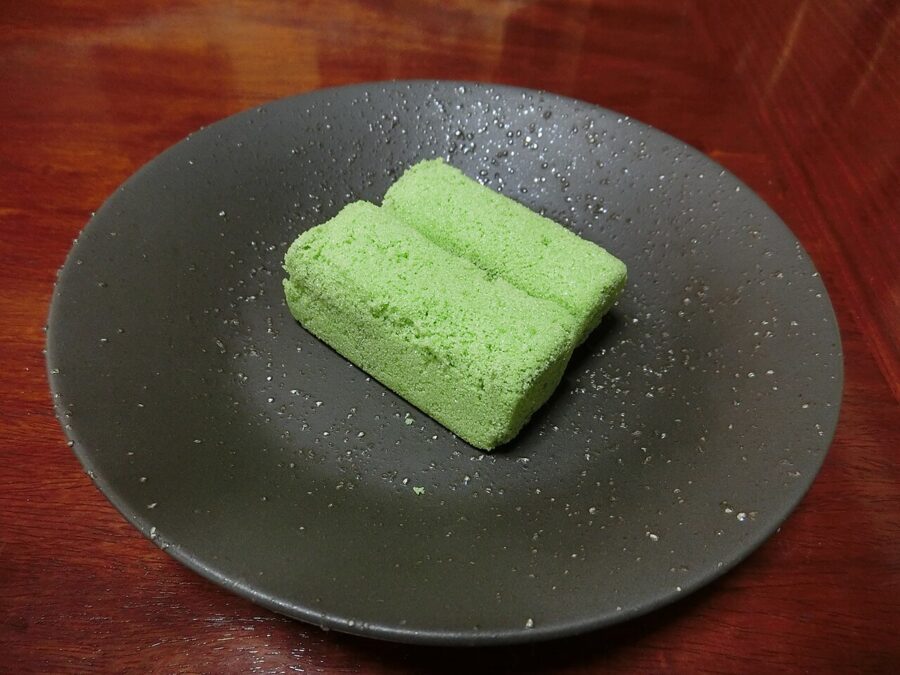
八ツ橋 (yatsuhashi) is Kyoto’s souvenir sweet. The original is a hard, curved cracker of rice flour, sugar and cinnamon, baked until it snaps, said to copy the shape of a koto. Yatsuhashi Kengyo, the blind musician credited with founding modern koto music, died in Kyoto in 1685, and the sweet carries his name. The soft version everyone buys now, 生八ツ橋 (nama yatsuhashi), is unbaked dough folded around bean paste, and only appeared in the 1960s.
The founding dates are part of the sales pitch. Shogoin Yatsuhashi Sohonten signs itself as founded in 1689, and its main shop in the Shogoin district opens 9:00 to 18:00. Izutsu Yatsuhashi Honpo dates itself to 1805 and has its main shop opposite the Minamiza theater in Gion. I would buy the baked kind for flavor and the nama kind for fun.


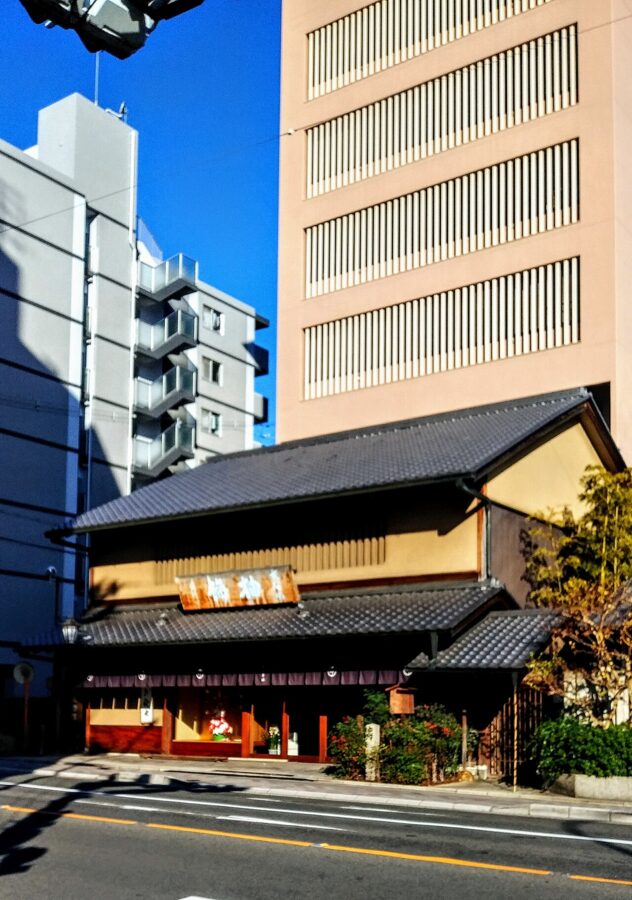
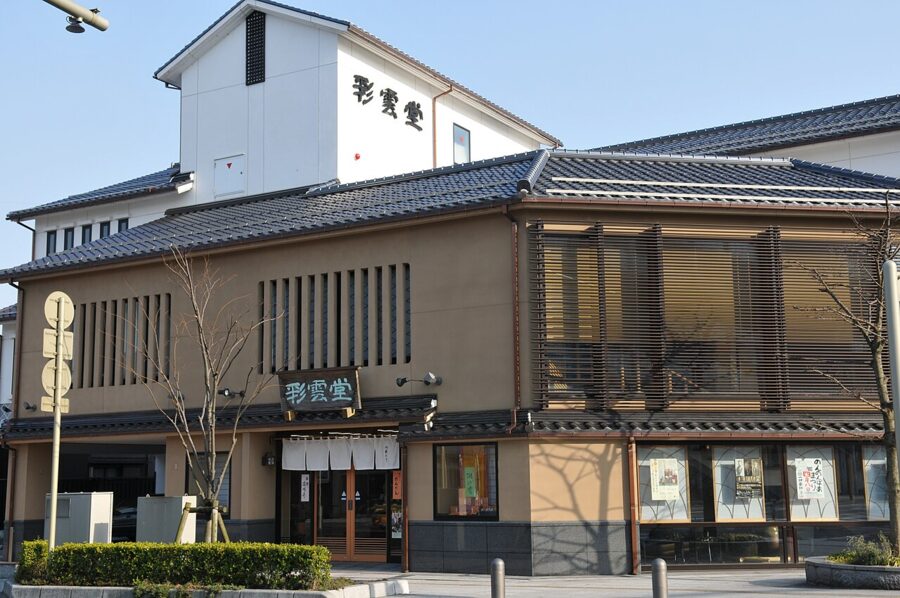
For kuzukiri, go to Kagizen Yoshifusa’s Shijo main shop in Gion: sales 9:30 to 18:00, tea room 10:00 to 18:00 (last order 17:30), no reservations, closed Mondays (the next weekday if Monday is a holiday). For fresh sweets made in front of you, Tsuruya Yoshinobu at the Horikawa-Imadegawa corner runs a counter called 菓遊茶屋 (Kayu-jaya) upstairs, where a craftsman shapes your sweet while you watch, from a choice of two designs, and serves it with matcha. The counter opens 10:00 to 11:20 and 12:30 to 17:30 and takes reservations; the shop opens 9:00 to 18:00 and closes most Wednesdays.

Kanazawa: Morihachi and Choseiden
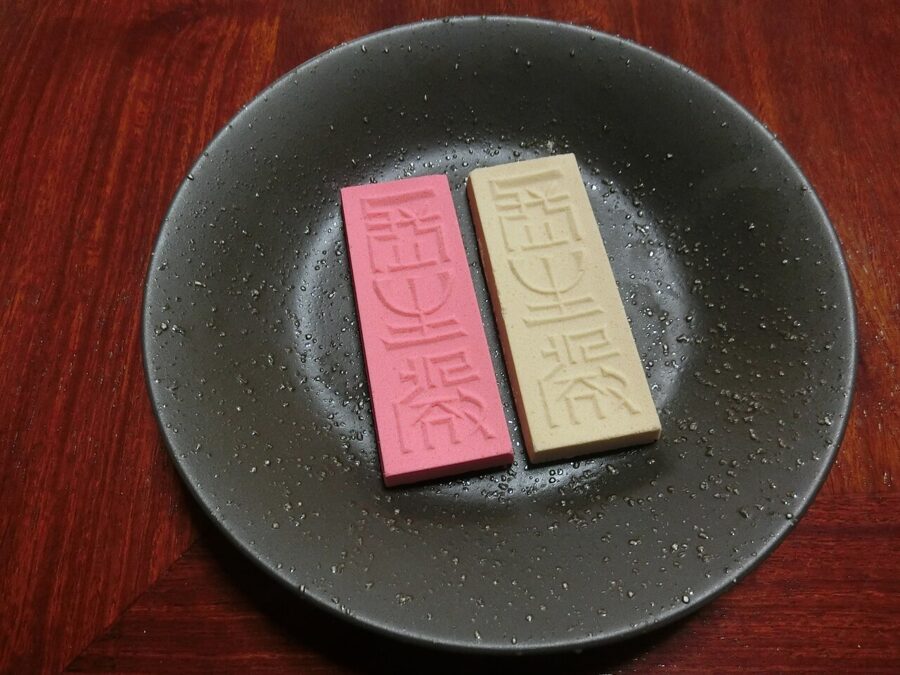
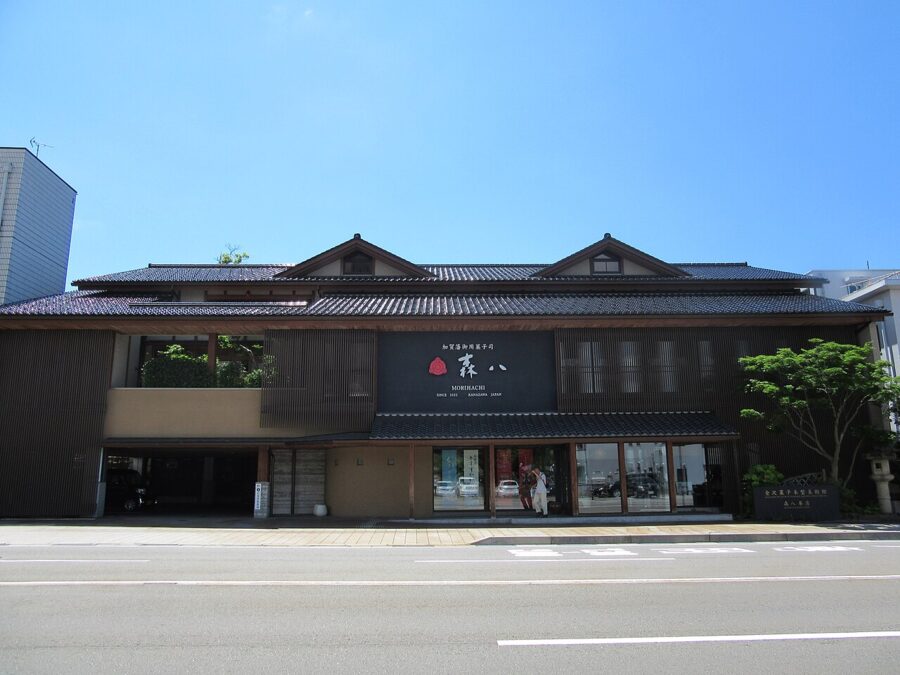
Kanazawa was the castle town of the Maeda lords, who spent lavishly on tea. Morihachi began making sweets for them in 1625, and its 長生殿 (Choseiden) is the sweet to know: a red or white bar of rakugan made with Awa wasanbon from Tokushima and glutinous rice flour from Hokuriku, struck from a mold carved with three characters in the hand of the tea master Kobori Enshu. It counts among Japan’s three famous confections, all of them rakugan, with Koshi no Yuki of Nagaoka and Yamakawa of Matsue.
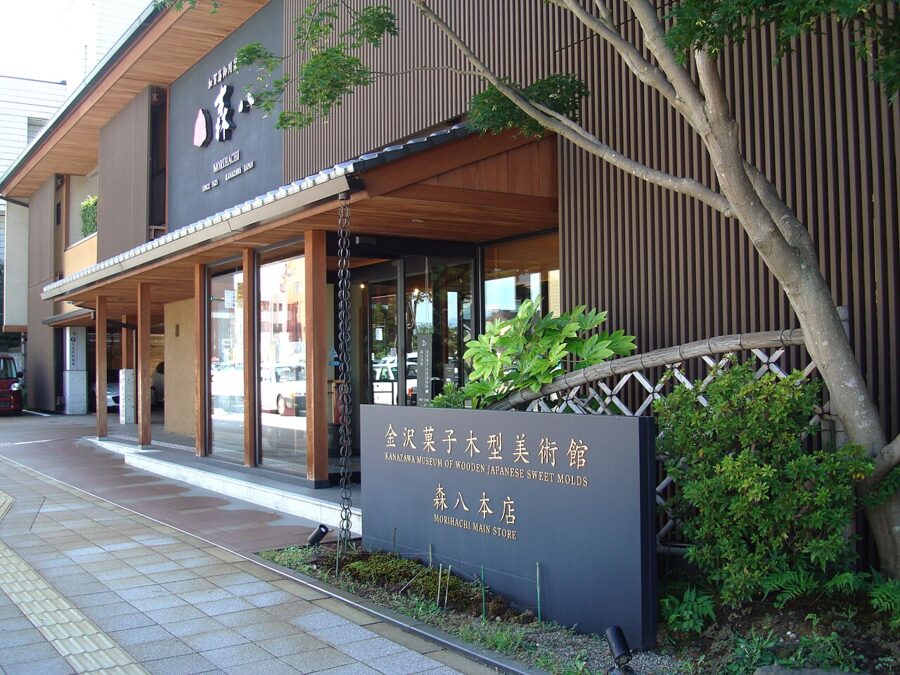
The main shop in Ote-machi, about ten minutes on foot from Kenroku-en and Omicho Market, opens 9:00 to 18:00 and closes only on January 1 and 2. Upstairs, the Kanazawa Kashi Kigata Museum shows around a thousand wooden sweet molds from the Edo period on, and the tea room looks onto the garden of the samurai house next door. Both close at 17:00.



Matsue: a tea town that never stopped
Matsue’s sweets grew from one man. Matsudaira Harusato, the seventh lord of Matsue, better known by his tea name Fumai, became lord in 1767 at 17 and founded his own school of tea. The sweets served at his gatherings disappeared after 1868 and were revived by the town’s confectioners. The ministry’s page on Matsue wagashi names three of them: Wakakusa, soft gyuhi dusted with pale green sugar; Yamakawa, a soft red-and-white rakugan; and Natane no Sato, which pictures white butterflies over a field of rape flowers.
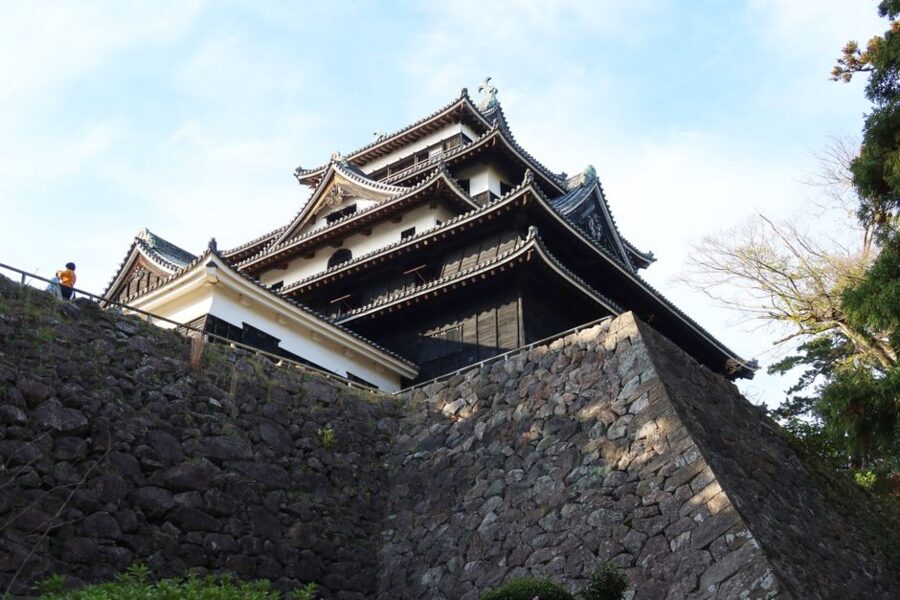
Tea is still daily life here. By city ordinance, April 24, the day Fumai died, and the 24th of every month are Tea Days, and Matsue households rank near the top in Japan for spending on green tea and the sweets that go with it. Saiundo, a Matsue maker since 1874, runs a tea room at its main shop in Tenjin-machi (shop 9:00 to 18:00, tea room 10:00 to 17:00, last order 16:30, irregular holidays), where a fresh sweet by its master craftsman with a drink is ¥1,430 (about US$9.50).


Making wagashi yourself
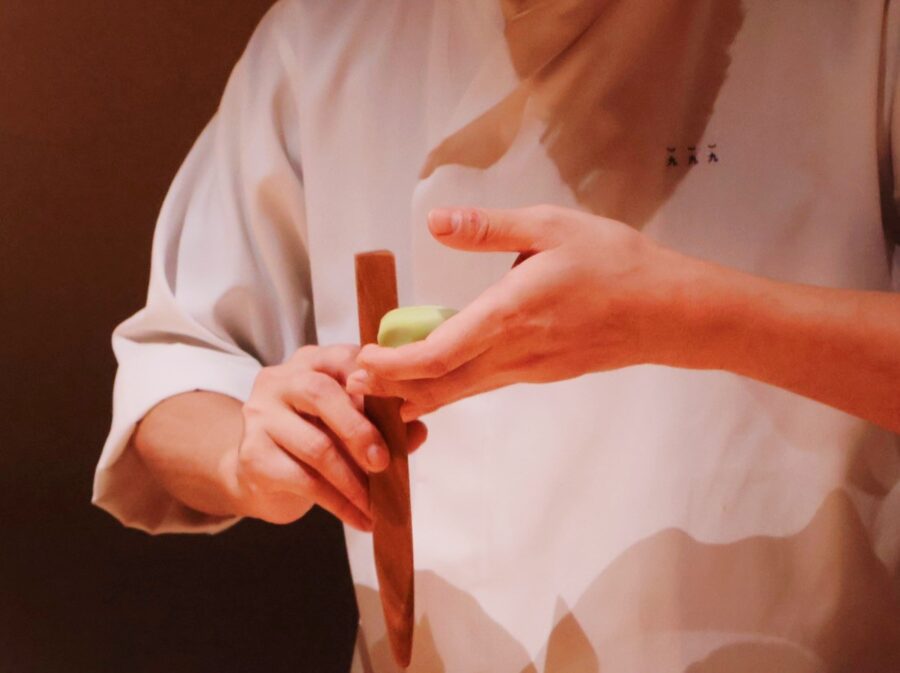
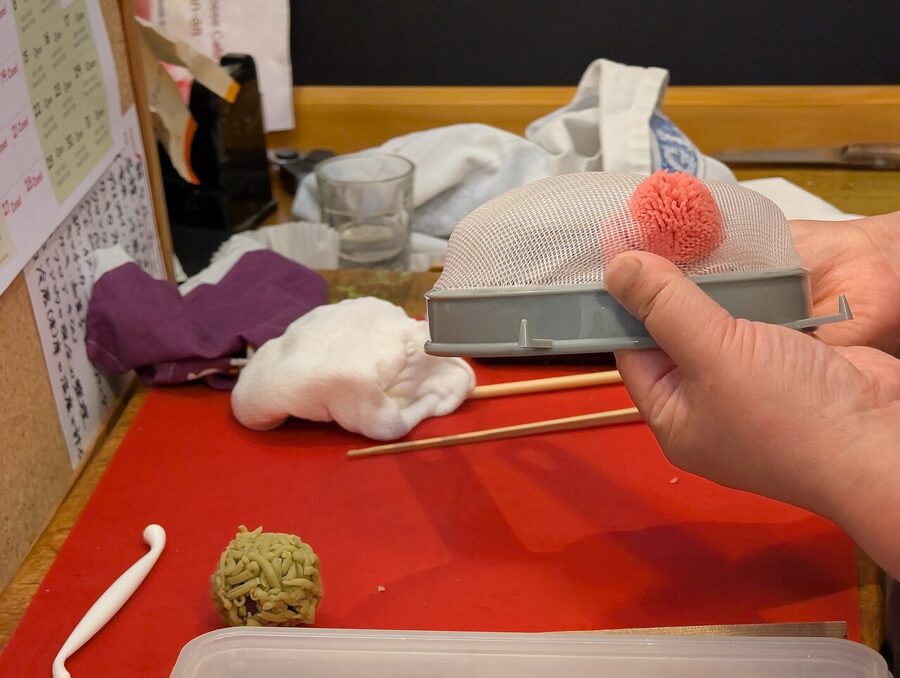
Shaping nerikiri needs your palms, a fine sieve for the crumbly kinton style and a three-sided stick, the 三角棒 (sankakubo). A teacher makes a chrysanthemum in a minute; yours will take ten and look like a tired dahlia, which is fine.
In Kyoto, Kanshundo runs classes every day at 9:15, 11:00, 13:15 and 15:00, at its shop opposite Toyokuni Shrine in Higashiyama and at a branch in Saga, near Arashiyama. The standard course is ¥3,700 (about US$25) for three fresh sweets and one dry sweet with matcha, about 75 minutes, with English text available. Book two or three days ahead; the minimum is two people.
In Kanazawa, Morihachi’s rakugan class costs ¥1,870 (about US$12.50), including matcha, a box for your sweets and entry to the mold museum. You press rakugan in wooden molds, twelve to fifteen pieces in about 45 minutes. Sessions run at 10:00 (book by the day before) and 15:00 (book by 13:00 the same day).

Back at the depachika counter, the apple stays on the tray until November 30. Now you know it is konashi around white paste, that its design is older than the railways and that it will not improve overnight in your bag. Buy it, ask for a kuromoji, and eat it that afternoon with a cup of tea.