
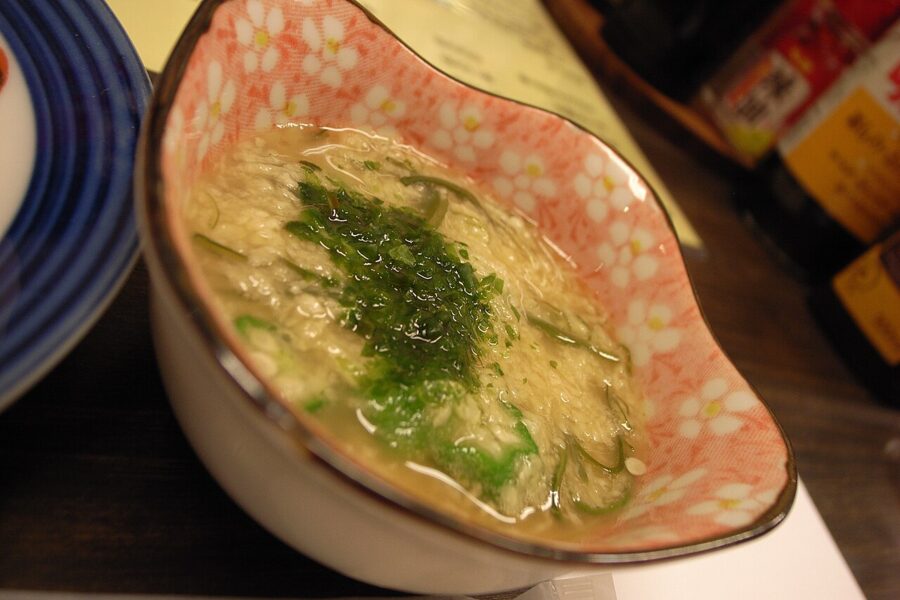
The door slides sideways, someone behind the counter calls out irasshaimase, and before you have found a hook for your coat there is a hot towel in your hands. You ask for a beer because everyone does. It comes in a frosted mug, and with it comes a small dish you did not order: a spoonful of simmered something, a few pickles, a little salad dressed in sesame.
That dish is the first lesson of the izakaya. It is on the bill whether you eat it or not, and it tells you the kitchen is open and the evening has started. Everything after it is up to you: a plate at a time, a drink at a time, until someone at the table says it is time for rice.
An izakaya is where most people in Japan eat out on a weeknight, and it rewards a little knowledge more than almost any other kind of restaurant. Once you know what the small dish costs, how the menu runs and when to stop ordering, it is also one of the cheapest good meals in the country.


What an izakaya is
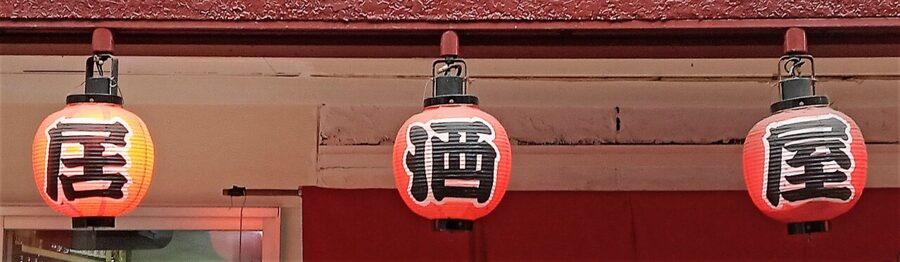
居酒屋 (izakaya) is i, “to stay,” plus sakaya, “sake shop.” In the Edo period, sake shops sold drink by measure to take home; some began letting customers drink on the spot, then added snacks and cooked dishes. By the 1820s Edo, a city full of single working men, had more than 1,800 such places by one count.
The modern izakaya keeps those priorities: a place to drink where the food is good enough to make a dinner of. Plates are small and meant for sharing, and nobody expects a starter, main and dessert.
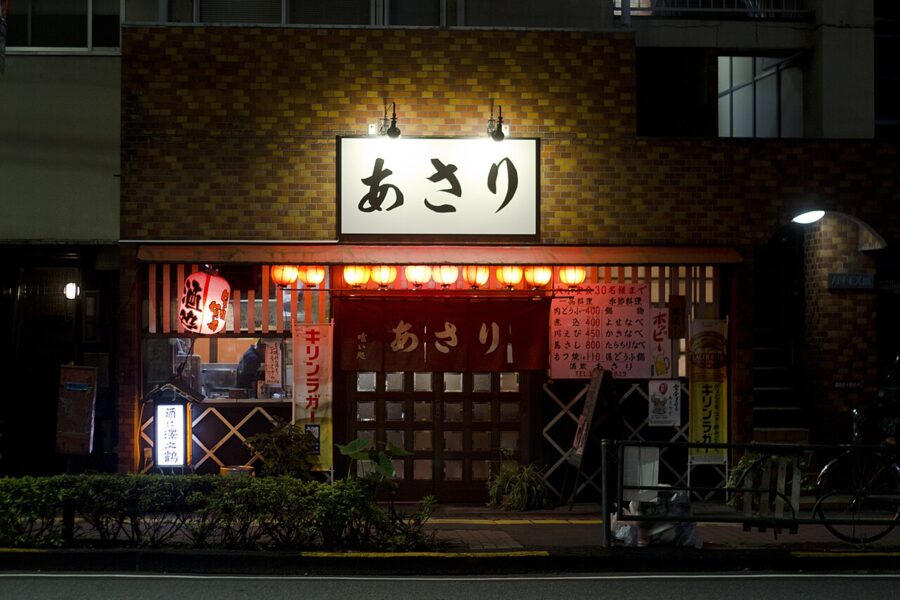

How it differs from a bar, a yakitori-ya, a tachinomi and a kissaten
| Place | What you go for | How it feels |
|---|---|---|
| 居酒屋 (izakaya) | Drinks and a long menu of shared dishes: raw, grilled, fried, simmered, rice to finish | Seated, loud, two or three hours, groups welcome |
| 焼き鳥屋 (yakitori-ya) | Chicken skewers grilled over charcoal, with a short list of sides | Often a counter facing the grill; many call themselves izakaya too |
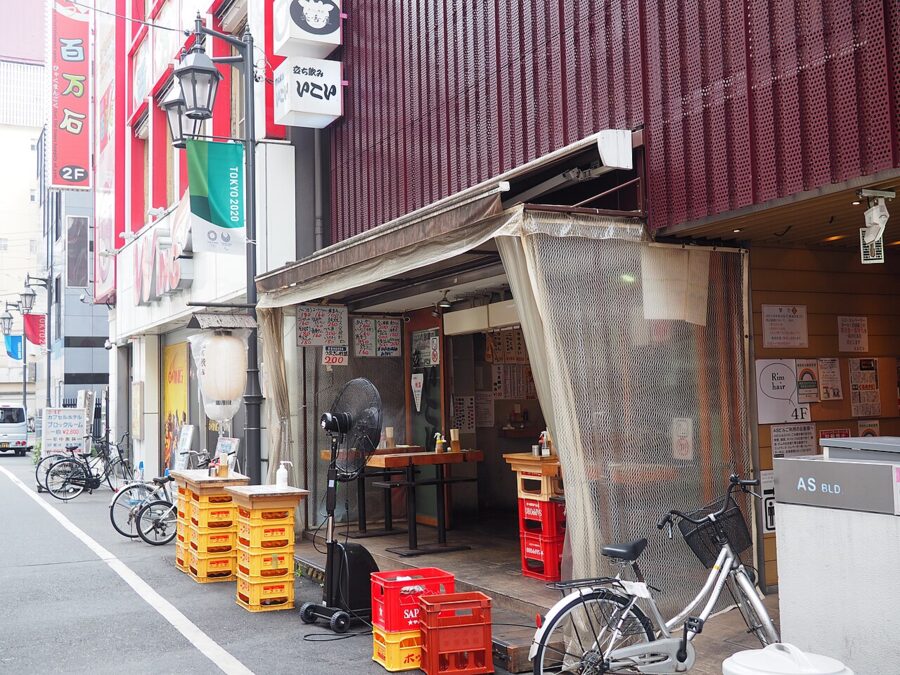
| 立ち飲み (tachinomi) | A drink or two and a couple of cheap plates, standing | Quick, cheap, no reservations, thirty minutes is a normal visit |
| バー (bar) | Whisky, cocktails, wine; food is an afterthought | Quiet, a seat charge is common, small groups |
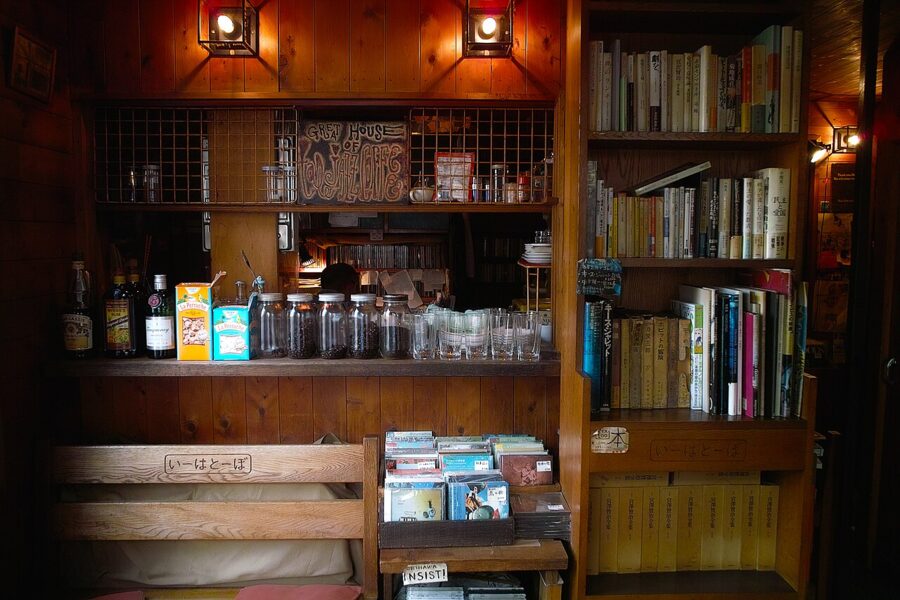
| 喫茶店 (kissaten) | Coffee, toast, curry rice, cake, mostly by day | An old-style coffee house; not for drinking |
The edges blur: a yakitori-ya with a sashimi board is an izakaya in all but name. If the menu has a page of dishes and another of drinks, you are in one.



How an izakaya works
The towel and the first order
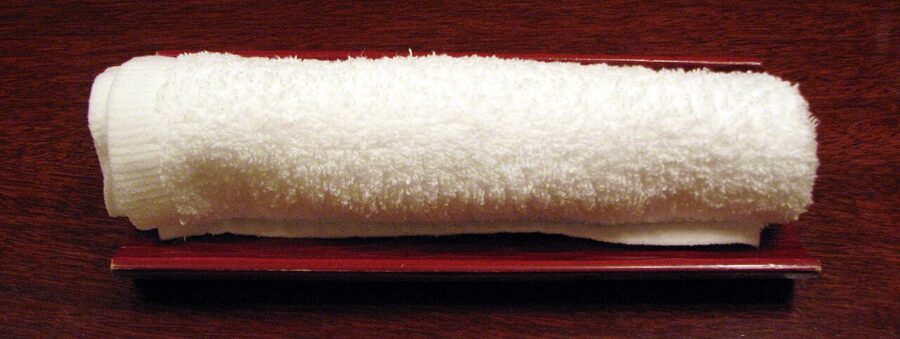
Staff will ask how many you are and seat you at the counter, a table or a low table on tatami. Then comes the おしぼり (oshibori), a wet towel, hot in winter and cold in summer. Wipe your hands with it and fold it by your plate. Older regulars wipe their faces with it too; you need not.
The first question is always about drinks. Ordering food before drinks is allowed but slows everything down, which is why so many tables start with とりあえずビール (toriaezu biru, “a beer for now”). It is a placeholder that buys time to read the menu.

The otoshi, or tsukidashi, and what it costs
The small dish that arrives with your first drink is お通し (otoshi) in Tokyo and the east, 突き出し (tsukidashi) in Osaka and the west. It is a cover charge served as food. Expect ¥300 to ¥500 (about US$2 to US$3) per person at an ordinary izakaya; restaurant-trade guides updated in 2026 put the usual range at ¥300 to ¥800, higher in nightlife and tourist districts.
Most places serve it without asking, and you usually cannot decline it. Some chains skip it: Torikizoku has long made a point of not charging one. If the cost matters, ask at the door: お通しはありますか (otoshi wa arimasu ka, “is there an otoshi?”). I would simply eat it, since at a good small izakaya it is a fair preview of the kitchen.
Menus, tablets and paper
At chains you will usually order on a tablet at the table or by scanning a QR code with your phone, and these often have an English setting. Small places have a printed menu, a handwritten board of the day’s fish and vegetables, and strips of paper on the wall. The board is where the kitchen’s best work is. Point, ask for おすすめ (osusume, “recommendation”), or say これ (kore, “this one”).
Prices on menus in Japan have had to include the 10 percent consumption tax since April 2021, so the number you see is the number you pay, before any otoshi or service charge.
Nomihodai and tabehodai
飲み放題 (nomihodai) is all-you-can-drink for a fixed price and a fixed time; 食べ放題 (tabehodai) is the same for food. Read the terms before you agree: the time limit, the drinks covered, the minimum party size and whether everyone at the table must take the plan.
Torikizoku’s Trikki Bansankai course is a fair example. It costs ¥4,100 (about US$26) per person after the chain’s October 2026 price change, covers food and drink from the regular menu for two hours, takes last orders 20 minutes before the end, needs four or more people and must be booked by phone by the day before, according to the course page. Nomihodai pays off if you drink three or more glasses. If you will stop at two, order by the glass.
Last order and paying
ラストオーダー (rasuto oda, “last order”) is called for food and drink some time before closing, and for nomihodai plans before the time runs out. Staff will tell you; it is your cue to order the rice.
When you are done, say お会計お願いします (okaikei onegaishimasu, “the bill, please”), or catch someone’s eye and make a small cross with two index fingers. At most izakaya you take the bill slip to the register by the door and pay there. Do not leave money on the table. There is no tipping in Japan, and coins left behind will often be chased down the street and handed back.
Small places may be cash only, and some add a seat or service charge, particularly in nightlife districts. If no prices are posted anywhere, ask before you sit down.
What to order, and in what order
There is no fixed course, but a good table follows a rough shape: something cold and quick while the first drinks land, then raw fish, then grilled and fried things, then something simmered, and rice or noodles at the end. Order two or three plates at a time and add as you go. Ordering everything at once fills the table with dishes going cold.
| Stage | Order | Why |
|---|---|---|
| With the first drink | 枝豆 (edamame, salted soybeans), 冷奴 (hiyayakko, chilled tofu), ポテトサラダ (potato salad) | Fast from the kitchen; salty and cold against cold beer |
| Raw | 刺身盛り合わせ (sashimi moriawase, mixed sashimi) | Fish is best early, before the palate is tired |
| Grilled | 焼き鳥 (yakitori), with salt (shio) or sweet soy glaze (tare) | The heart of many menus; order by the skewer |
| Fried | 唐揚げ (karaage, fried chicken), 揚げ出し豆腐 (agedashi tofu) | The point of the evening for many; share them |
| Egg and simmered | だし巻き卵 (dashimaki tamago, rolled omelet), もつ煮込み (motsu nikomi, stewed offal), おでん (oden) | Soft, warm and slow; good with sake |
| To finish | 〆 (shime): 焼きおにぎり (yaki onigiri, grilled rice balls), お茶漬け (ochazuke, rice in tea or broth) | The signal the evening is ending |

The cold start
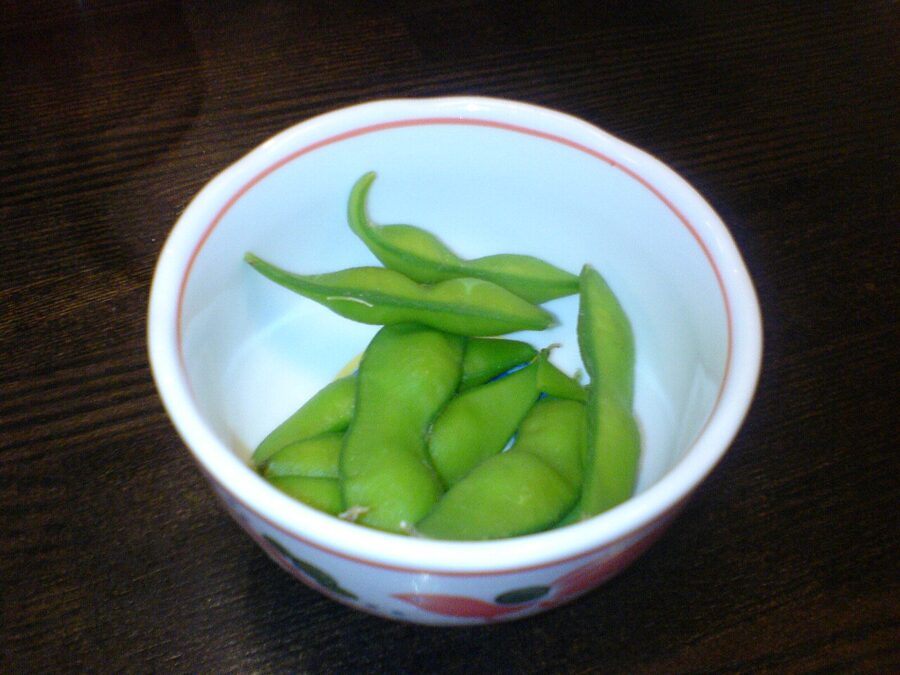
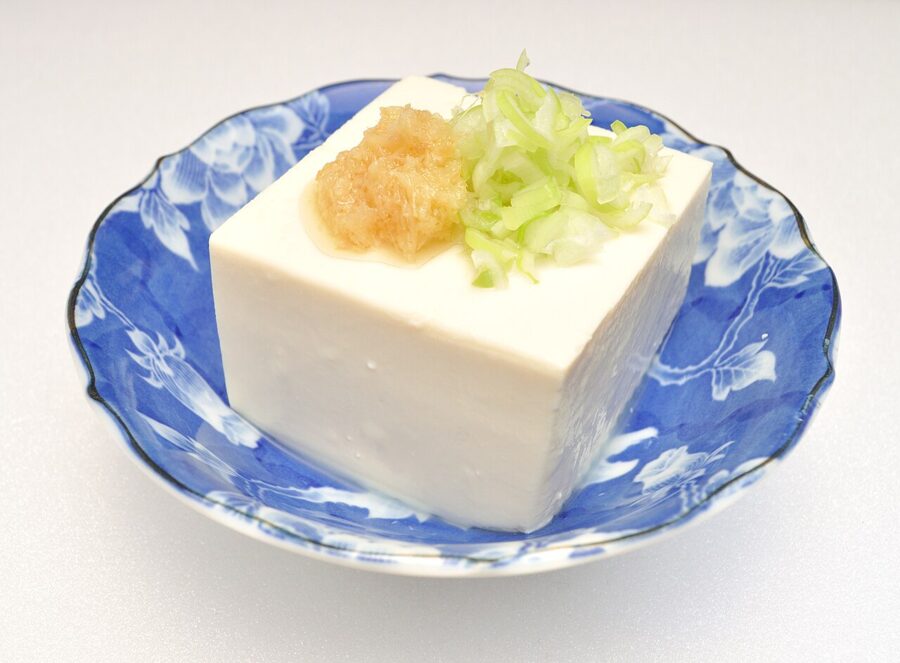
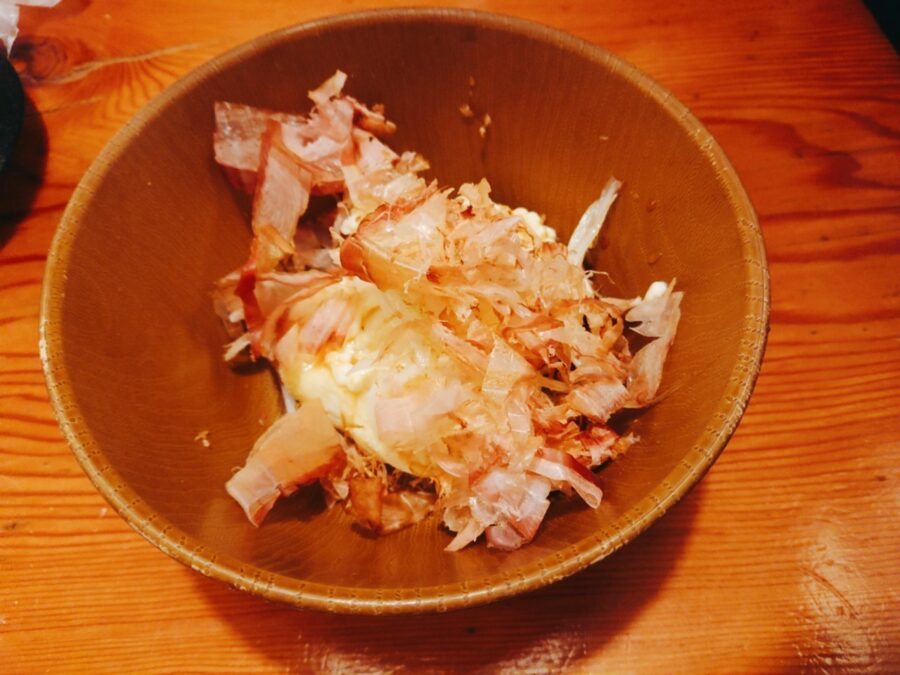
Edamame is the reflex order and earns its place: salty, and something to do with your hands while you read the menu. Hiyayakko is cold tofu with ginger and green onion. Potato salad in an izakaya is its own thing, mashed rough with cucumber and onion and sometimes a soft egg, and most regulars order it without looking.

Sashimi
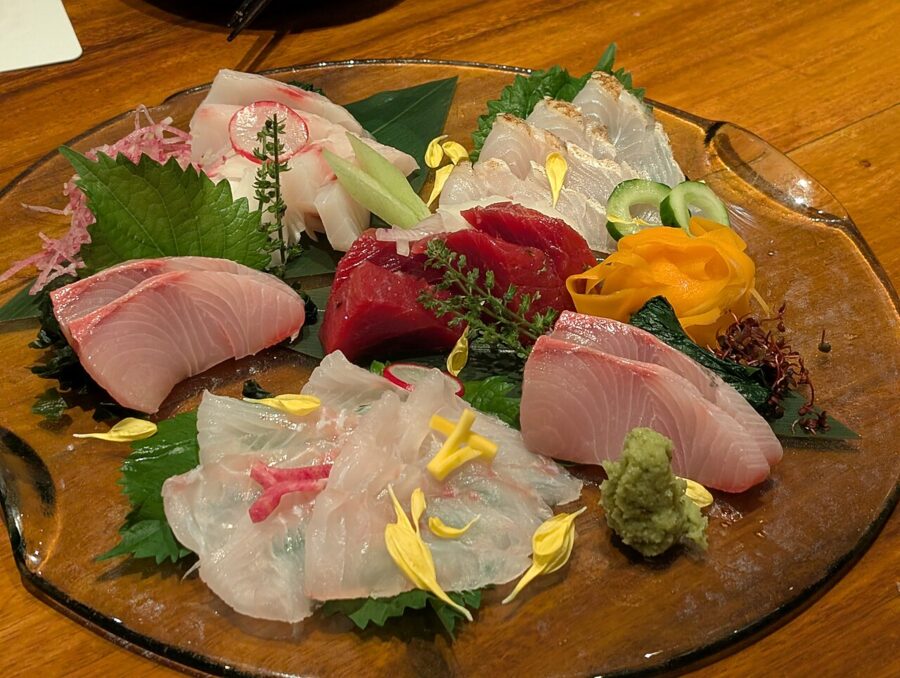
A mixed sashimi plate, 刺身盛り合わせ (sashimi moriawase), shows what the fish counter bought that day. Ask for the smaller size if you are two. At a chain, keep expectations modest and lean on the grill instead.
Yakitori and the grill
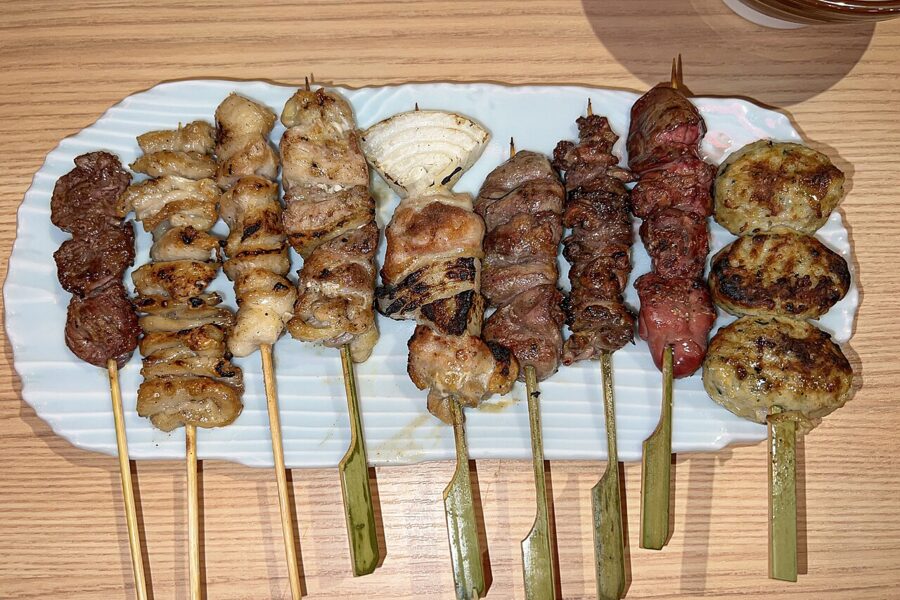
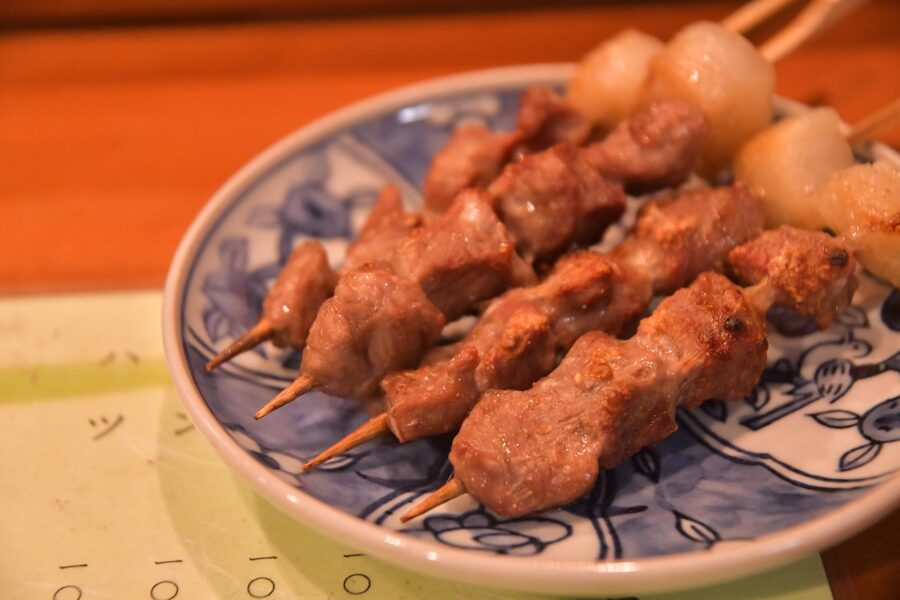
Yakitori is chicken on bamboo skewers grilled over charcoal: thigh with leek (negima), meatballs (tsukune), skin (kawa), liver (reba), gizzard (sunagimo), heart (hatsu). Order by the skewer, one or two of each. Salt shows off good chicken; tare, the sweet soy glaze, suits liver and meatballs.

Karaage and agedashi tofu
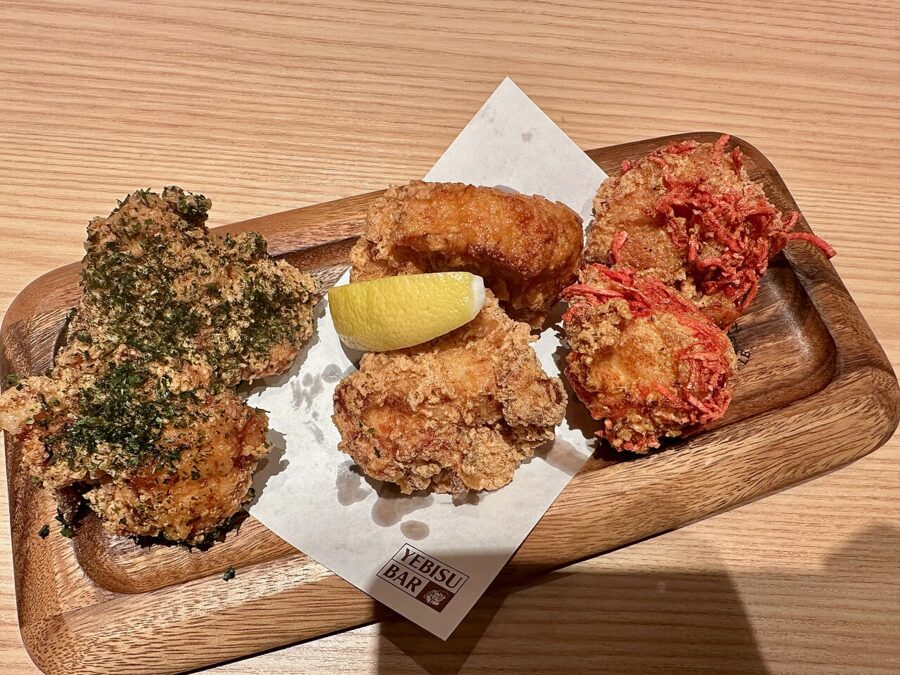
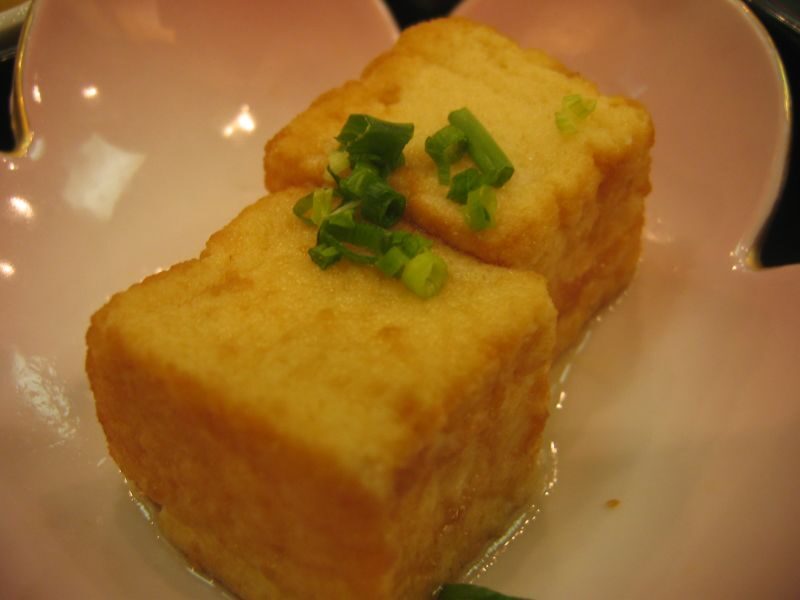
Karaage is chicken thigh marinated in soy, ginger and garlic, dusted in starch and fried, usually with a wedge of lemon on the side. Ask before squeezing it over a shared plate, since some people like it dry. Agedashi tofu is the gentler fried dish: blocks of tofu coated in starch, fried, then set in warm dashi with grated daikon and green onion, so the crust goes soft at the edges.


Tamagoyaki and the simmered pots
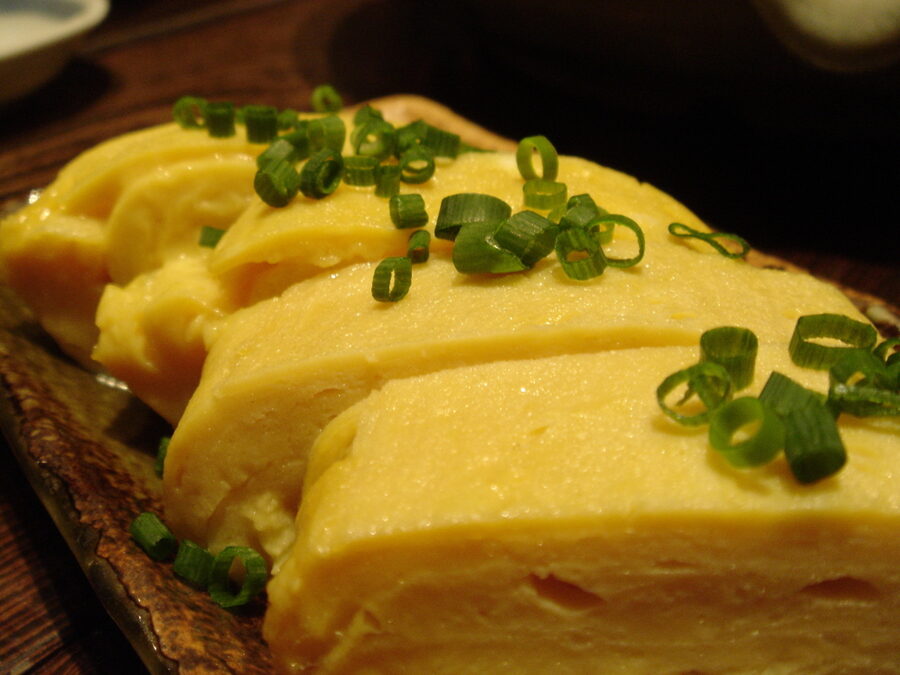
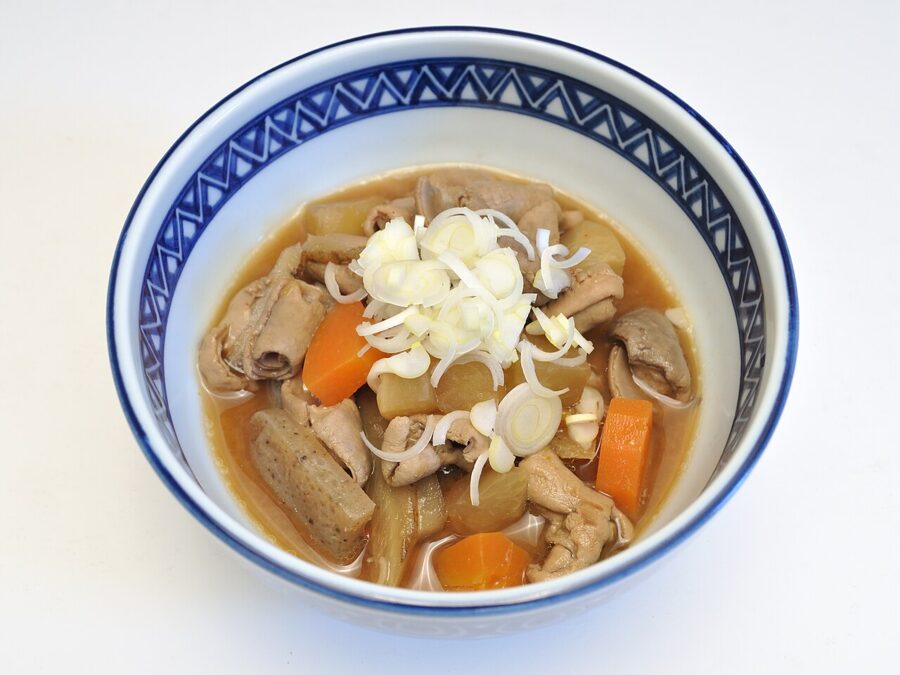
Tamagoyaki is a rolled omelet; the izakaya version is usually だし巻き卵 (dashimaki tamago), made with dashi so it is soft and wobbly and runs juice when you cut it. It comes with grated daikon and soy. Motsu nikomi, pork offal stewed for hours with daikon and konnyaku in miso or soy, is the dish of the old Tokyo drinking alleys. In winter, many izakaya keep a pot of oden going.

The shime
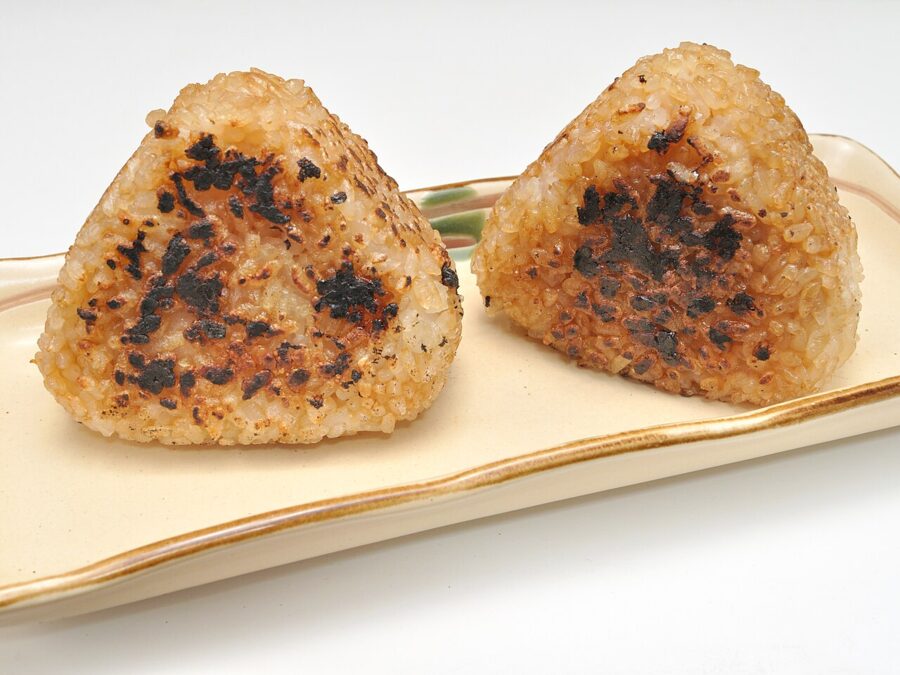
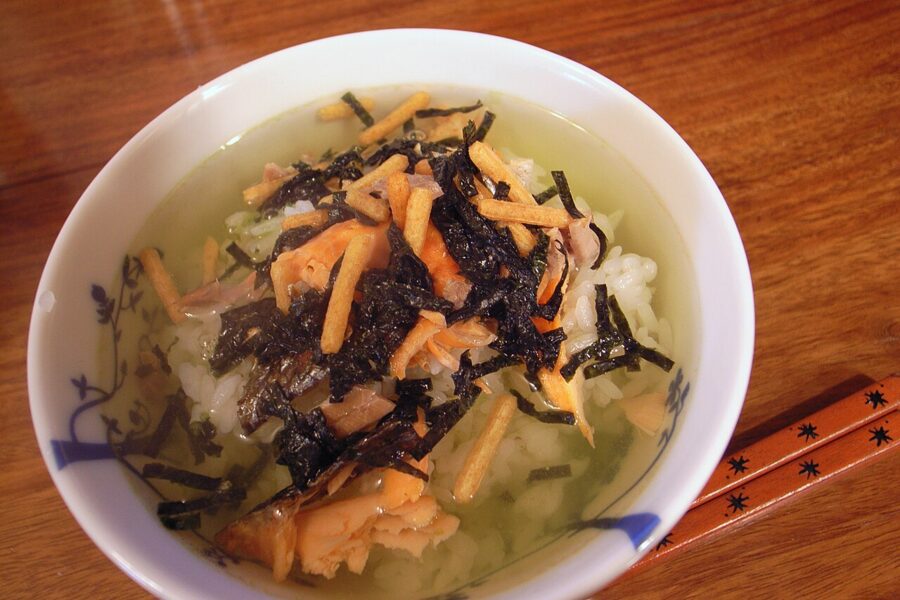
〆 (shime) means “closing,” and it is the rice or noodles that ends the meal. Yaki onigiri are rice balls brushed with soy and grilled until the outside crackles. Ochazuke is rice in hot green tea or dashi with salmon, pickled plum or seaweed on top. Some tables skip it and walk to a ramen counter instead, which is its own tradition.

The drinks
The legal drinking age in Japan is 20. Below it, or if you are not drinking at all, an izakaya is still fine: oolong tea, soft drinks and alcohol-free beer are on every menu, and nobody will mind.
Beer
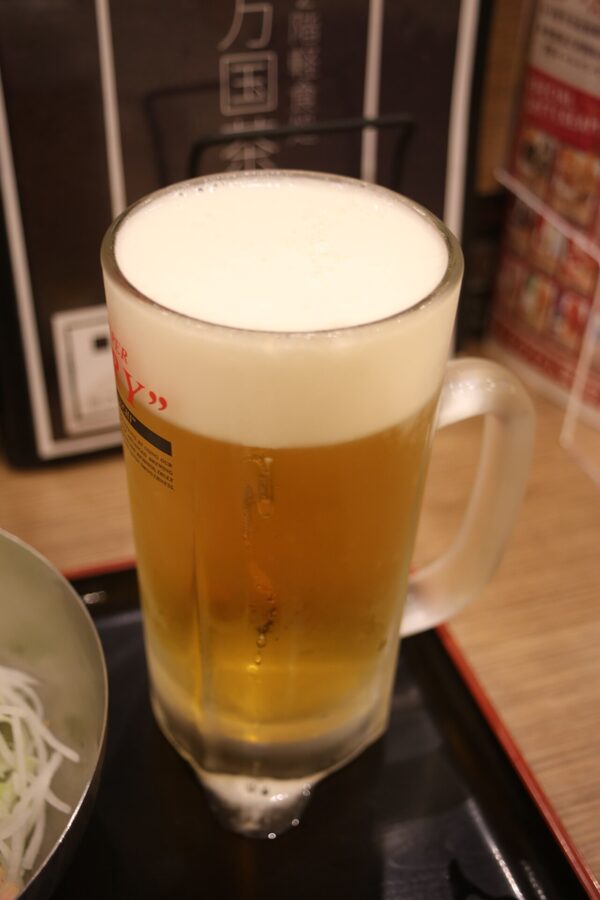
生ビール (nama biru) is draft beer, almost always a crisp lager from one of the big brewers, served in a frozen mug. Bottles (瓶ビール, bin biru) are for sharing.

Highballs and sours
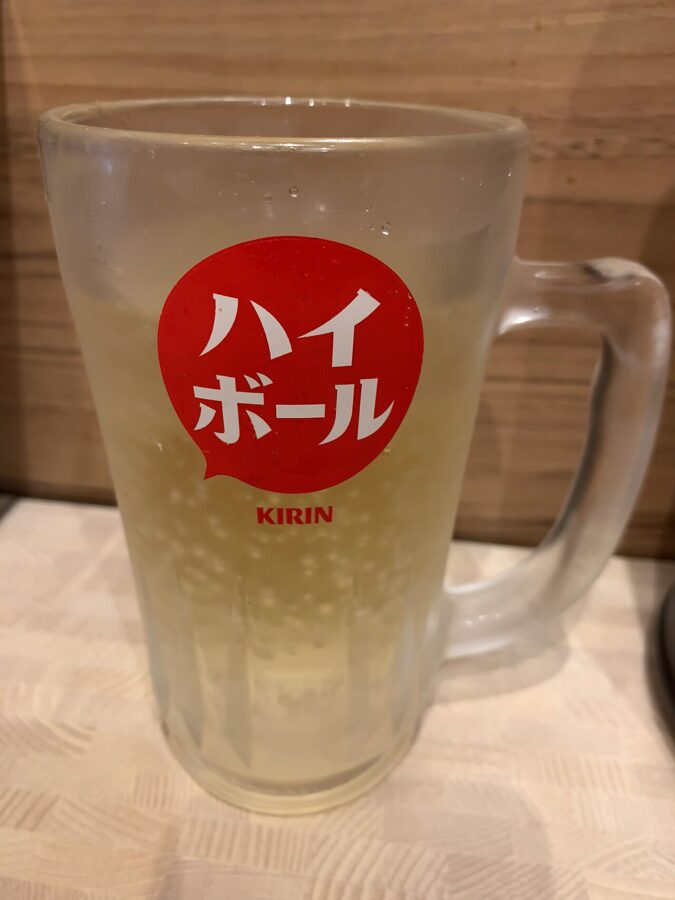
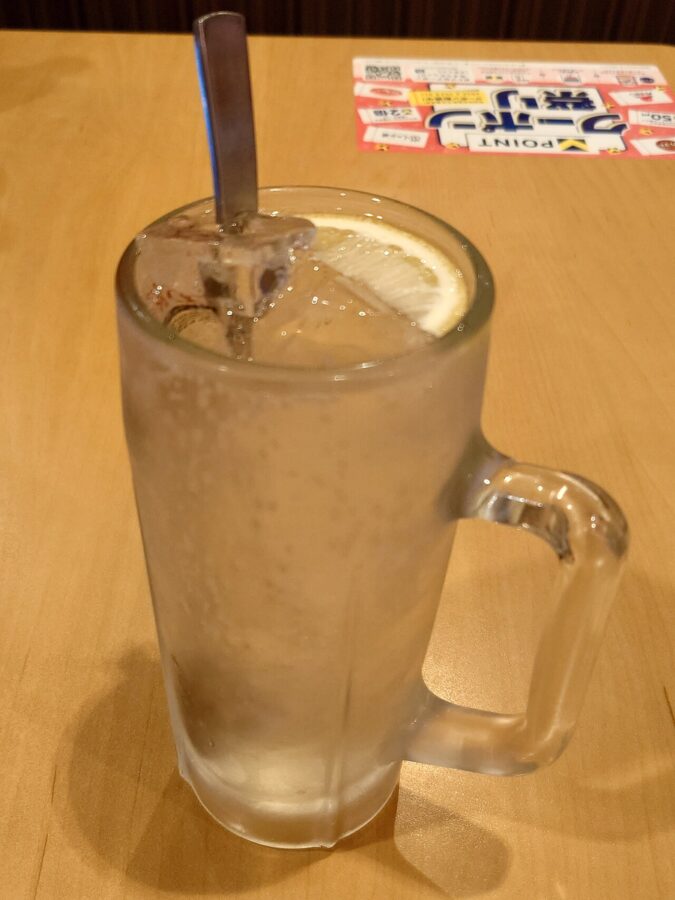
A ハイボール (haibōru, highball) is whisky and soda water in a tall mug with ice, often with a twist of lemon. It drinks like a light beer and goes with fried food. Sours (サワー, sawa) and chuhai are shochu with soda and fruit: lemon above all, also grapefruit, plum and green tea. Many izakaya now sell an unsweetened lemon sour, which is worth trying.


Sake
日本酒 (nihonshu) is what Japanese call sake. You can have it warm (熱燗, atsukan), at room temperature (常温, jo-on, though older menus write 冷や, hiya) or chilled (冷酒, reishu). It comes in a carafe (徳利, tokkuri) with small cups, or poured to overflowing into a glass standing in a square wooden box.
The labels follow a legal scheme. 純米 (junmai) sake is made from rice, rice koji and water only; 本醸造 (honjozo) adds a little distilled alcohol and uses rice polished to 70 percent of its weight or less. 吟醸 (ginjo) uses rice polished to 60 percent or less and 大吟醸 (daiginjo) to 50 percent or less, which generally makes them lighter and more fragrant. For food, I would order a junmai and ask for it warm with the simmered dishes.
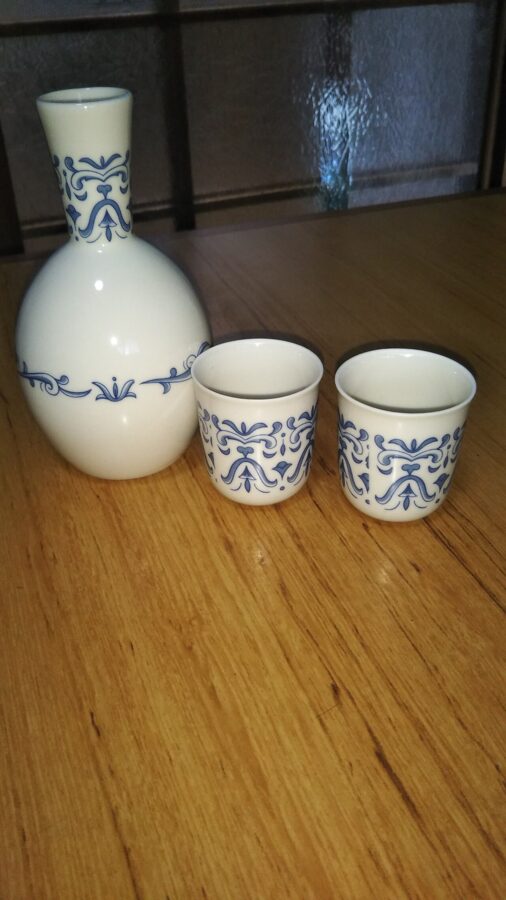

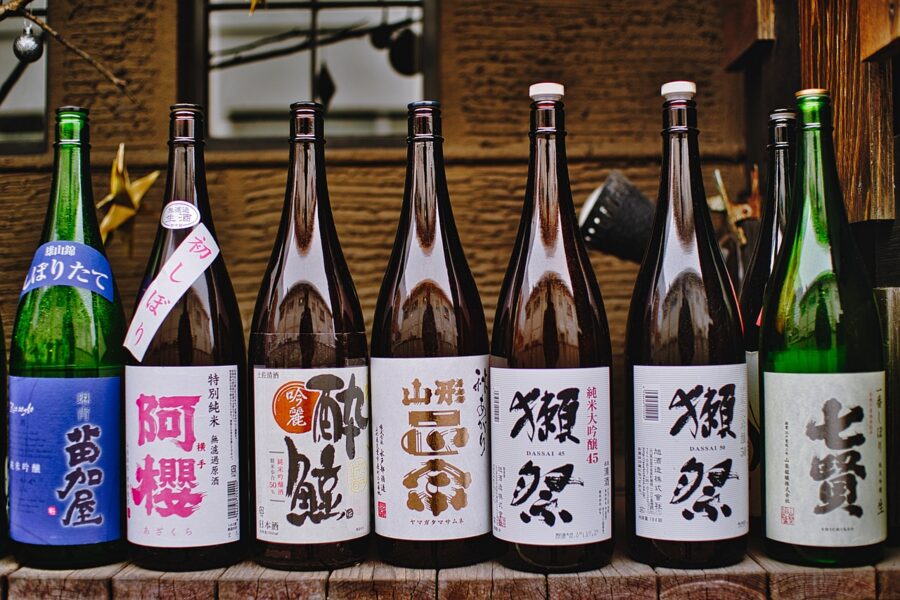
Shochu and umeshu
焼酎 (shochu) is a distilled spirit made from sweet potato (imo), barley (mugi), rice (kome) or brown sugar, usually around 25 percent alcohol. Drink it on the rocks (ロック, rokku), with water (水割り, mizuwari) or with hot water (お湯割り, oyuwari), which is the classic winter order. 梅酒 (umeshu) is ume, a Japanese plum, steeped in spirit or sake with sugar. It is sweet and fragrant, and best on the rocks or with soda.
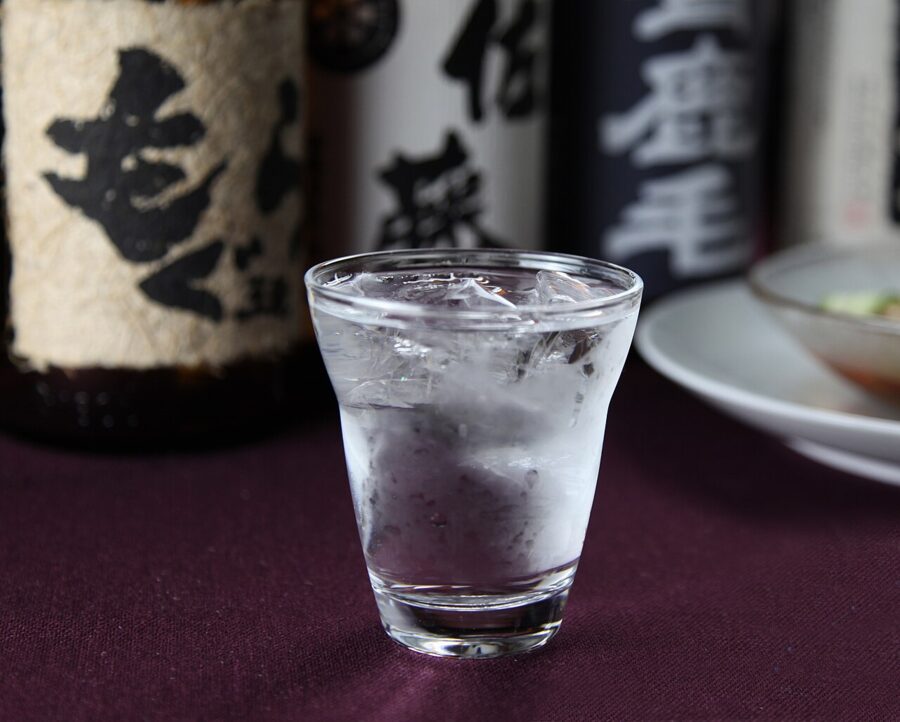
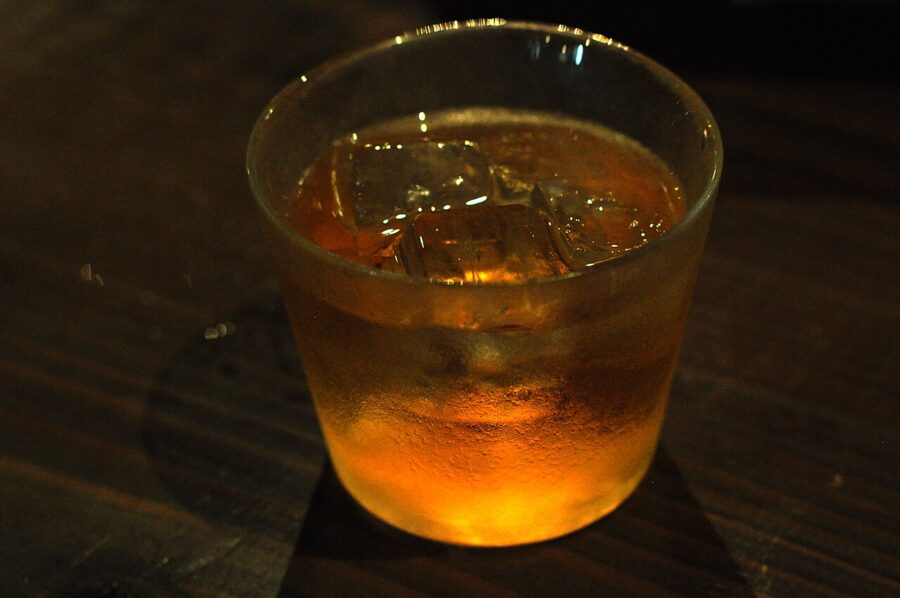

Chains or the small place
Izakaya chains spread across Japan from the 1980s, and they are where most office parties and student nights happen: big rooms, tablet menus, long nomihodai lists, prices you can predict. Torikizoku is the best-known for value: every food and drink item on its regular menu sells at one price, ¥410 (about US$3) since October 1, 2026, up from ¥390, and the company says every ingredient on its food menu has been sourced in Japan since 2016.
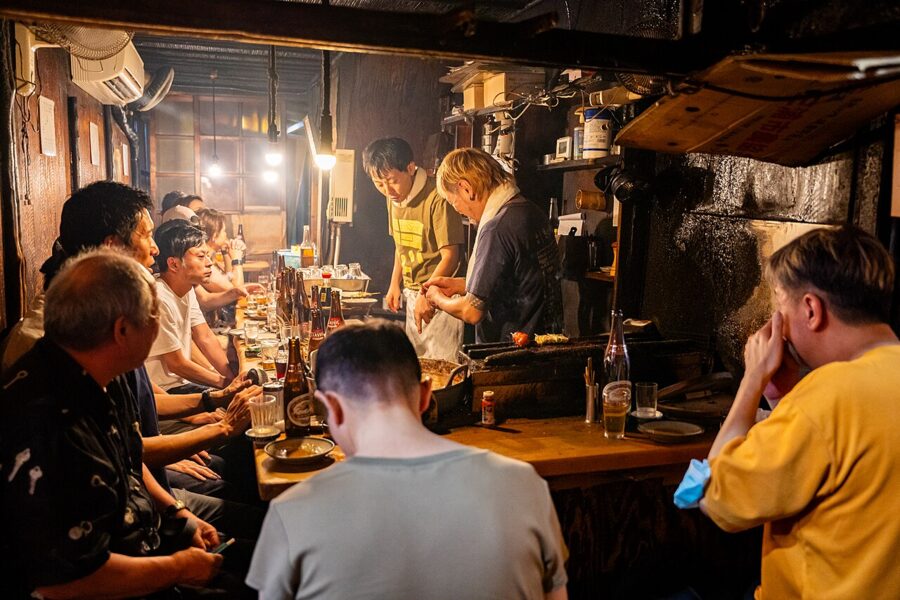
The small place is the other world: one counter, a cook who is also the owner, a menu that changes with the market. Prices are not always posted and the menu may be in Japanese only, but the cooking can be far better than at any chain. Go in twos, sit at the counter and order what the cook is making.
If you have only one night, I would skip the chain and find the counter. If you are six people with no Japanese, a chain is the easy and sensible choice.
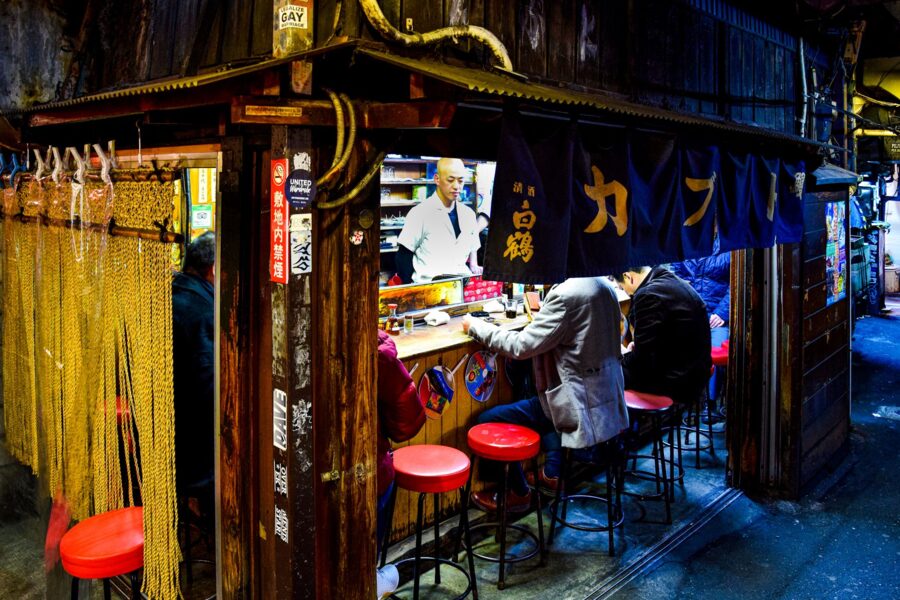
Smoking since 2020
Since April 1, 2020, under the revised national Health Promotion Act and Tokyo’s own ordinance, indoor smoking in restaurants and izakaya is banned in principle. The exception is the small old shop. A place already open on that date, with no more than 100 square meters of seating and run by an individual or a company capitalized at ¥50 million or less, can register as a smoking-permitted shop. Tokyo adds one more condition: the shop must have no employees.
Shops with staff in Tokyo may have only a sealed smoking room where you cannot eat or drink, or a heated-tobacco room where you can. Every restaurant must post a sign at the door saying which it is, and nobody under 20 may enter a smoking room or a smoking-permitted shop, staff included. Outside Tokyo, small old shops can still allow smoking with staff present, so check the sign if smoke bothers you or you have teenagers with you.
Reservations and groups
For two on a weeknight, walk in, ideally before the after-work crowd. For groups of four or more, Friday nights and the December party season, book. Chains and larger izakaya take bookings online through reservation sites, often with a course and nomihodai attached; small places by phone or not at all.
Turning up late or not at all for a booking hurts a small kitchen that has prepared for you. If plans change, call.
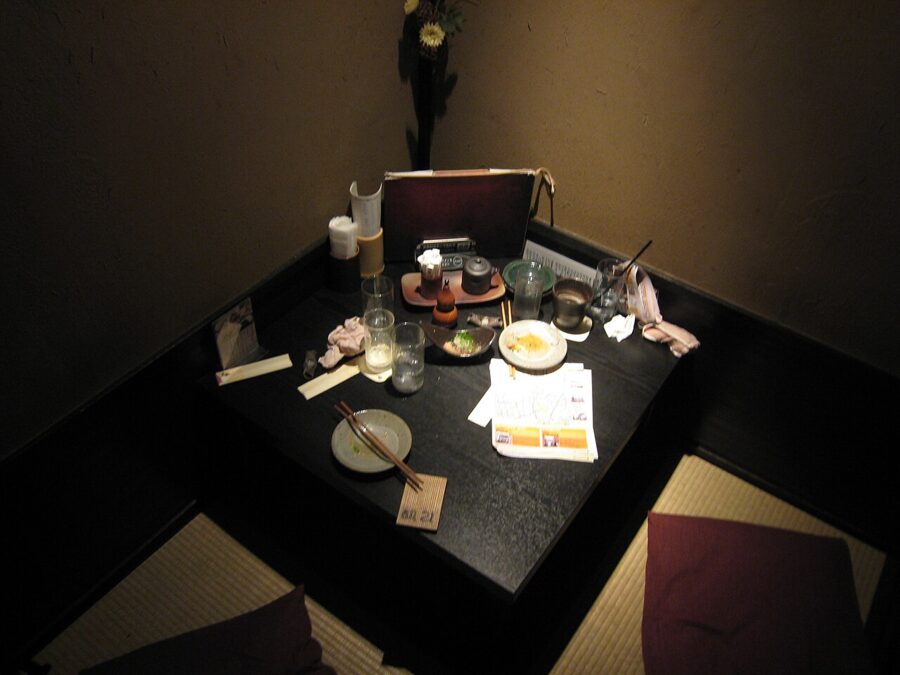
Where to find them: the alleys
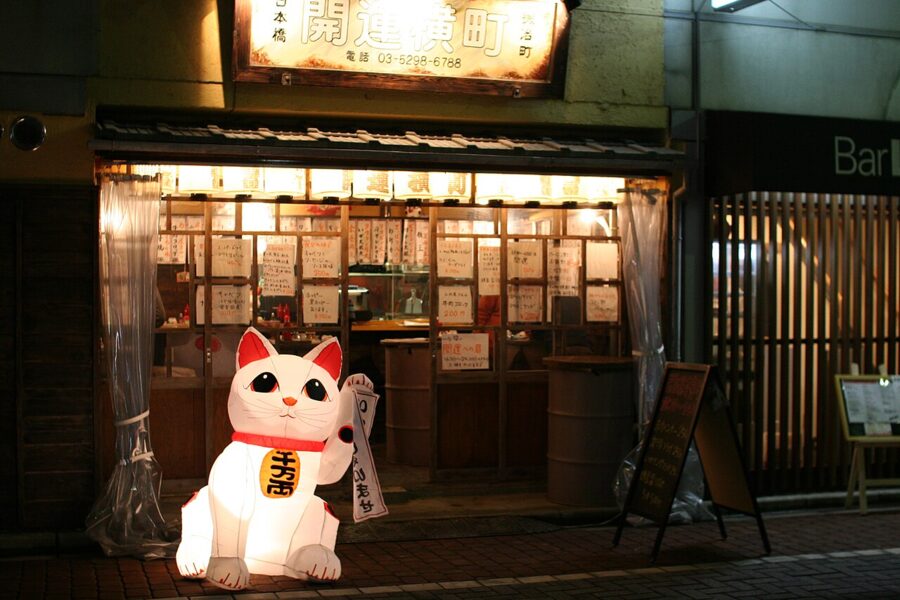
Every station of any size in Japan has izakaya within a few minutes’ walk. The most rewarding to wander are the 横丁 (yokocho), narrow alleys or covered lanes packed with tiny bars, many of them built on the sites of postwar markets.
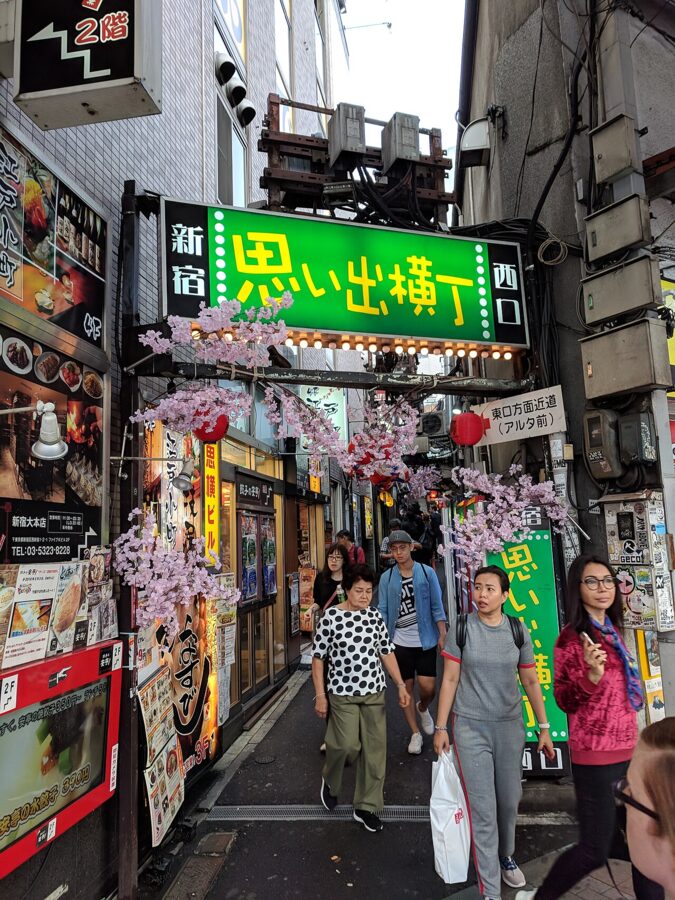

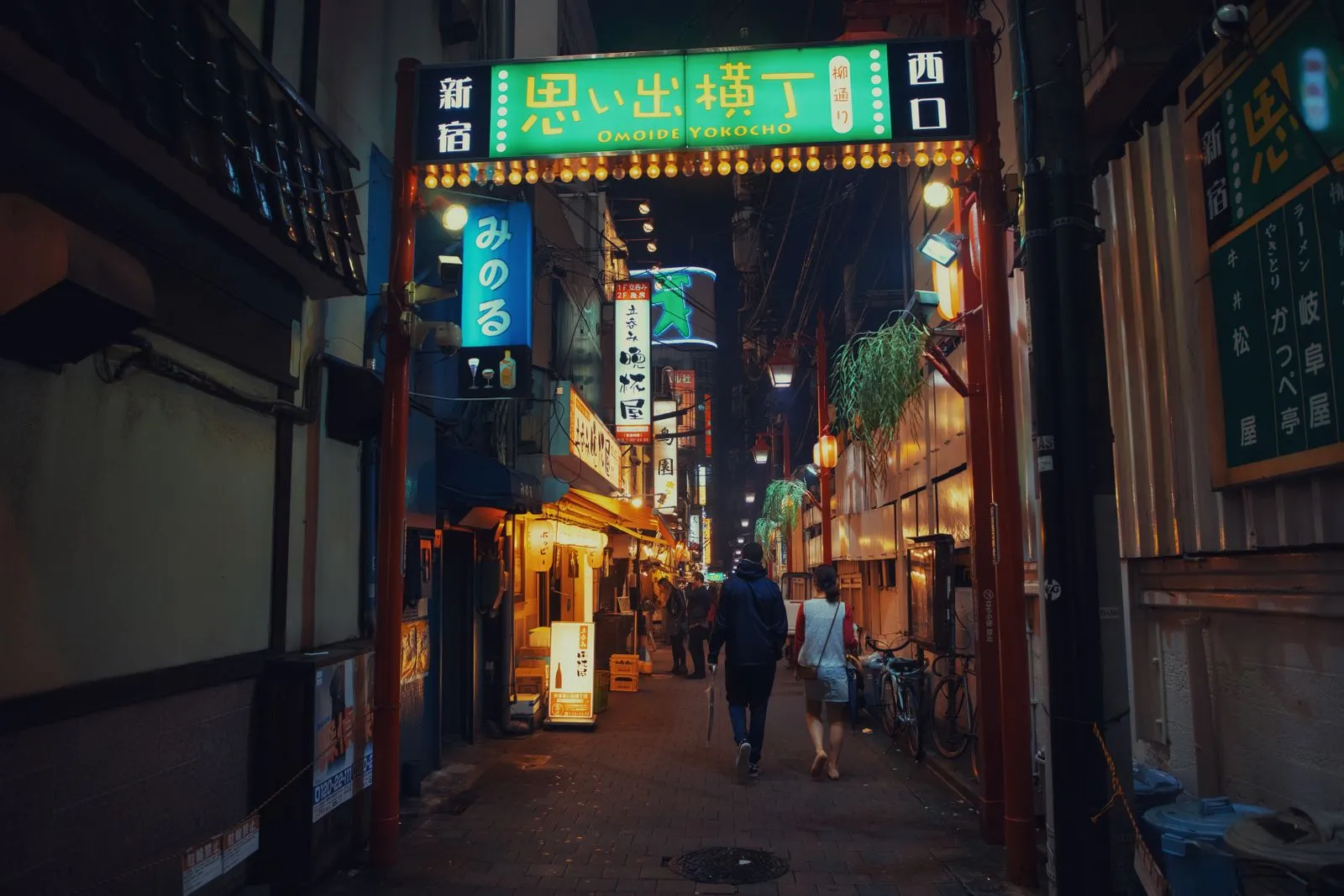
Omoide Yokocho, Shinjuku
Omoide Yokocho, “Memory Lane,” sits by the West Exit of Shinjuku Station. It began as a street market on burned-out ground right after the Second World War and now holds about 80 premises, some 60 of them bars and restaurants, mostly motsuyaki (grilled offal) and yakitori. A fire on November 24, 1999 burned 28 of the alley’s shops, and the street association now marks that date as Omoide Yokocho Day.
Most shops seat fewer than a dozen. Expect smoke from the grills, a short stay and prices that reflect the address. Photo crews need the association’s permission in advance and tripods and flash are banned under its filming rules. With a phone camera, keep it short and do not point it into people’s faces at the counters.
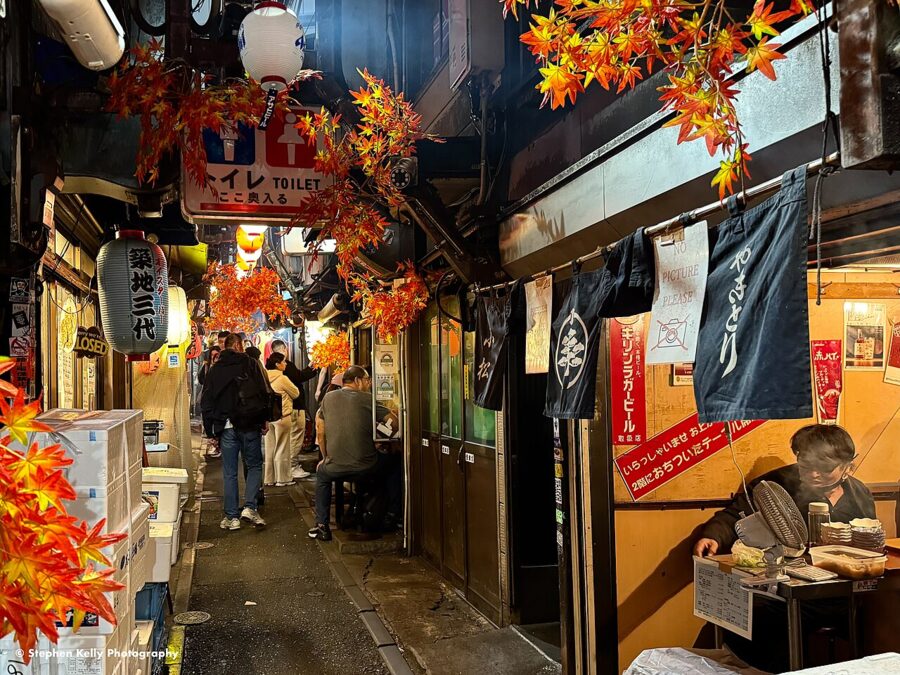

Ebisu Yokocho, Tokyo
Ebisu Yokocho is a lane of small bars about two minutes’ walk from the East Exit of JR Ebisu Station, on the site of what was once the Yamashita shopping center. Around twenty small shops share it: Kyoto-style oden, a Hakata-style izakaya, kushiage skewers, a mushroom kitchen, horse-meat dishes, a wine bar. Hours and bookings are handled by each shop, not the lane, so check the shop list before you go.
Ura-Namba, Osaka
Ura-Namba, “back Namba,” is the grid of small streets behind Osaka’s Namba district, roughly between Sennichimae-dori and Nansan-dori, from Takashimaya east to Kuromon Market. It is a neighborhood rather than a single alley, lined with small, reasonably priced shops: standing bars, seafood izakaya and skewer counters. Here the small first dish is tsukidashi, not otoshi, and nobody will mind which word you use.
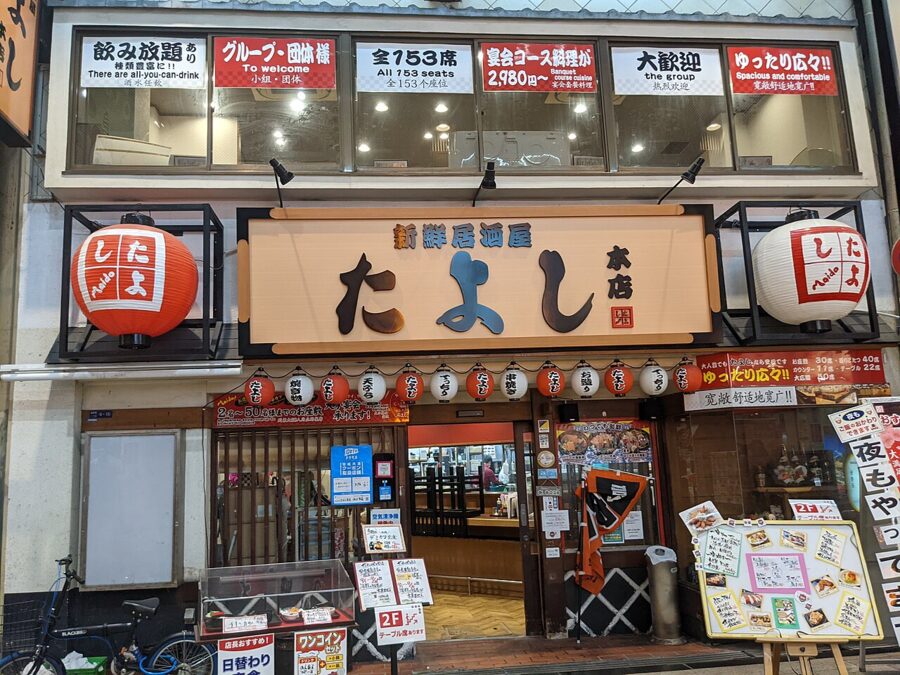

Hakata, Fukuoka
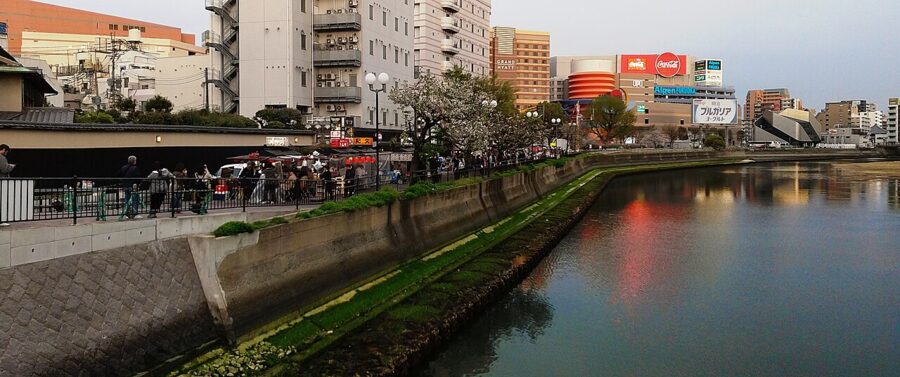
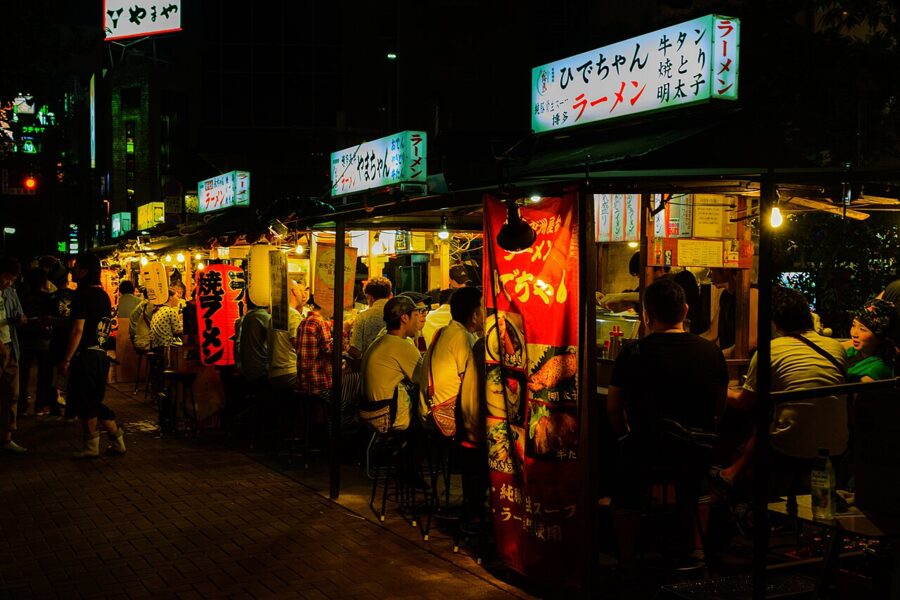
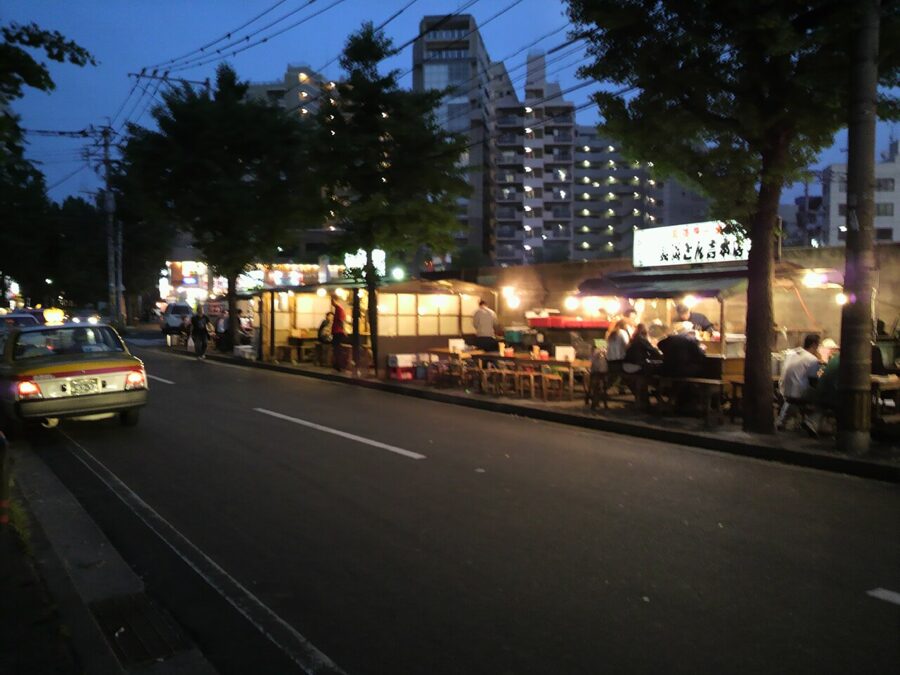
Fukuoka’s answer to the yokocho is the 屋台 (yatai), the street stall that sets up each evening and packs away by morning. About 100 yatai operate in the city, the best known along the Naka River at Nakasu, in Tenjin, and in Nagahama, whose stall street was revived in 2023. A yatai is not an izakaya, but it works like a very small one: a handful of seats, beer and shochu, oden and yakitori, and Hakata ramen to finish.
Sit close, order a drink each and give up the seat when you are done, since there is usually a queue behind you. The Hakata and Nakasu districts also have ordinary izakaya on every block, good for the local mentaiko and motsunabe, offal hot pot, when the stalls are full.


Manners that matter
Very little goes wrong at an izakaya if you are friendly and pay attention.
- Wait for kanpai. When the first drinks arrive, everyone raises a glass and says 乾杯 (kanpai) before anyone drinks.
- Pour for others. With bottles and sake, fill your neighbors’ glasses and let them fill yours. Hold your glass up a little when someone pours.
- Order a drink each. An izakaya makes its living on drinks. Sitting for two hours with one glass of water between four is poor form.
- Share plates. Dishes go in the middle. Use the serving chopsticks if there are any, never pass food chopstick to chopstick, and do not stand chopsticks upright in rice.
- Shoes off where there is a step. Low tables on tatami and the sunken tables called horigotatsu mean shoes off at the edge.
- Mind the time. Many places set a two-hour limit on busy nights. When the staff mention it, finish up.
- Say thanks on the way out. ごちそうさまでした (gochisosama deshita) to the counter is the polite way to leave.
What does not matter: noise, which is part of the room; finishing every plate; or saying the wrong word for the small dish. Nobody expects you to know which skewer is the heart.

Next time the door slides open and a small dish lands next to your beer, you will know what it costs and why it is there. Order the edamame, then whatever is on the board, and when last orders are called, ask for rice.