
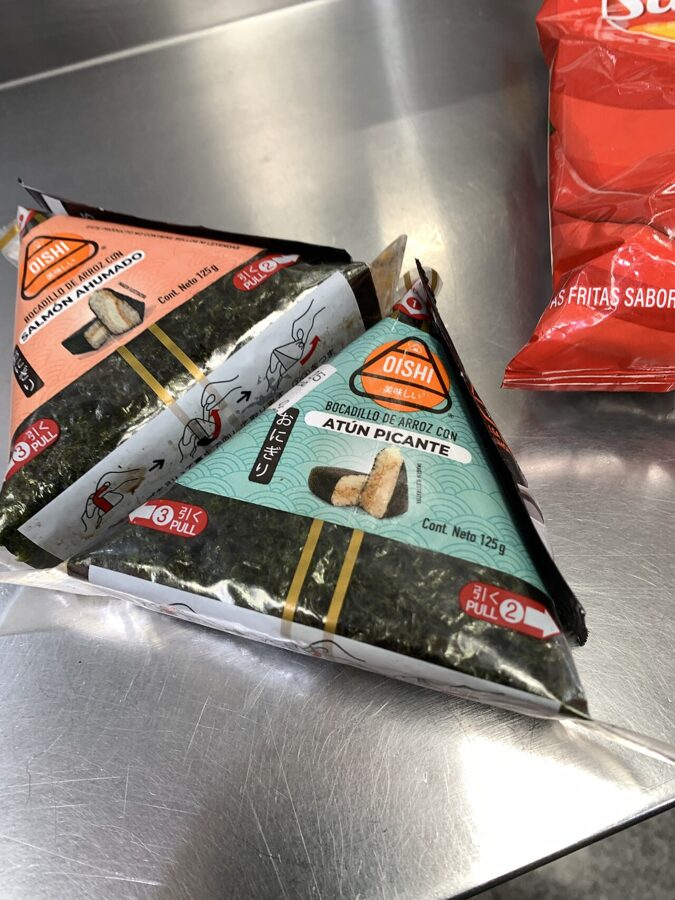
A konbini onigiri comes apart in three pulls, and the order is printed on the plastic. Tab 1 runs down the middle: pull it and the film splits in two. Tab 2 and tab 3 slide the halves off the corners, and the sheet of nori that has been sealed away from the rice all morning settles onto it dry. Done right, the first bite cracks.
Done wrong, you are holding a damp triangle of rice in one hand and a crumpled square of seaweed in the other, which is how most people meet the thing. It still tastes fine. At a 7-Eleven in the Tokyo area the tuna mayonnaise one costs ¥196.56 with tax (about US$1.25) as of November 2026, and it was the best seller at each of the big chains in their latest yearly count.
Behind that small engineered package is a rice ball older than writing in Japan, a handful of fillings people argue about, counters where onigiri are pressed while you watch, and the convenience store itself, which in Japan is a serious place to eat.

What an onigiri is
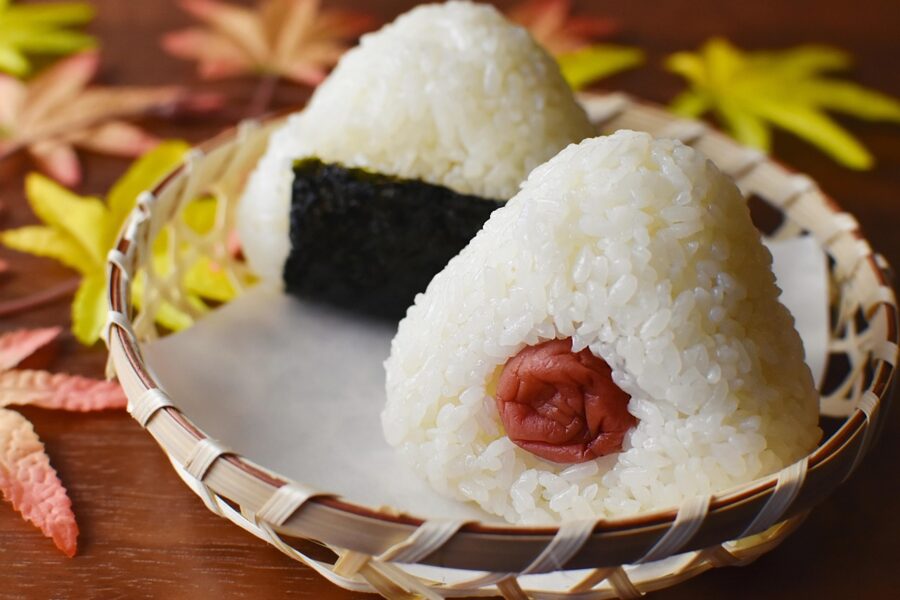
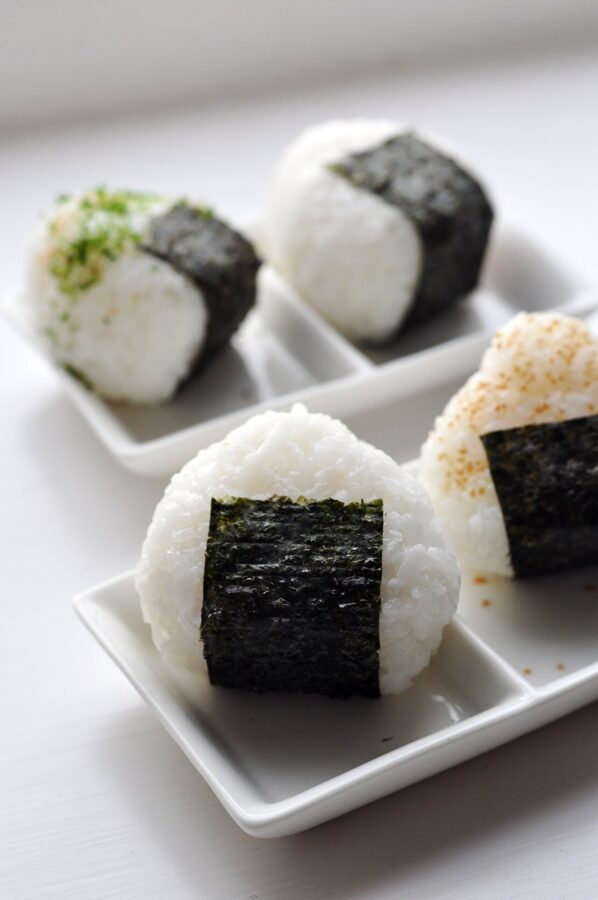
An onigiri is cooked short-grain rice pressed by hand into a shape you can hold, usually a triangle, sometimes a ball or a flat drum. The cook wets their palms, rubs on a pinch of salt and squeezes the rice warm, so the salt seasons only the outside. A filling goes into the middle, and a strip of nori goes around it, either at once or just before eating.
The name has nothing to do with oni, the demon. おにぎり (onigiri) comes from 握る (nigiru, “to grip” or “to squeeze”) with the polite o- in front; the older word, 握飯 (nigiri-ii), turns up in the eighth-century Hitachi Fudoki. The other common name, おむすび (omusubi), comes from 結ぶ (musubu, “to tie”). Both are in daily use, and the chains cannot agree either: FamilyMart calls every one omusubi, while 7-Eleven sells “temaki onigiri” and “jikamaki omusubi” on the same shelf.
The rice ball is also older than any of those words. In November 1987, archaeologists at the Sugitani Chanobatake site in what is now Nakanoto, Ishikawa, dug up a blackened, palm-sized cone of steamed rice from a Yayoi-period dwelling. The town of Rokusei, as it was then, called itself the home of onigiri and named June 18 Onigiri Day; the find was steamed glutinous rice, closer to a chimaki than to anything on a konbini shelf.
An onigiri is not sushi: there is no vinegar in the rice. Nor does it need a filling. 塩むすび (shio musubi, “salt rice ball”) is just rice and salt, and it is the cleanest test of whether a shop’s rice is any good.

Crisp nori or soft nori
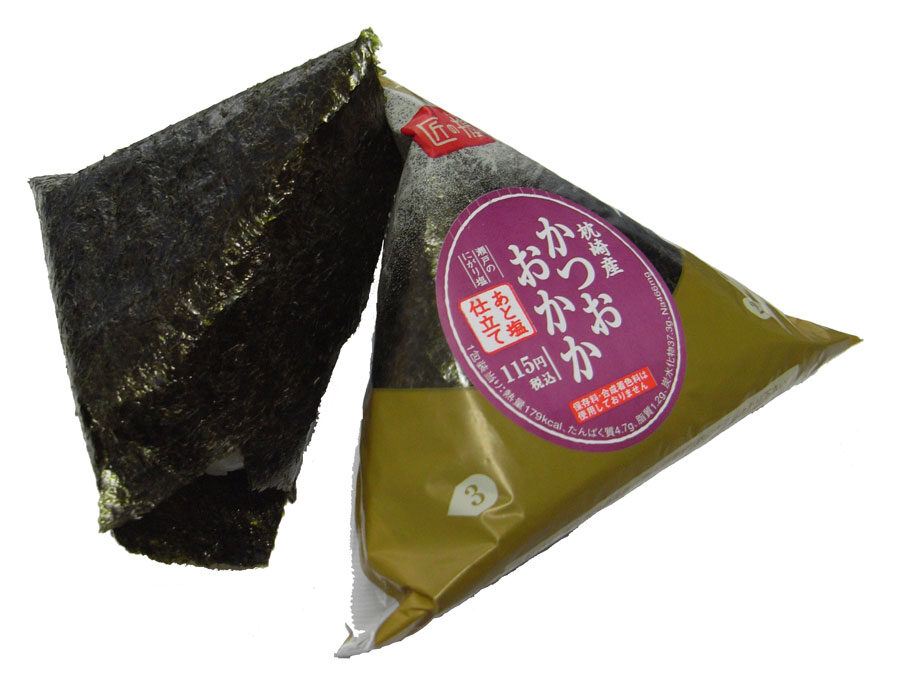
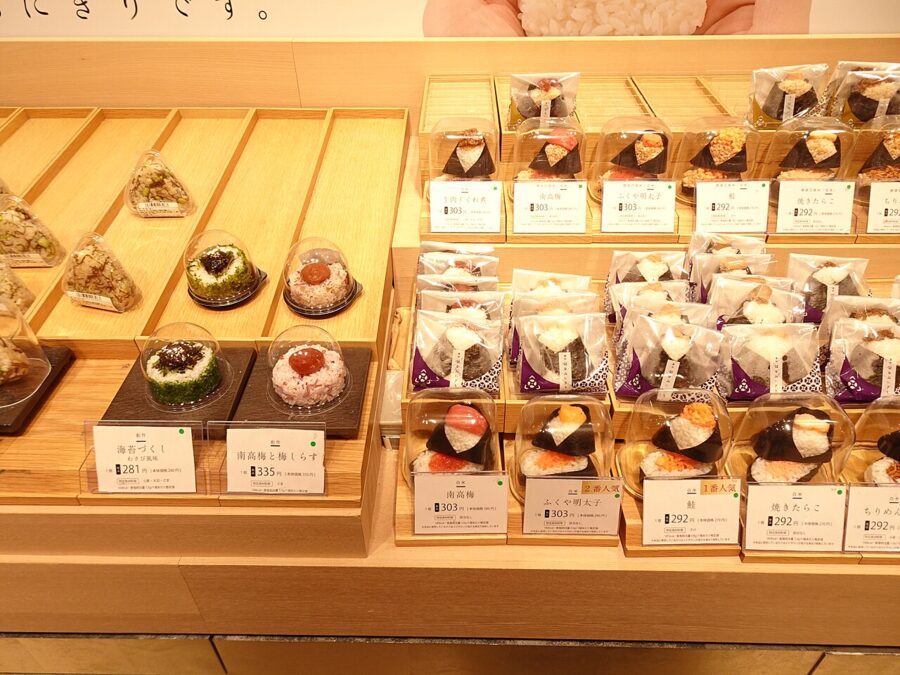
The konbini splits onigiri into two families, and the label tells you which. 手巻 (temaki, “hand-rolled”) means the nori is sealed away from the rice by film and goes on when you open it: crisp, a little brittle, smelling of the sea. 直巻 (jikamaki, “directly wrapped”) means the nori was wrapped straight onto the rice at the factory and has gone soft and chewy, the way a home-packed onigiri is by lunchtime.
I take temaki for salmon and plum, where the crack matters, and jikamaki for rich fillings like mentaiko mayonnaise. The film that made crisp nori possible on a shelf arrived in 1978, when 7-Eleven Japan put it on its hand-rolled onigiri; the chain had sold rice balls since its first shop opened in Toyosu, Tokyo, in May 1974.
How to open a konbini onigiri
The numbered tabs are printed on every temaki wrapper, and they work only in order:
- 1. Pull the center strip straight down from the top, all the way to the bottom. The film is now in two halves.
- 2. Pull the left corner outward and away. Hold the rice lightly; squeezing it drags the nori with the plastic.
- 3. Pull the right corner the same way, then press the nori gently onto the rice with your fingers.
If the nori tears, step 1 usually stopped halfway. Jikamaki wrappers have no numbers: tear along the marked line and peel. Round and oversized onigiri use other films, with arrows to follow.
The fillings
The filling, 具 (gu), is named on the label in kanji or katakana. The Onigiri Association, a Kamakura-based promotion body, surveys the big chains every year; in its 2025 results tuna mayonnaise was the top seller at all four that answered, with salmon and kombu close behind. The same survey tracked prices: the top onigiri at each chain rose by ¥24 to ¥50 (about US$0.15 to US$0.30) in a year, as rice and nori costs climbed.
| Filling | Japanese | What it is | What it tastes like |
|---|---|---|---|
| Umeboshi | 梅干し (umeboshi, “dried plum”) | A salted, sun-dried ume, often with red shiso | Sharply sour and salty; the oldest and best keeper |
| Shake (or sake) | 鮭 (shake, “salmon”) | Salted salmon, grilled and flaked | Savory, gently smoky; the classic |
| Tuna mayo | ツナマヨ (tsuna mayo) | Canned tuna mixed with Japanese mayonnaise | Rich and mild; the national best seller |
| Kombu | 昆布 (kombu, “kelp”) | Kelp simmered in soy and sugar (tsukudani) | Sweet-salty and chewy |
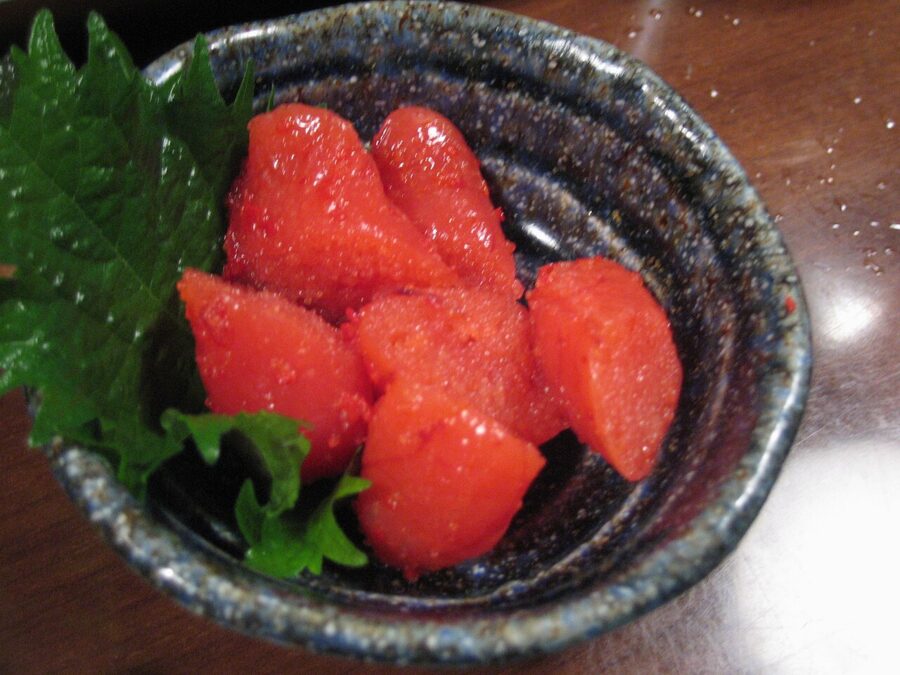
| Mentaiko | 明太子 (mentaiko) | Pollock roe cured with chili | Spicy, briny, fine-grained |
| Tarako | たらこ (tarako) | The same roe salted, without chili, often grilled | Milder and saltier than mentaiko |
| Okaka | おかか (okaka) | Bonito flakes moistened with soy sauce | Smoky and deeply savory |
| Takana | 高菜 (takana) | Pickled mustard greens, sometimes with chili | Sour, crunchy, a little hot |
| Sujiko and ikura | 筋子・いくら (sujiko, ikura) | Salmon roe, in the sac or as loose beads | Salty pops; the luxury tier |
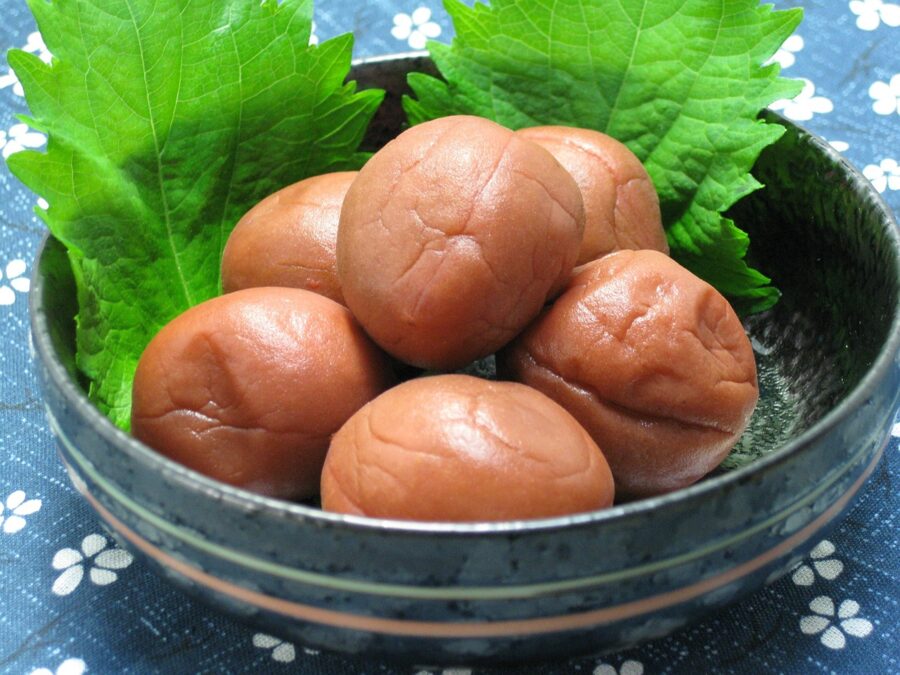
鮭 can be read “sake”, like the drink, but on a rice ball it always means salmon (the drink, sake, is written 酒). Labels also add pedigree: 紀州南高梅 is Nanko plum from Kishu, the old name for Wakayama.
Tuna mayonnaise went into a konbini onigiri in 1983 and is the right first one for anyone unsure. After that, try umeboshi once, with tea, and decide; it divides people more than any other filling.
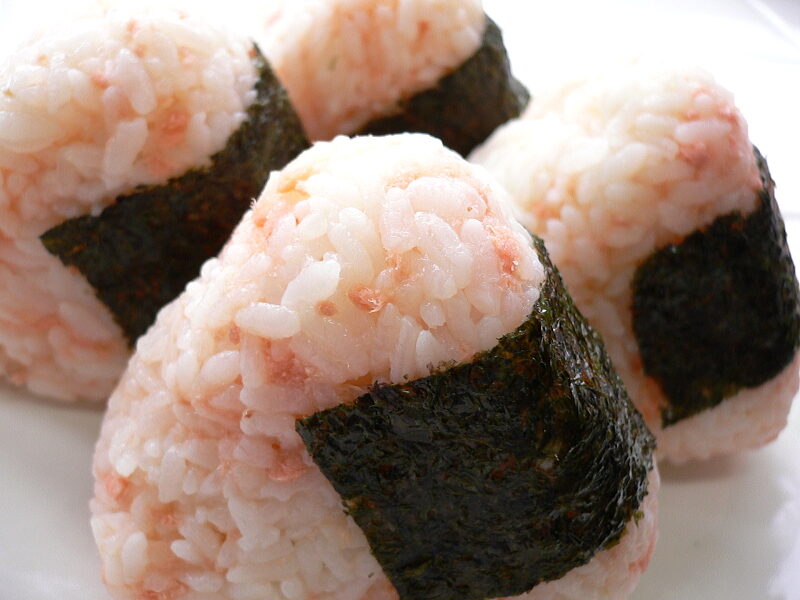

Mentaiko and okaka are the two I would steer a curious eater toward: the first for its slow chili heat and fine, sandy texture, the second for pure smoked bonito and soy.

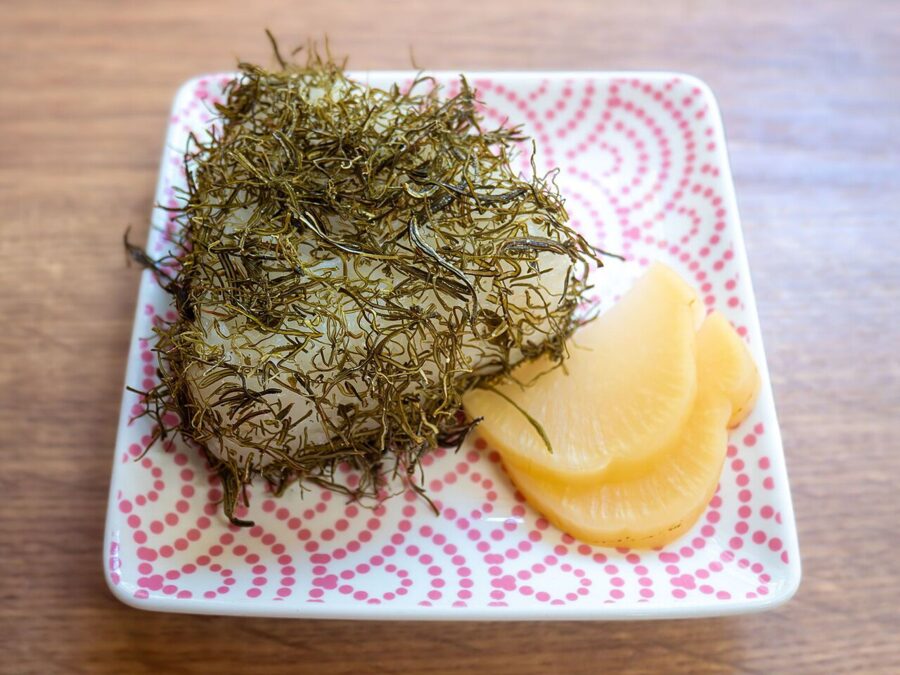

Specialist onigiri shops
A konbini onigiri is built to last a day on a cold shelf; an onigiri shop’s is built for the next ten minutes, warm and barely pressed.
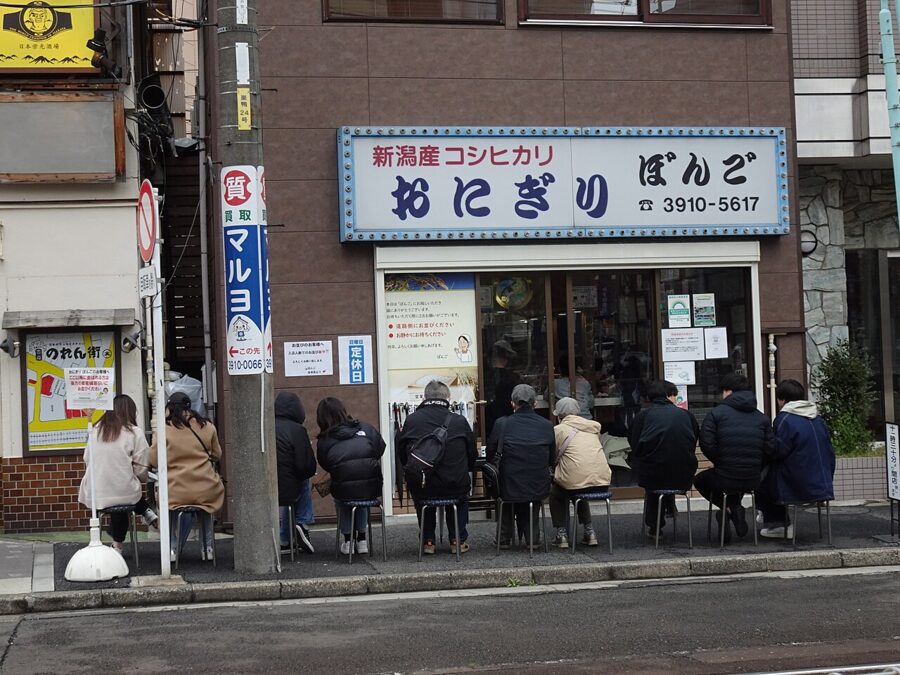
Onigiri Bongo, Otsuka
Onigiri Bongo (おにぎり ぼんご) opened in Otsuka in 1960 and now sits at Kita-Otsuka 2-27-5, two minutes from the north exit of JR Otsuka Station on the Yamanote Line. You sit at a counter like a sushi bar and choose from about 55 fillings.
The onigiri are big and barely squeezed. Its 2026 price list starts at ¥400 (about US$2.50) for salted rice with or without nori; salmon and minced meat with ginger are ¥500, and sujiko, the whole salmon roe, is ¥800 (about US$5). On weekdays from 9:00 to 14:00 there are sets: three ¥400 onigiri with tofu miso soup for ¥1,300 (about US$8), or two for ¥900 (about US$5.70), and soup refills are free.
The queue can run past an hour. Takeaway orders go by phone, first come first served; the 卵黄 (ran’ō, a whole egg yolk cured in soy sauce for four hours) is the one I would order to taste something no konbini makes. Bongo also supervised a line of FamilyMart omusubi in 2025.

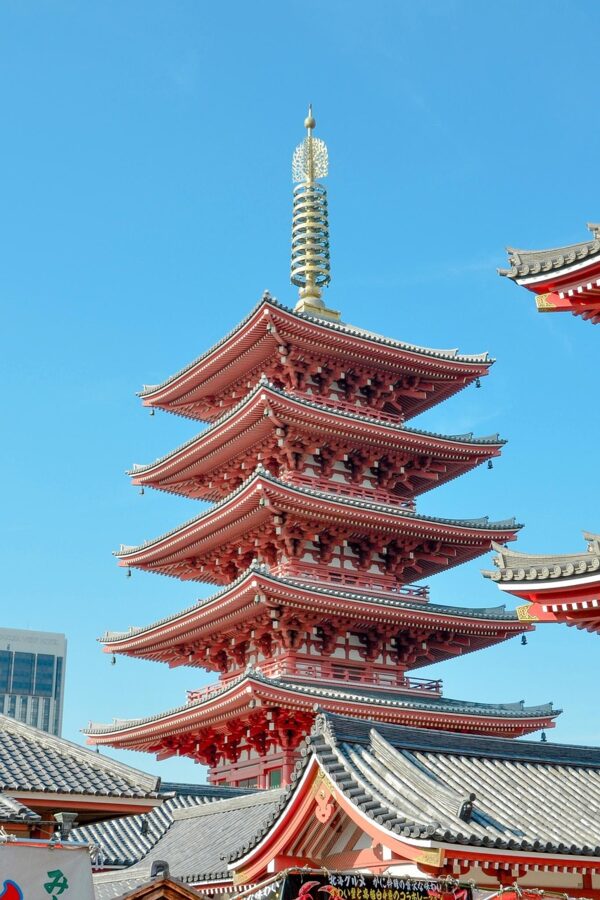
Onigiri Asakusa Yadoroku
Onigiri Asakusa Yadoroku (おにぎり浅草宿六) calls itself the oldest onigiri shop in Tokyo, open since 1954, when white rice was still a treat. It is at Asakusa 3-9-10 on Kototoi-dori, behind the main hall of Sensoji, with eight seats at the counter and two tables. The rice is Koshihikari cooked in a large pot, the nori comes from Tokyo Bay, and the onigiri are pressed to order.
Lunch starts at 11:30 and dinner at 17:00, both until the rice runs out. Lunch is closed on Sundays; dinner is closed on Sundays, Tuesdays and Wednesdays. The lunch set of two onigiri with tofu miso soup and takuan starts at ¥814 (about US$5), three at ¥1,100 (about US$7), and the shop takes no cards, as listed on its own site in November 2026.
Counters in stations and department stores
On the move, look for chains that sell only rice balls. Omusubi Gonbei (おむすび権米衛) has shops across the Tokyo area and opened a new one in Atre Nakano in November 2026. Its list runs from shio musubi at ¥130 (about US$0.80) to tenmusu, rice around a shrimp tempura, at ¥330 (about US$2).
In Osaka, the rice cooker maker Zojirushi runs Zojirushi Ginpaku Onigiri (象印銀白おにぎり), which cooks its rice in the company’s top-model cookers. The first counter opened in the basement food hall of the Hanshin Umeda department store in April 2022; a Kyobashi shop followed in September 2025 and one in Kintetsu Nara in July 2026.

Onigiri at home and in the bento box
Onigiri began as home food, made in the morning to eat later, and they still are. That is why the fillings are what they are: salt, plum, salted fish and kelp simmered in soy all hold up for hours at room temperature, while tuna mayonnaise and anything with raw roe do not. A home onigiri for a school trip or a hike is usually plum or salmon for that reason.
The method is short. Let hot short-grain rice cool until you can bear it, wet your hands, rub on a pinch of salt, bury the filling in the middle, and cup and turn until it holds a triangle. Wrap the nori at once for soft, or carry it separately and wrap at lunch, the konbini wrapper’s idea done by hand.
Onigiri also go into the 弁当 (bentō), the packed lunch, and grilled ones, 焼きおにぎり (yaki onigiri, brushed with soy and toasted), close out a night at an izakaya. Rice also has a sweet life, pounded into mochi, dango and daifuku.
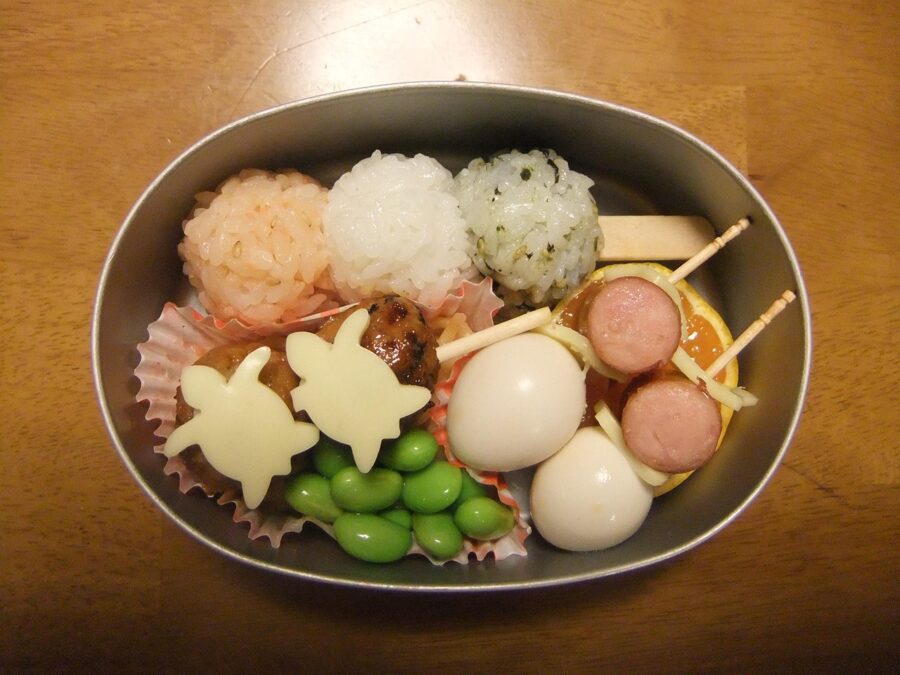
The konbini as a food stop
The コンビニ (konbini, “convenience store”) is where many visitors eat their first onigiri, and in Japan it is a proper food shop. In October 2026, the seven chains in the Japan Franchise Association ran 56,235 stores and served about 1.4 billion customer visits in the month, at an average of ¥751 (about US$4.70) a visit before tax. Daily fresh food, the category that holds onigiri, bento and sandwiches, made up the largest share of sales at existing stores, 35.8%.
The three national chains differ most in hot food. Prices below are Tokyo-area prices with 8% takeaway tax, from each chain’s pages in November 2026.
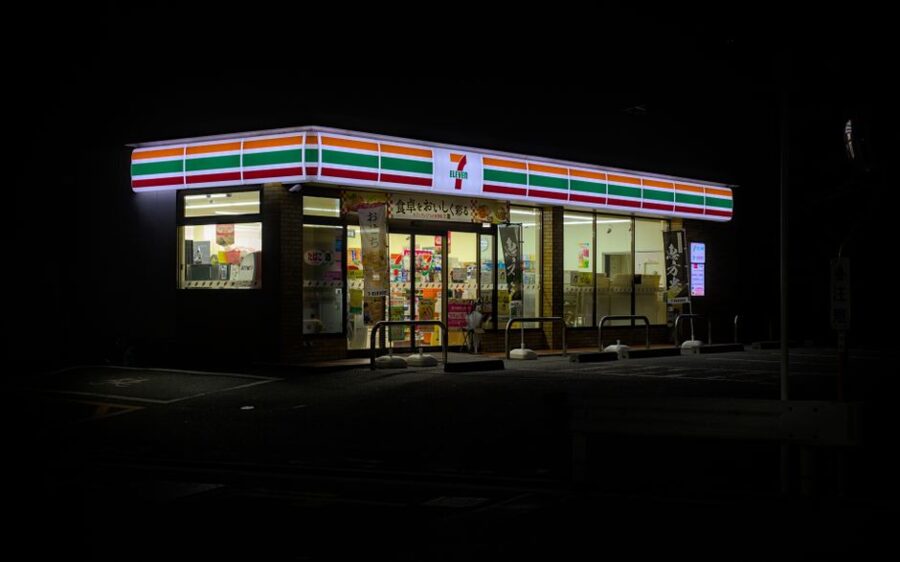
7-Eleven
7-Eleven has the most stores and the deepest onigiri range. On its Kanto onigiri list the hand-rolled tuna mayonnaise, plum and Hokkaido kombu are ¥196.56 each, and charcoal-grilled salmon and spicy mentaiko are ¥213.84 (about US$1.35). The chain’s other reputation is its sandwiches; the Kodawari THE Tamago Sando, a soft egg-salad sandwich, is ¥300.24 (about US$1.90).
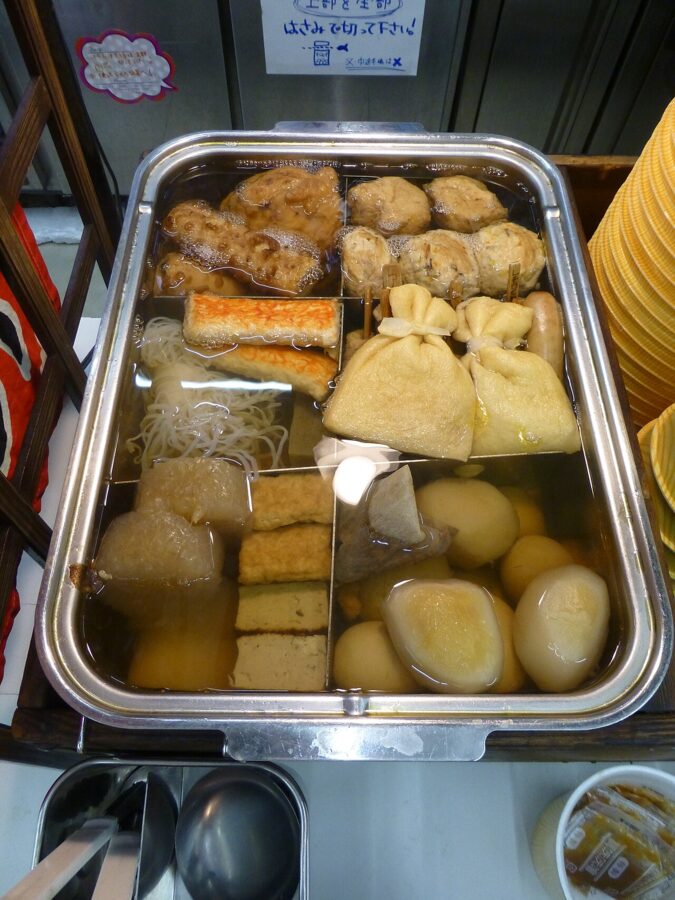
Oden is the cold-weather food of the konbini: daikon, eggs, konnyaku and fish cakes simmered in dashi. On 7-Eleven’s oden list a piece of daikon is ¥130.68 (about US$0.80) and an egg ¥150.12.

FamilyMart
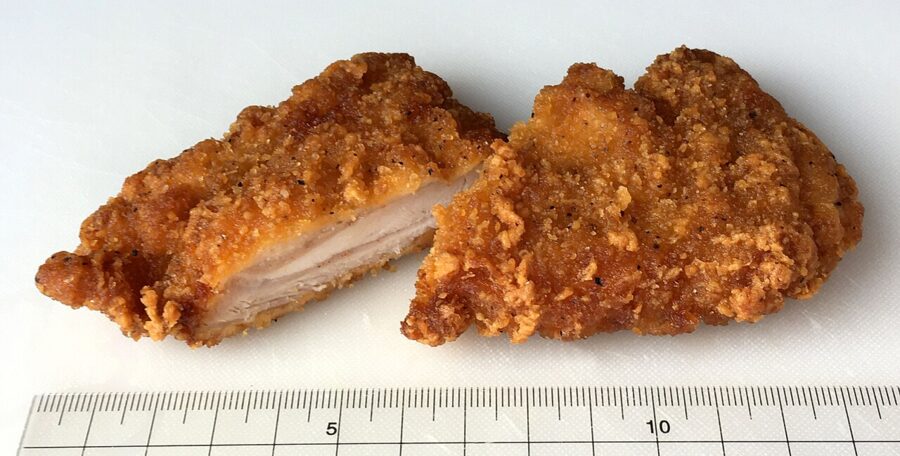
FamilyMart is the chain of the Famichiki, a boneless fried chicken in a paper sleeve that it launched on October 17, 2006, and marked with anniversary flavors in autumn 2026. The plain one is ¥248 (about US$1.55) on its hot snack list. It is juicy and peppery.
For rice balls, FamilyMart’s omusubi list is the one to read for regional items, because it marks each with the area where it is sold. Its hand-rolled Sea Chicken mayonnaise, the tuna mayo, is ¥198 (about US$1.25), and its big two-filling omusubi run near ¥298.
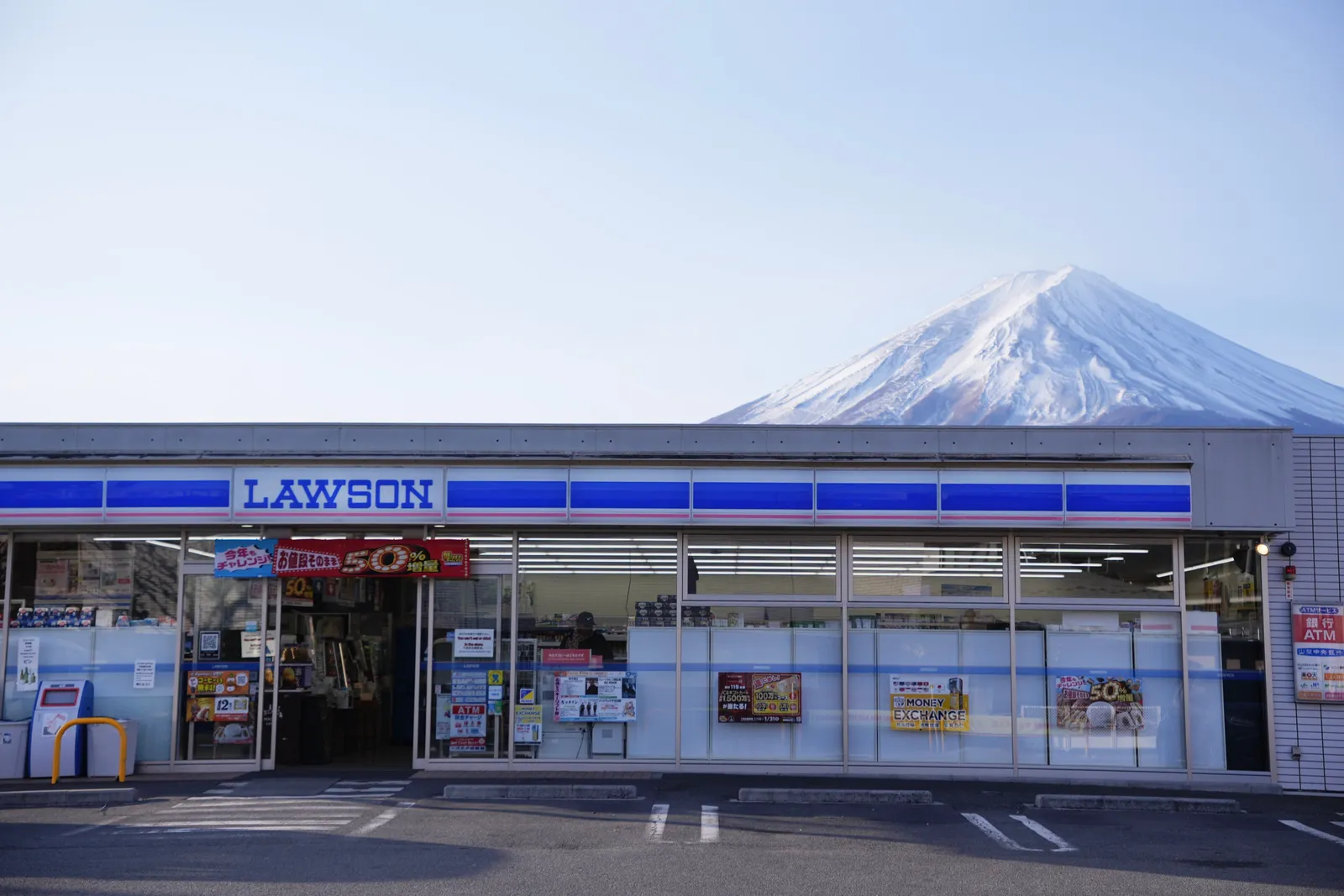
Lawson
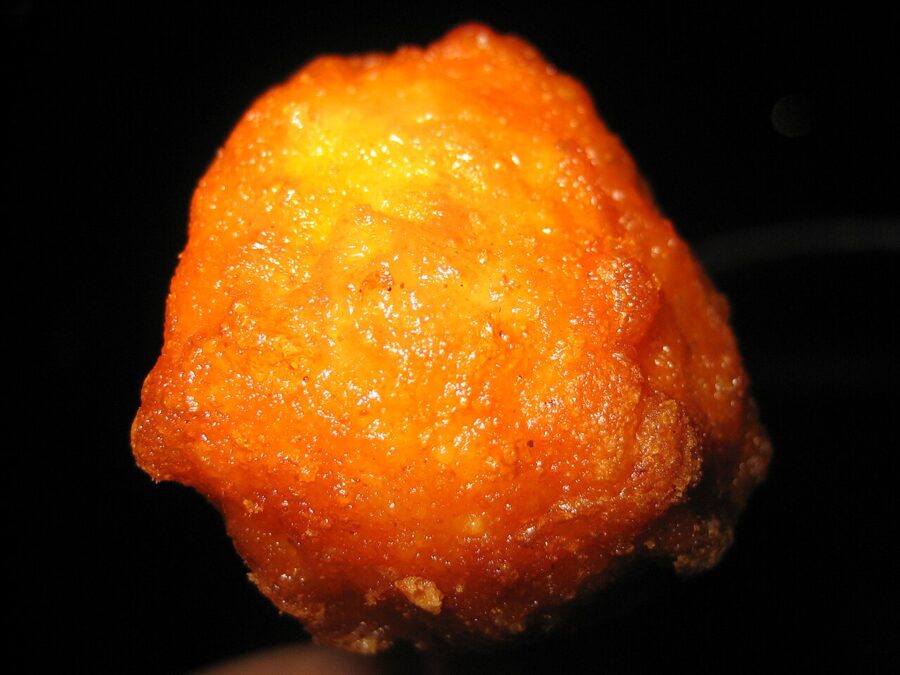
Lawson’s signature is Karaage-kun, bite-size fried chicken in a small box with a pull tab, sold since 1986: five pieces of the regular flavor are ¥288 (about US$1.80) on its fried food list. The Red version is fiery by konbini standards.

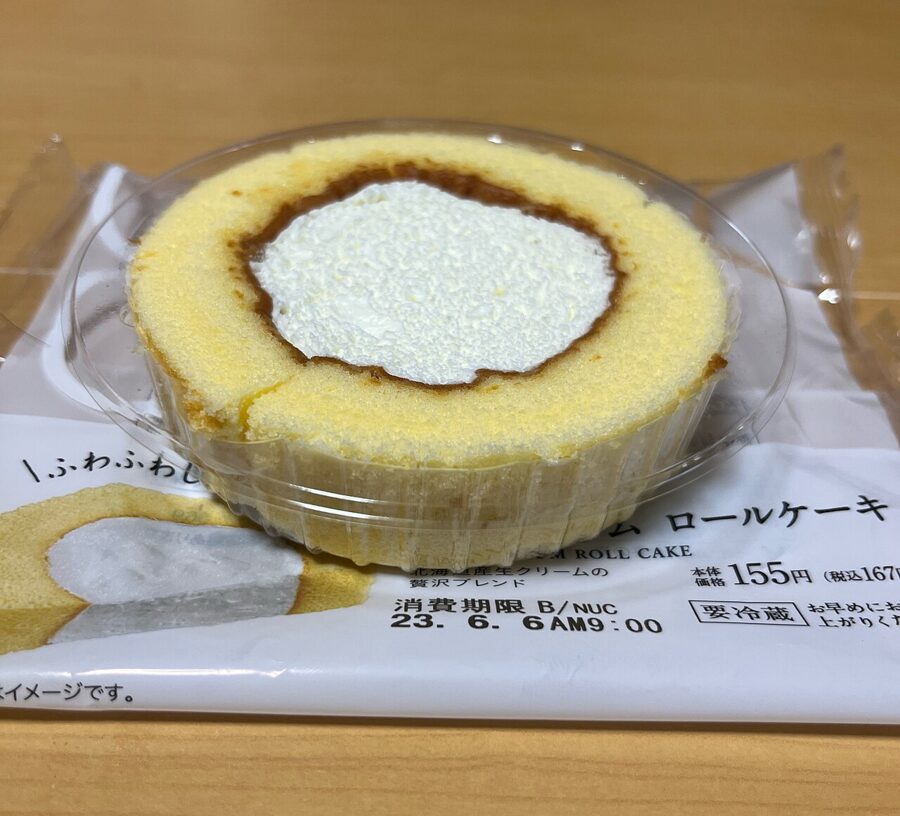
Lawson does two other things well. Many stores have a kitchen, Machikado Chubo (まちかど厨房, “street-corner kitchen”), that makes cutlet sandwiches, rice bowls and onigiri on site; a whole pork-cutlet sandwich is ¥505 on its in-store kitchen list, and stores without a kitchen get the same food from a nearby one. And its Uchi Cafe sweets are better than they need to be: the Premium Roll Cake, a sponge wrapped around a thick core of cream, is ¥214 (about US$1.35).
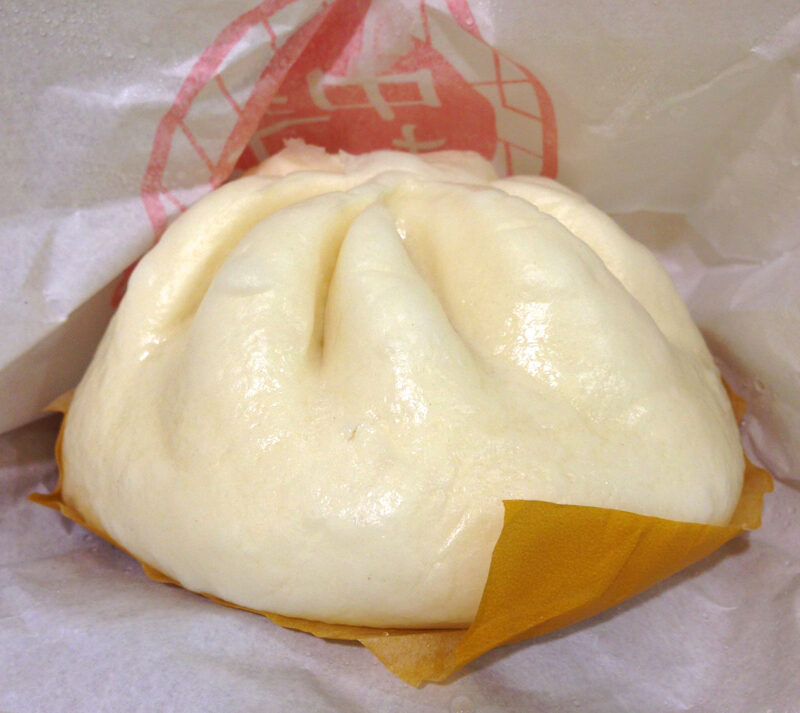
Lawson also sorts its onigiri into tiers. On its onigiri list a hand-rolled tuna mayonnaise is ¥171 (about US$1.10), while the “premium” line runs to ¥322 (about US$2) for soy-marinated salmon roe. The oden at Lawson is listed as cooked in store, with daikon and eggs at ¥160 (about US$1) a piece on its oden page, and a steamed pork bun from the case is ¥198.
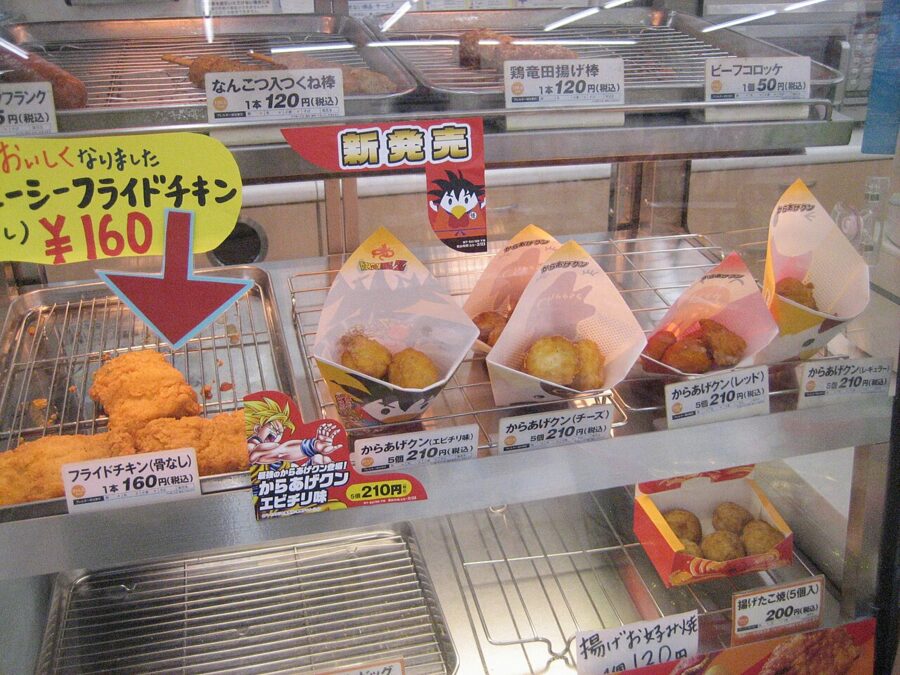



Lawson even stocks konamono, the batter foods; the street versions are better, in takoyaki and okonomiyaki. For a hot bowl, a ramen counter is usually a few doors away.
Seicomart, in Hokkaido
In Hokkaido the local chain Seicomart is the one to look for. Many of its stores have a Hot Chef counter that cooks food on site, including large onigiri made with Hokkaido beef soboro, listed on its Hot Chef page. A warm onigiri on a snowy night is a different food from a cold one on a shelf.

How to shop and eat at a konbini
The cashier asks the same few questions, fast.
| What you hear | What it means | Usual answer |
|---|---|---|
| 温めますか? (atatamemasu ka) | Shall I heat it? | Hai (yes) for bento and pasta; no for onigiri |
| お箸おつけしますか? (ohashi otsuke shimasu ka) | Do you want chopsticks? | Hai, or iie (no) |
| 袋はご利用ですか? (fukuro wa go-riyō desu ka) | Do you need a bag? | Bags cost a few yen; say no if you carry one |
| 店内でお召し上がりですか? (tennai de omeshiagari desu ka) | Will you eat in the store? | Say yes only if you will use the eat-in seats |
Heating. Onigiri are made to be eaten cool; a microwave turns the nori to wet paper. Bento, pasta and gratin are made for the store microwave, and the staff will heat them for you.
Tax and eat-in. Food you take away is taxed at 8%, food you eat in the shop at 10%, and the shelf price is the takeaway one. If you sit at the eat-in counter, say so at the register; it is a few yen, and it is the rule. The eat-in corners, where they exist, are a window counter with stools, sometimes with hot water for cup noodles.
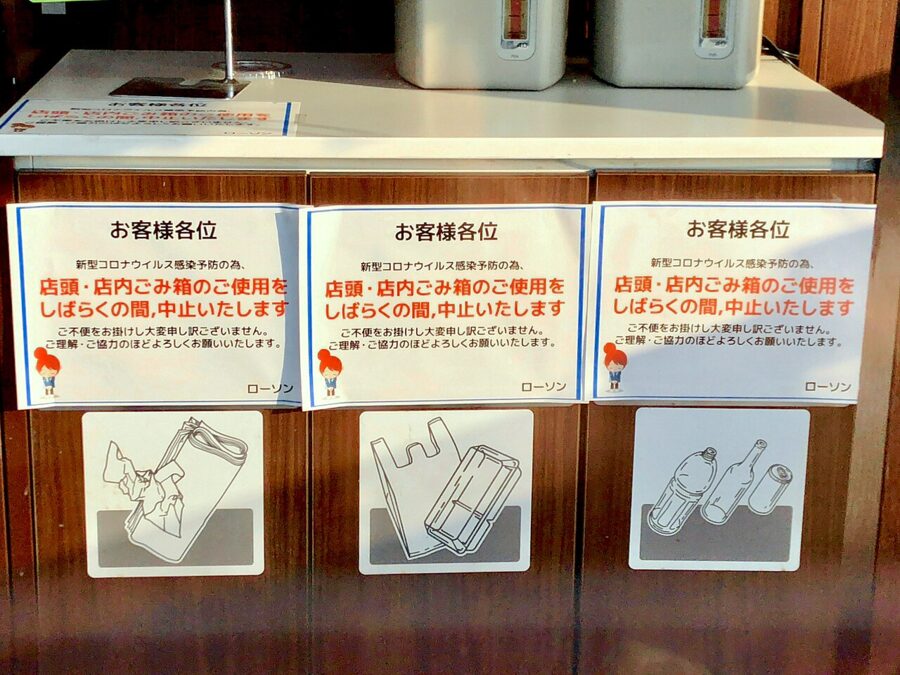
Rubbish. Japan has few public bins, and the konbini bin is for packaging from things you bought there, sorted by type. Never bring household rubbish; if there is no bin, carry the wrapper on.

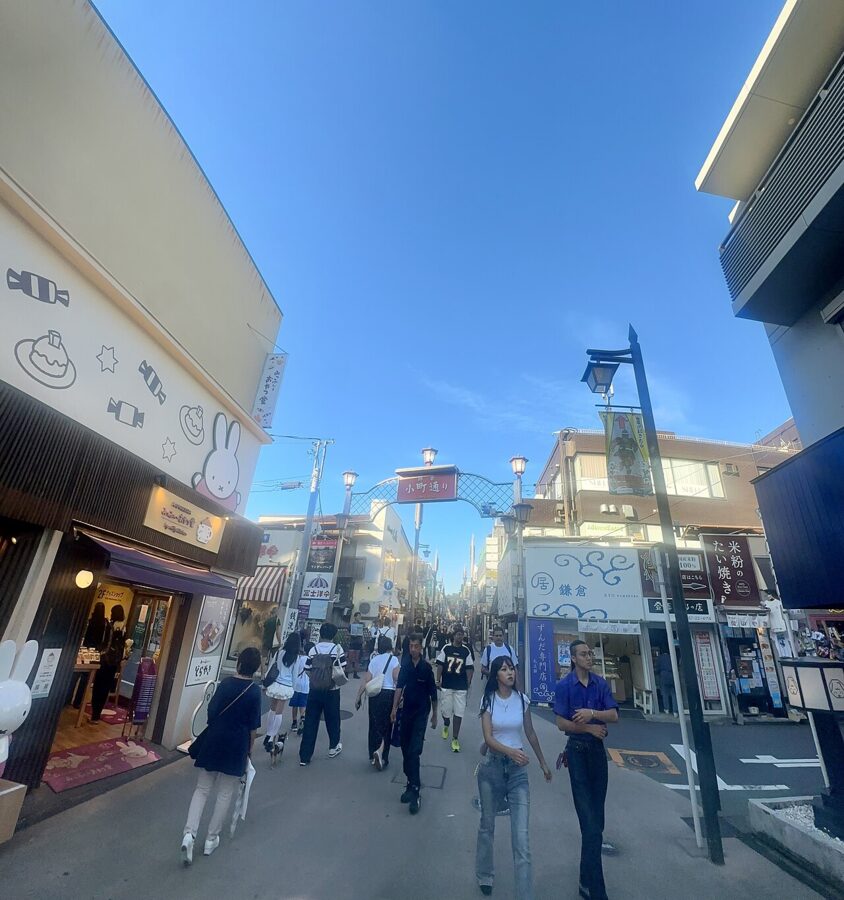
Eating while walking. It is not illegal, but in Japan people mostly stand by the store, find a bench or eat in. A few places ask for more: Kamakura’s 2019 manners ordinance asks people not to eat while walking on crowded streets where they might stain someone’s clothes, without any fine. An onigiri is the easiest food in Japan to eat standing still, which is the polite way to do it.

Konbini prices as of November 2026
| Item | Chain | Price with 8% tax |
|---|---|---|
| Hand-rolled tuna mayo onigiri | 7-Eleven / FamilyMart / Lawson | ¥196.56 / ¥198 / ¥171 |
| Hand-rolled salmon onigiri | 7-Eleven / Lawson | ¥213.84 / ¥211 |
| Premium onigiri (salmon roe) | Lawson | ¥322 |
| Famichiki | FamilyMart | ¥248 |
| Karaage-kun, 5 pieces | Lawson | ¥288 |
| Oden daikon | 7-Eleven / Lawson | ¥130.68 / ¥160 |
| Egg sandwich (THE Tamago Sando) | 7-Eleven | ¥300.24 |
| Nikuman | Lawson | ¥198 |
7-Eleven prints prices with decimals because it shows the pre-tax price and the tax separately; at the register the total is rounded down to the yen.
Regional and seasonal onigiri
Every chain’s list carries regional lines, the most interesting things on the shelf; most cannot be bought a prefecture away.
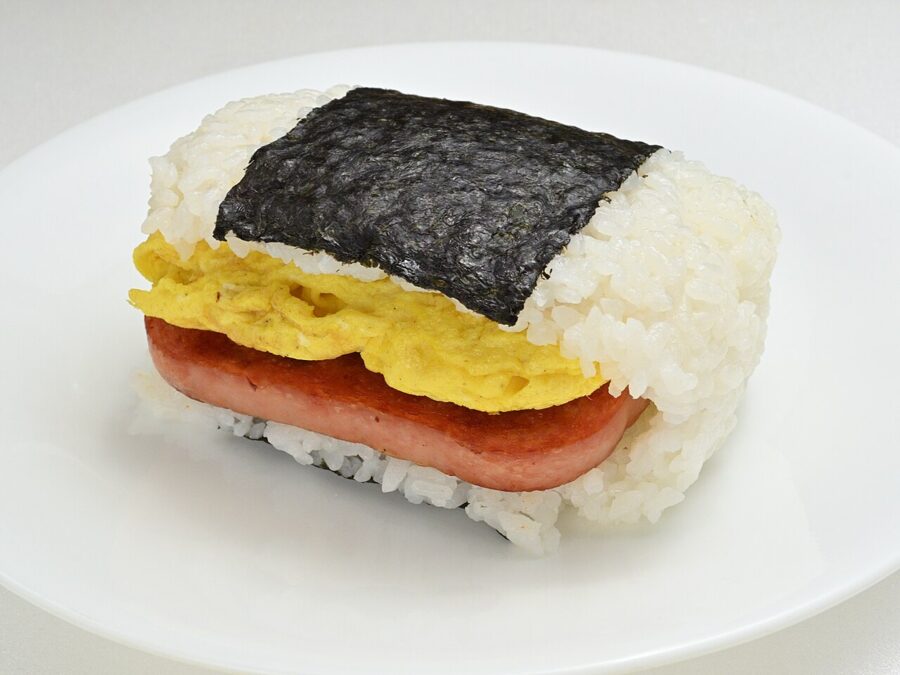
Okinawa has the most distinctive set. ポーク玉子おにぎり (pōku tamago onigiri) is a slab of luncheon meat and a fold of omelet pressed between rice and wrapped in nori; at Okinawan 7-Elevens it is ¥340.20 (about US$2.15), and Lawson lists one with tuna mayonnaise added. The same 7-Eleven list carries 油みそ (abura miso, sweet miso cooked with pork) and じゅーしー (jūshī), the island’s word for seasoned cooked rice, as onigiri at ¥170.64.
Kansai has かやくごはん (kayaku gohan), rice cooked with vegetables, fried tofu and dashi, as a “Kansai only” onigiri at 7-Eleven (¥159.84, about US$1) and at FamilyMart. Most Kyushu FamilyMarts carry ばくだんむすび (bakudan musubi, “bomb rice ball”), big round ones with two or three fillings at ¥378 (about US$2.40), plus spicy takana. Akita has ぼだっこ (bodakko), very salty salmon, which FamilyMart sells in Akita only at ¥235 (about US$1.50).
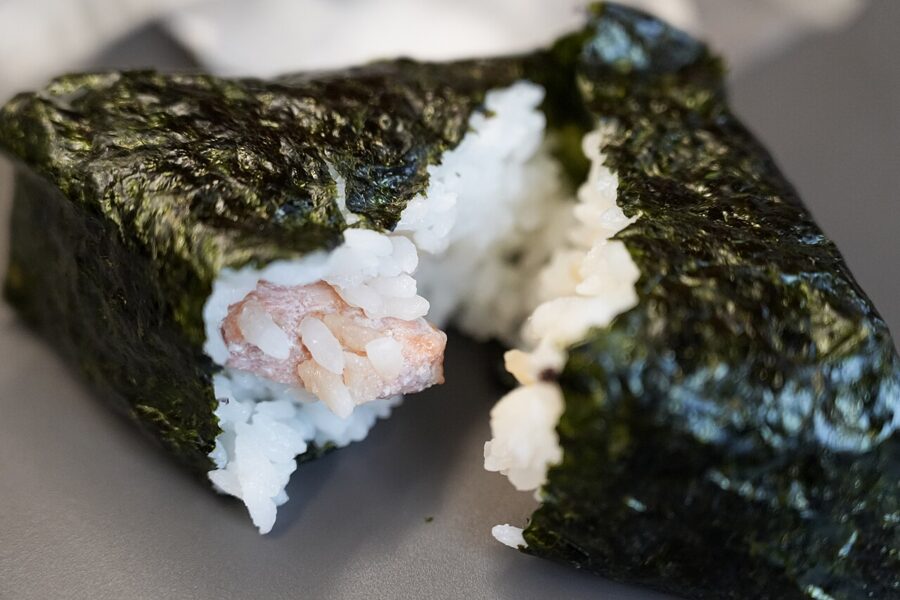

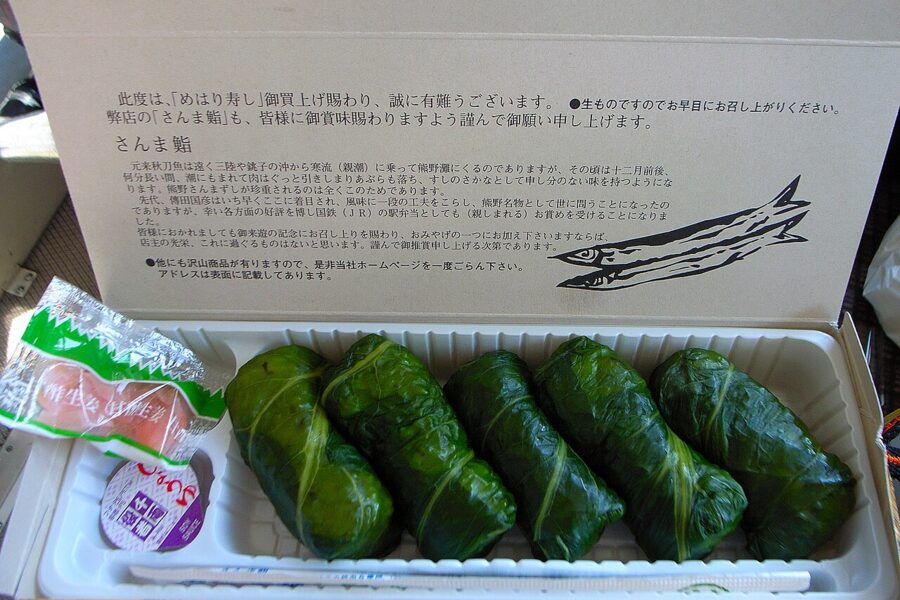
Southern Wakayama’s めはりずし (meharizushi) is a rice ball wrapped in a leaf of salted takana, once lunch for fishermen and forestry workers. The Ministry of Agriculture’s regional food record gives several stories for the name, including that you have to open your mouth wide enough to open your eyes. Look for it around Shingu and the Kumano coast.

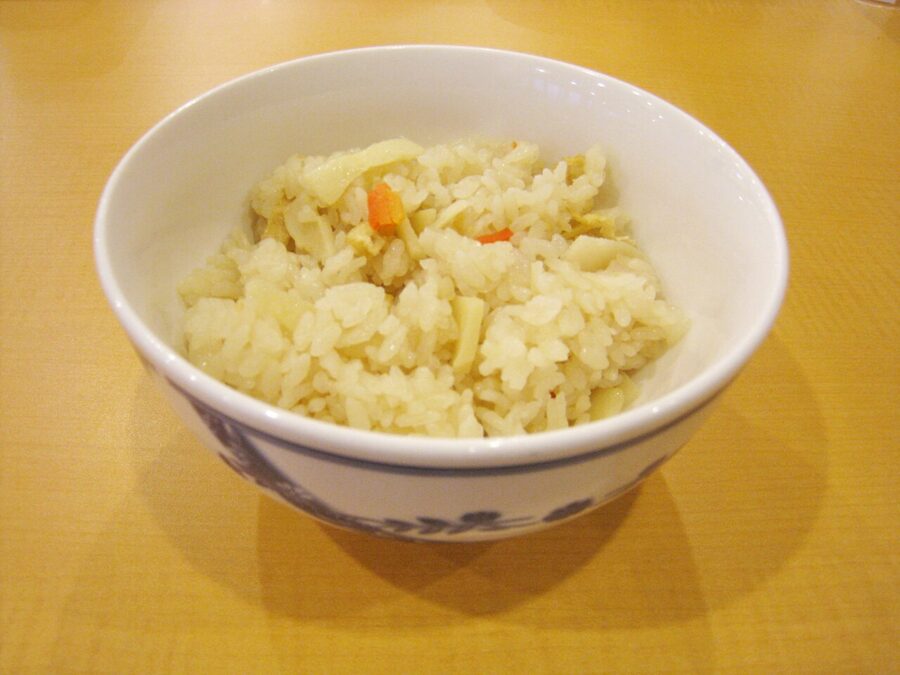
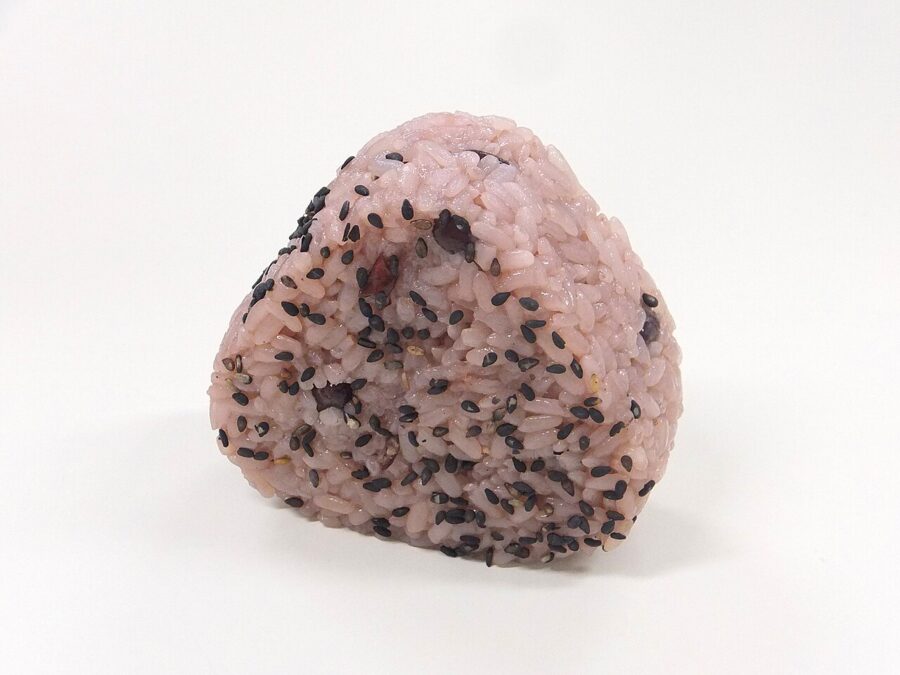
The seasons move through the shelf as well. Autumn brings new-crop rice and mushroom okowa, sticky rice steamed with maitake; spring brings bamboo-shoot rice, takenoko gohan, which FamilyMart sold through spring 2025. On November 24, 2026, 7-Eleven began rolling out tori gomoku, chicken and vegetable rice, in Hokuriku and Niigata. Sekihan, sticky rice with red adzuki beans for celebrations, is a year-round onigiri at several chains.

The newest arrival is the freezer: Lawson took frozen onigiri to all 47 prefectures in 2025 to cut waste, and FamilyMart followed in January 2026. I would still buy the chilled one.
So, back at the shelf: pick a temaki, find the 1, pull it all the way down, then 2, then 3. If the nori cracks, you did it right, and if you want to know what the same rice ball tastes like warm and barely pressed, the queue in Otsuka is worth one morning.