
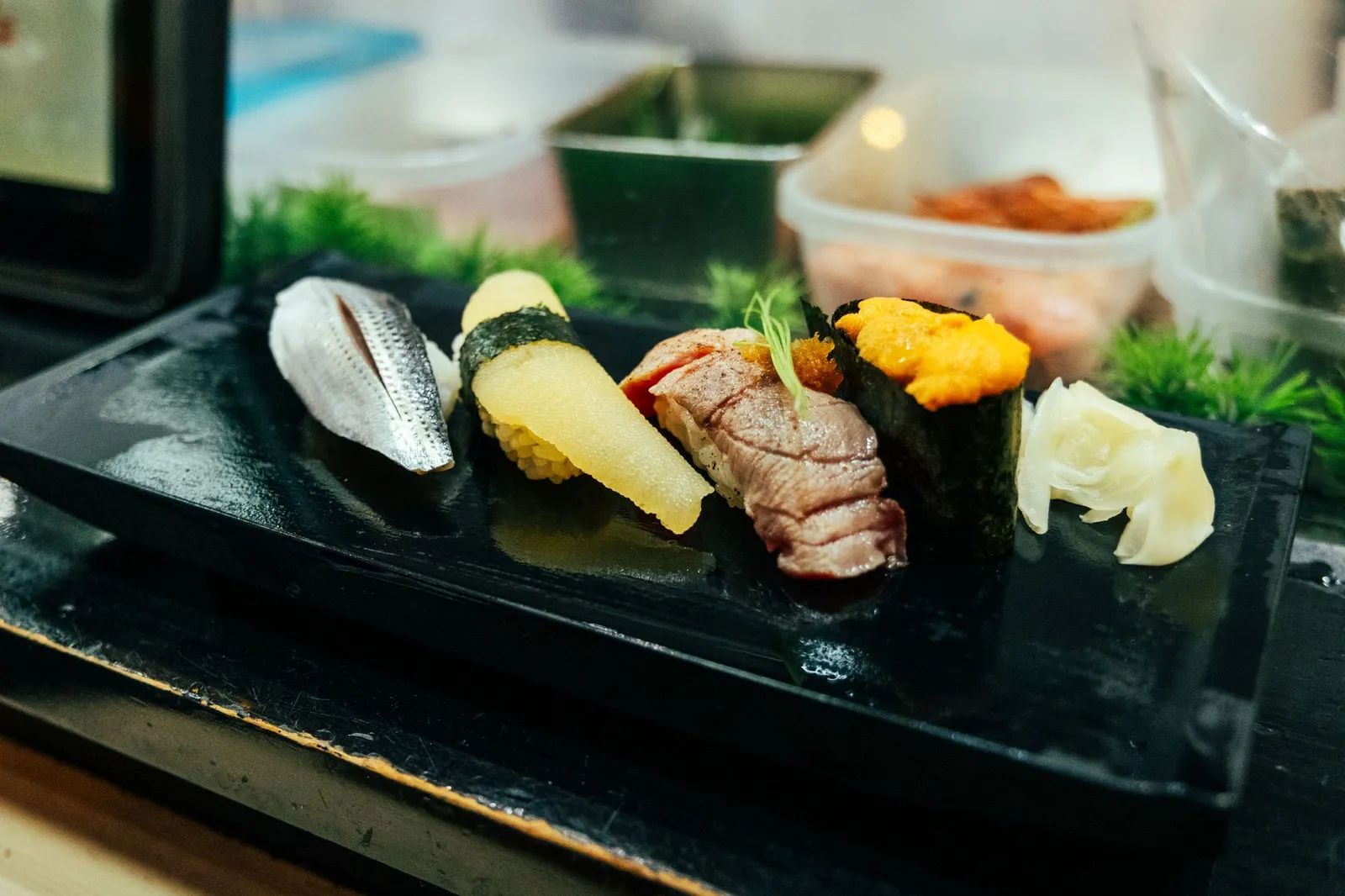
The rice is still warm when the piece lands on the counter in front of you, and the fish on top is cool. That gap in temperature lasts about as long as it takes to say thank you. A good sushi chef shapes each piece so it holds together on the way to your mouth and falls apart once it gets there, and the whole design assumes you will eat it now, in one bite, not after a photograph.
Everything else about sushi in Japan follows from that moment. It is why the counter exists, why the plates on a conveyor belt now come to you on order, why the old manners about soy sauce and fingers are really about keeping the rice in one piece. It is also why a ¥120 (about US$1) plate at a chain and a ¥36,000 (about US$230) course in Ginza are recognizably the same food.
Between those two sit standing bars, station counters and market stalls. Once you know which kind of place you are walking into, ordering is simple and the “rules” shrink to a handful that actually matter.



The kinds of sushi places
寿司 (sushi) also appears on signs as 鮨 or 鮓, and the older characters tend to mean an older, pricier shop. The word refers to the vinegared rice, not the fish. Raw fish without rice is 刺身 (sashimi), which belongs as much to the izakaya as to the sushi bar.
| Place | How you order | What it costs (as of 2026) |
|---|---|---|
| 回転寿司 (kaiten-zushi), the conveyor-belt chains | Touch screen or phone; plates come on an express lane | From ¥110 to ¥150 (about US$1) a plate, usually two pieces, depending on chain and shop |
| 立ち食い寿司 (tachigui-zushi), standing bars | Ask the chef, piece by piece or a set | A ten-piece lunch set with miso soup for ¥1,100 (about US$7) at one chain |
| Mid-range counters and station sushi bars | Set menus or by the piece, at a counter or table | Lunch sets from a few thousand yen; dinner more |
| おまかせ (omakase) counters | The chef decides; you book ahead | About ¥10,000 (about US$64) at the entry level in Tokyo; ¥25,000 to ¥40,000 (about US$160 to US$255) and up at the top |
Conveyor belts and tablets
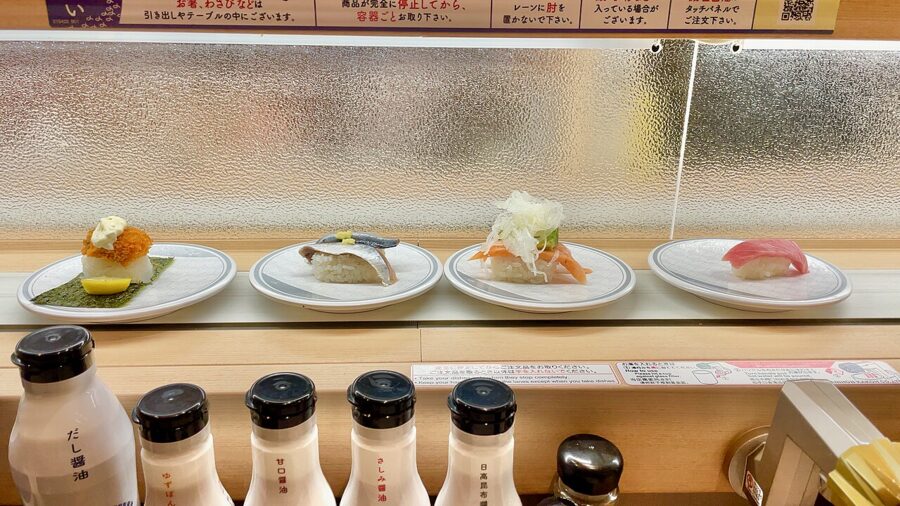
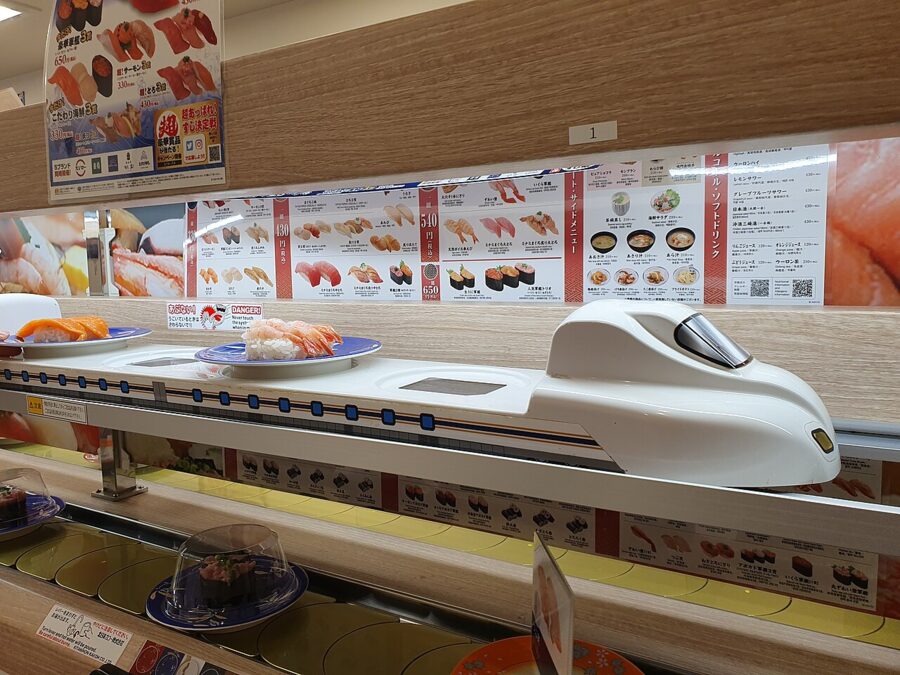
回転 (kaiten) means “rotating.” The first conveyor-belt sushi shop opened in Higashi-Osaka in 1958. The big three chains are Sushiro, Kura Sushi and Hama Sushi.
Prices are by the plate. As of November 2026, Sushiro’s shop pages list plates from ¥120, rising to ¥150 at city-center branches such as Sangenjaya in Tokyo. Kura Sushi’s menu runs four price tiers by shop, with the cheapest plate at ¥110, ¥115, ¥125 or ¥145. Hama Sushi lists its standard plates at ¥110 including tax, with a separate, dearer menu for city-center shops.
Standing sushi bars
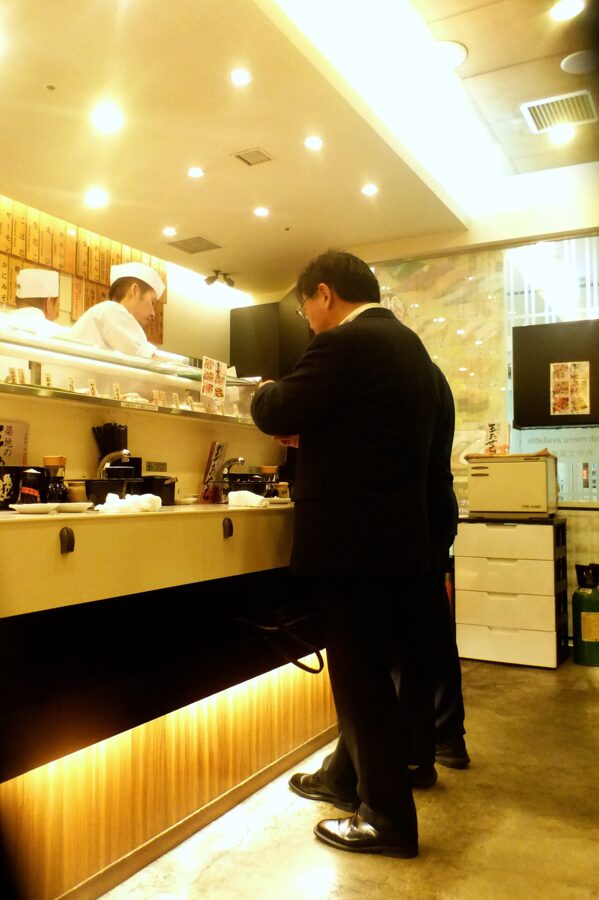
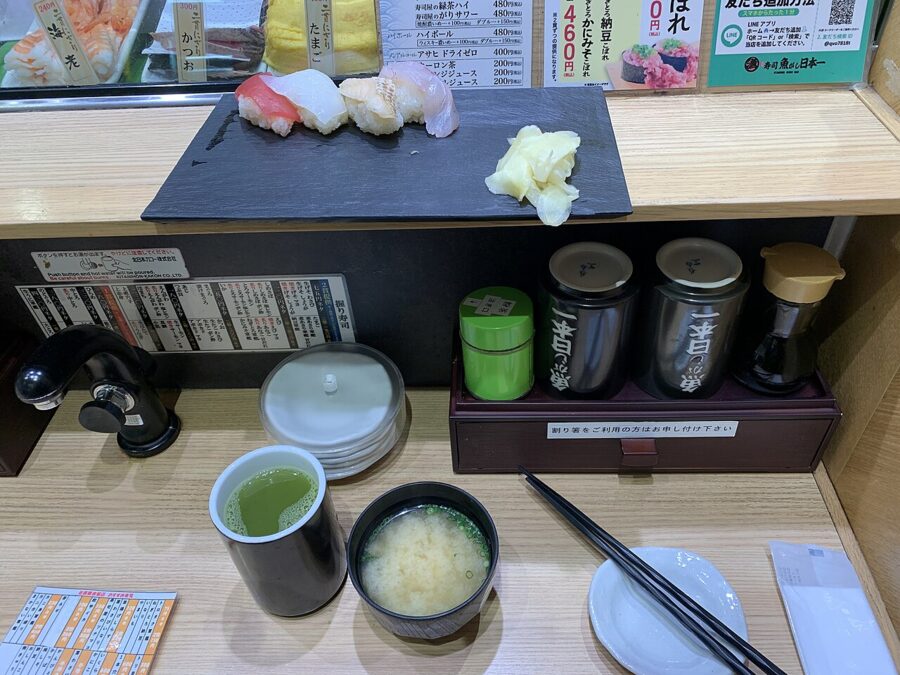
Nigiri started as street food. In late Edo-period Tokyo it was sold from stalls and eaten standing, and the 立ち食い (tachigui, “eat standing”) bar keeps that pace: stand at the counter, order a few pieces at a time, eat, pay and leave.
This is where I would send anyone who wants counter sushi without counter prices. At the standing chain Uogashi Nihon-ichi (魚がし日本一), the Minatomirai branch in Yokohama lists a ten-piece lunch set with miso soup at ¥1,100. Order by the piece in the evening and the bill depends on how much tuna belly you point at.

Mid-range counters
Between the chains and the omakase bars sit the ordinary sushi restaurants: neighborhood shops, department-store and station counters, and small chains with a line at the door, such as Sushi no Midori (美登利). You order a set, 盛り合わせ (moriawase), or point at the board of the day’s fish. Tokyo Station has several of these counters in its dining arcades, and lunch is the bargain at almost all of them.

Omakase counters
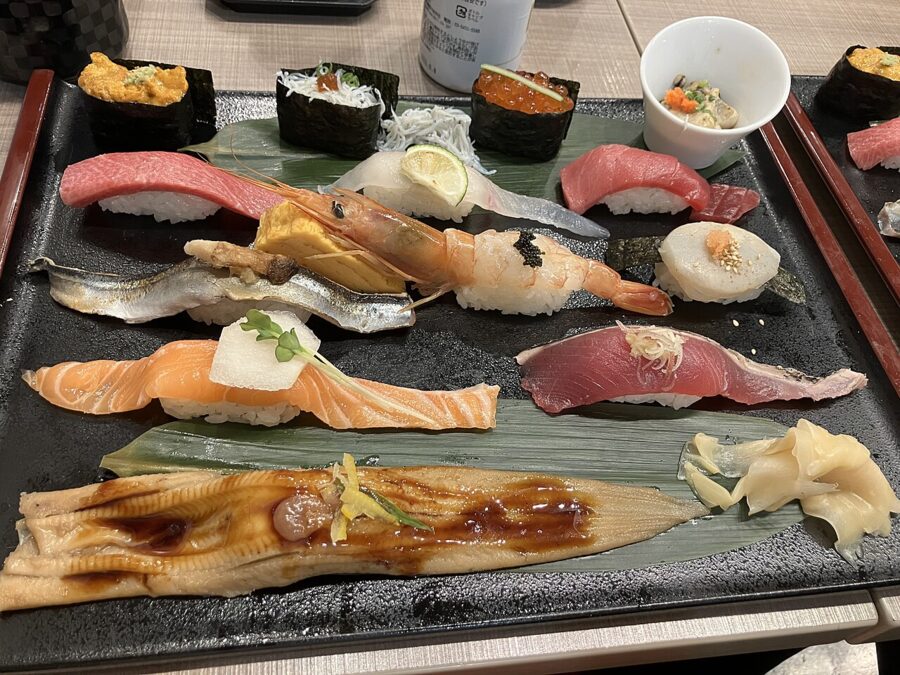
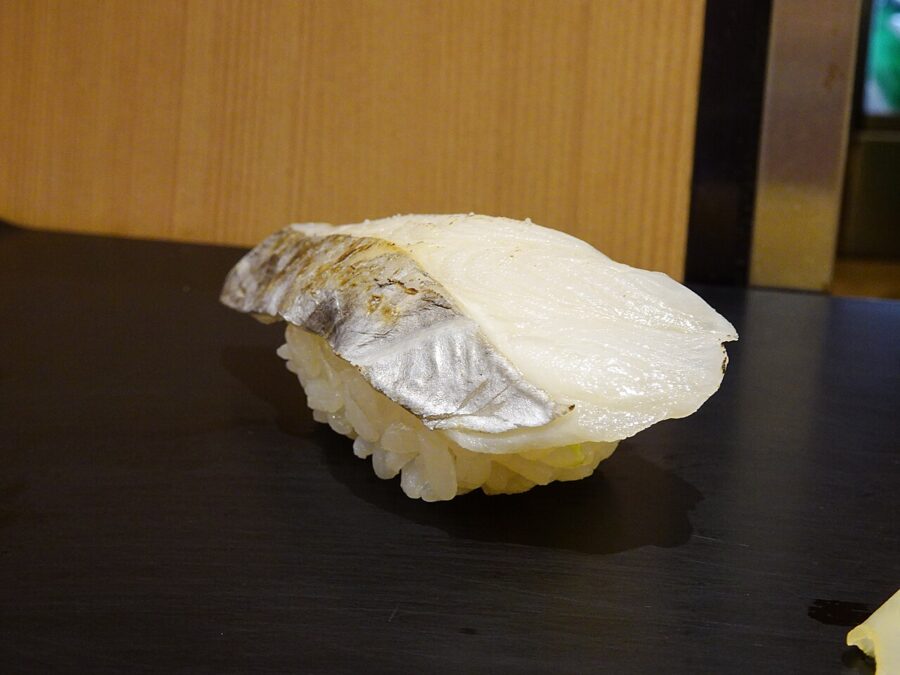
お任せ (omakase) means “I leave it to you.” There is usually one menu, a fixed run of nigiri and small dishes served to everyone at the same pace, at a counter that may seat eight or ten. You book ahead; how, and for how much, is further down.
What is on the plate
Japanese sushi menus are shorter on rolls and longer on fish than most menus abroad, and they are built from a handful of shapes.
Nigiri
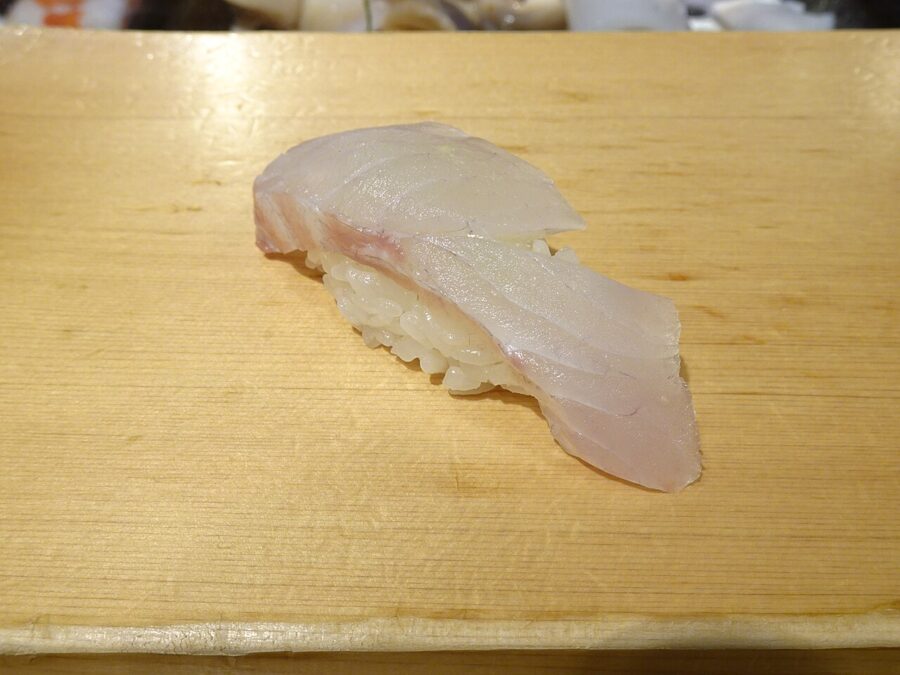
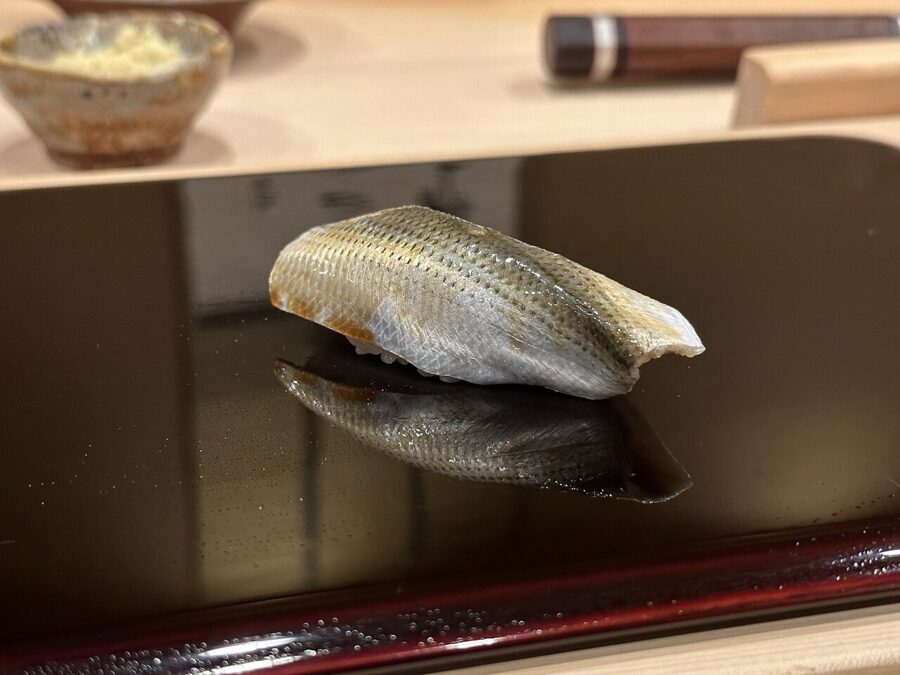
握り (nigiri, “squeezed”) is a finger of rice with a slice of fish, shellfish or omelet laid over it, usually with a smear of wasabi between. It is what sushi means in Tokyo. The rice is the しゃり (shari); the topping is the ネタ (neta).
Nutrition guides reckon about 15 g of rice to a piece of chain-shop nigiri, so ten pieces come to roughly a small bowl of rice. Edo-period nigiri used about three times as much, closer to a rice ball than to a modern piece.

Gunkan and maki
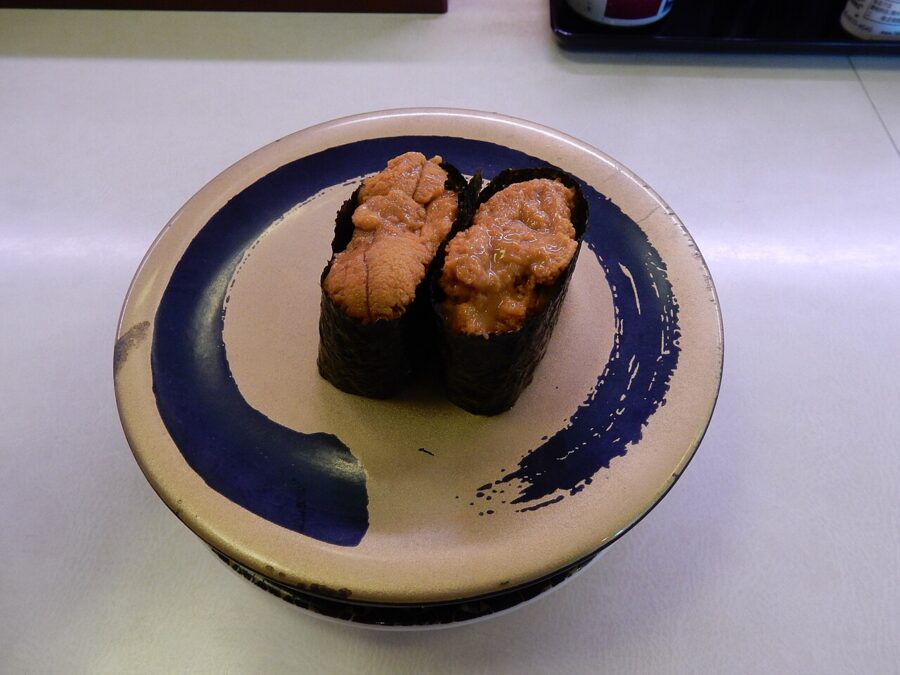
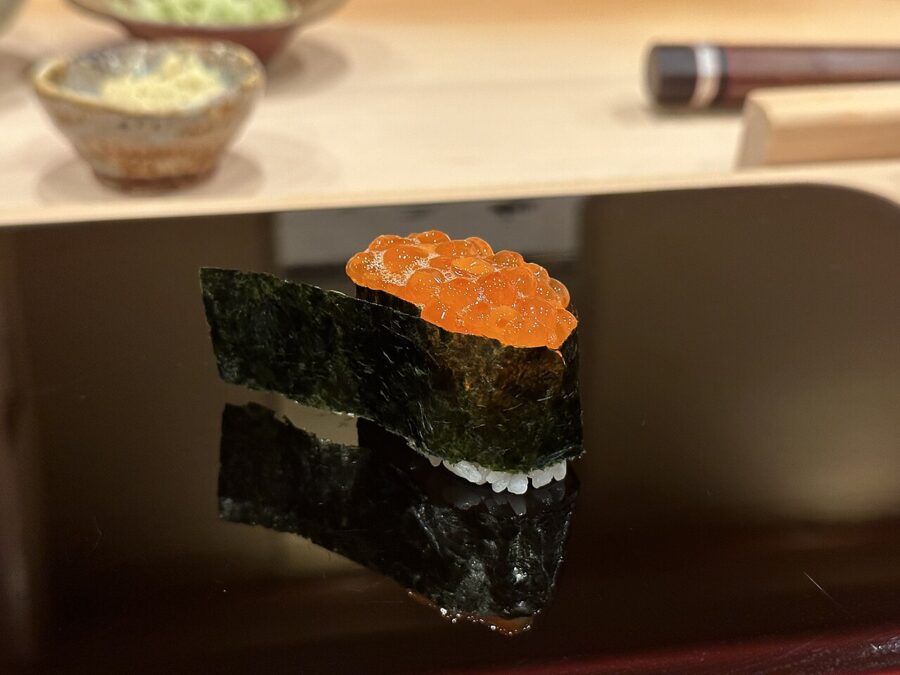
軍艦巻き (gunkan-maki, “battleship roll”) is rice wrapped in a band of nori with a soft topping piled on: sea urchin, salmon roe, chopped tuna with spring onion. Ginza’s Kyubey is generally credited with inventing it around 1941.
巻き寿司 (maki-zushi) is the rolled kind: 細巻き (hosomaki), thin rolls with one filling, and 太巻き (futomaki), fat ones with several. 手巻き (temaki) is a cone of nori to eat with your hands before the seaweed goes soft.

Chirashi and kaisendon
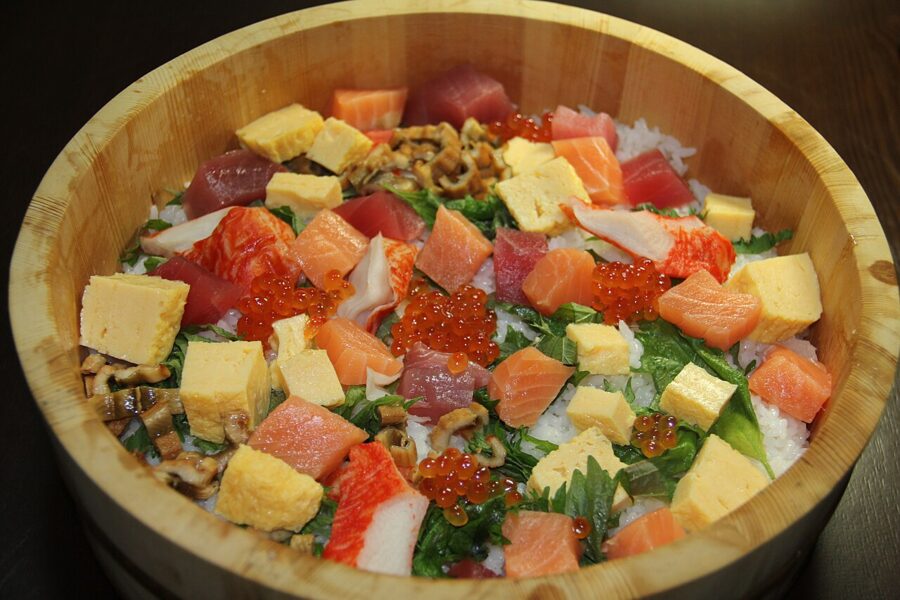
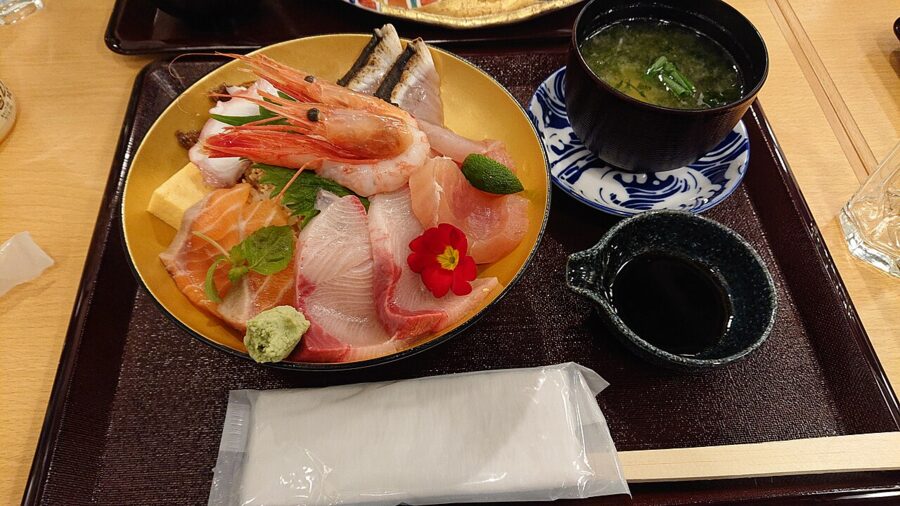
ちらし寿司 (chirashi-zushi, “scattered sushi”) puts the toppings on a bed of sushi rice. At home it is a celebration dish made in a wide wooden tub; at a sushi bar it means slices of raw fish over rice, often the cheapest way to eat a chef’s fish at lunch. The market 海鮮丼 (kaisendon, seafood bowl) is a close relative, usually on plain rice.

Inari
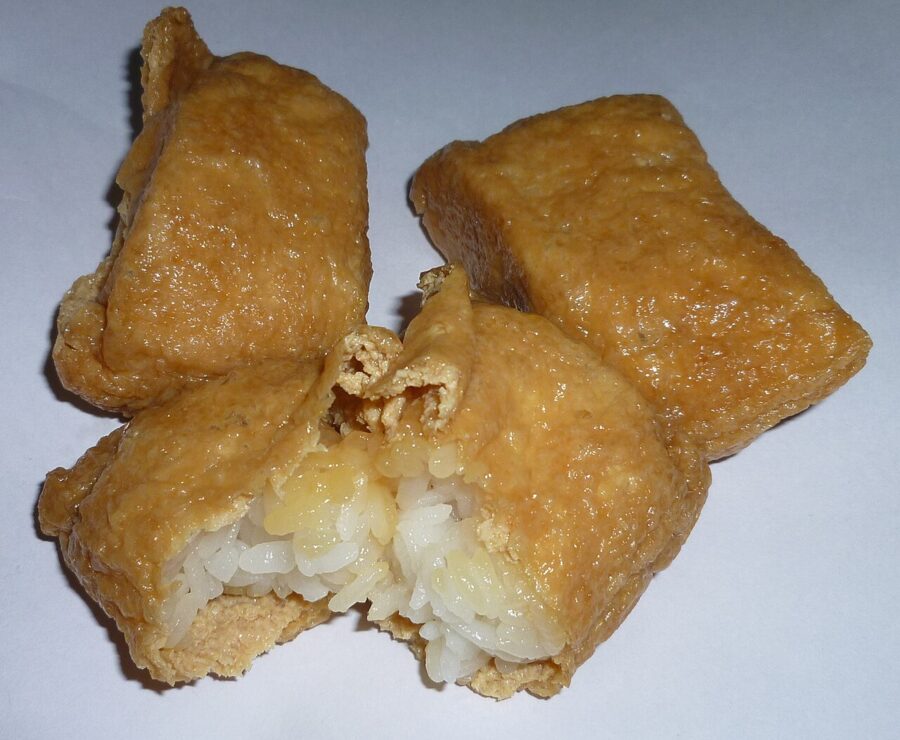
稲荷寿司 (inari-zushi) is sushi rice stuffed into a pouch of fried tofu simmered in sweet soy. It has no fish and travels well, so you find it in station shops and supermarket packs as often as on sushi menus: the sushi counter’s answer to the onigiri.

Regional styles
Sushi began as なれずし (narezushi), salted fish fermented for months in rice. In the Edo period vinegar took over, giving pressed sushi in the west and nigiri in Edo.
Edomae: Tokyo
江戸前 (Edomae, “in front of Edo”) first meant fish from the bay in front of the city. It now means nigiri topped with fish that has been worked on. The Ministry of Agriculture’s account of Tokyo nigiri lists the classic toppings: vinegared kohada and mackerel, simmered conger eel, steamed prawns and omelet, on rice seasoned with red vinegar.
Three Edo shops, Hanaya Yohei’s among them, get the credit for spreading nigiri in the early 19th century. The counter is a leftover of the street stall: when sushi moved indoors, the chef kept making it in front of the customer.
Osaka: battera and hakozushi
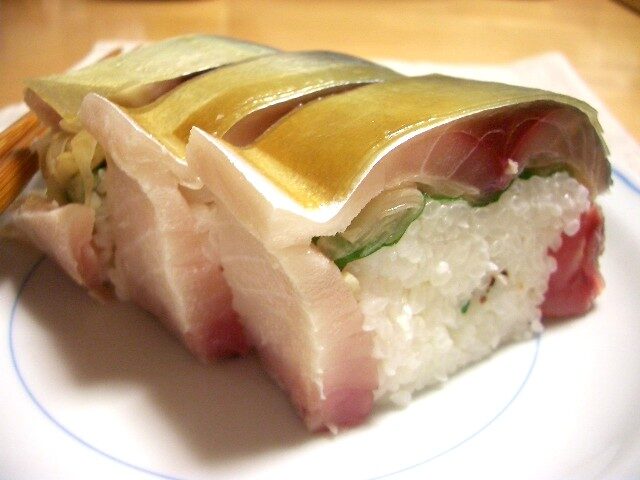
Osaka’s sushi is pressed in a wooden box and cut into squares. バッテラ (battera) is the everyday one: cured mackerel and a thin sheet of white kelp over rice. The Ministry of Agriculture’s page on battera credits Sushi Tsune in Minami-Senba with creating it in 1891, first with gizzard shad, and takes the name from the Portuguese bateira, “small boat,” for the shape of the half fish on the rice.
箱寿司 (hakozushi, “box sushi”) is the grander version, with sea bream, prawn, conger eel and omelet in layers. Pressed sushi needs no soy and tastes better after a rest, which makes it the train picnic to buy in Osaka between plates of takoyaki and okonomiyaki.

Kanazawa and the Sea of Japan
Kanazawa’s sushi comes from the Sea of Japan: sweet shrimp, blackthroat seaperch (nodoguro), winter yellowtail, and snow crab once the season opens in November. Even the conveyor-belt shops lean on local fish, and here I would pick a local one over a national chain.
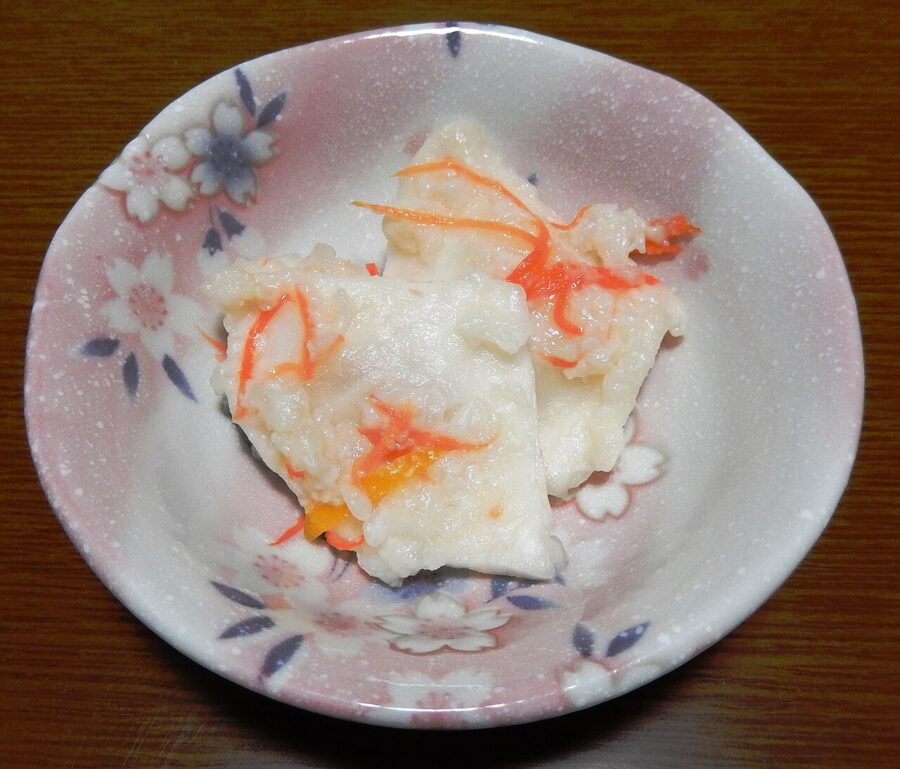
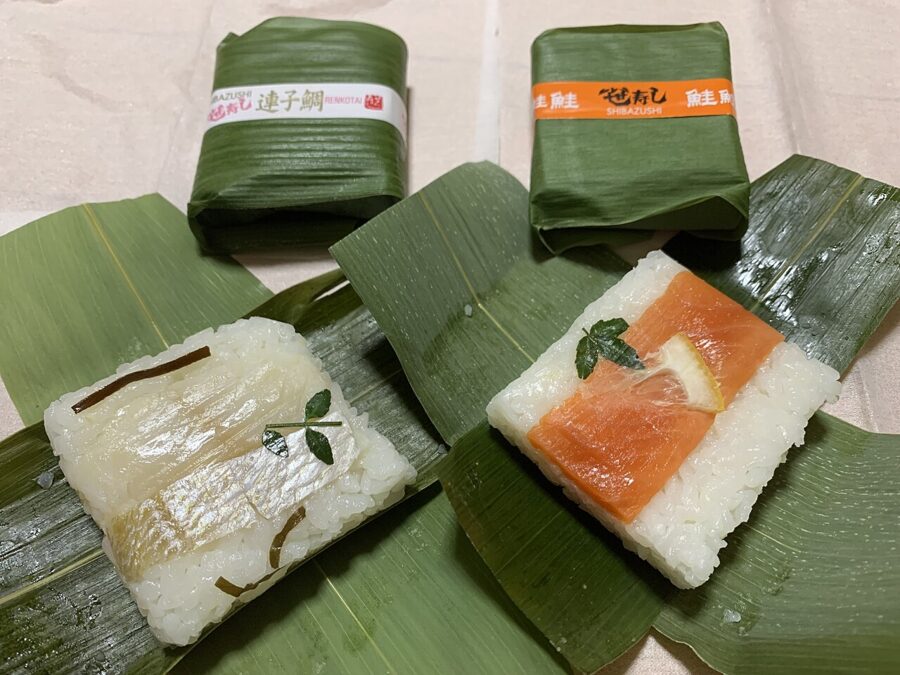
The city keeps its own pressed sushi too, fish and rice left under a weight overnight. In winter look for かぶら寿し (kabura-zushi), salted turnip sandwiching salted yellowtail, fermented with rice koji: a narezushi closer to a pickle than to nigiri, and a New Year essential in Ishikawa.



Hokkaido
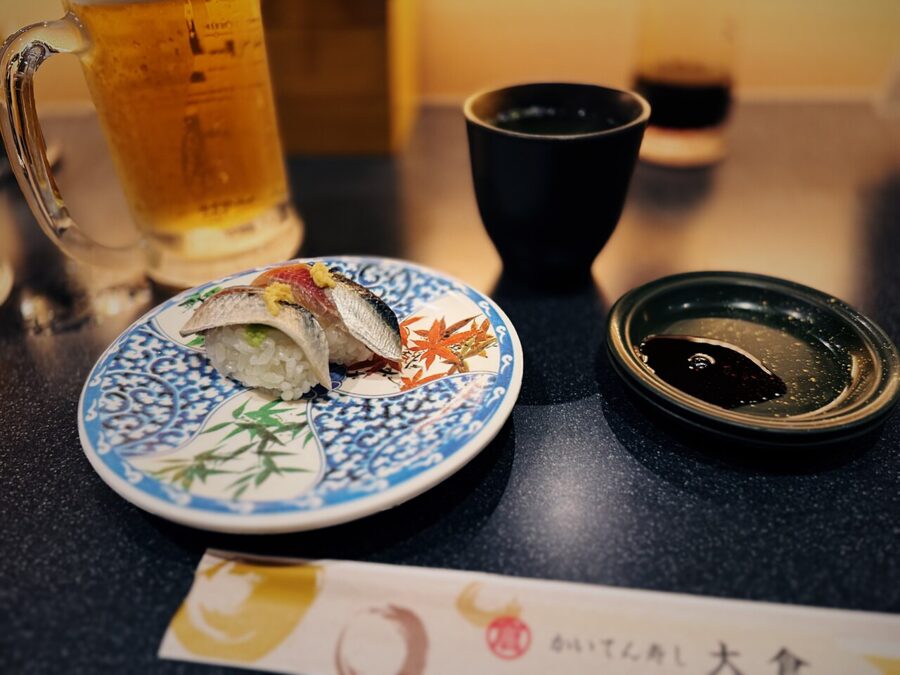
Hokkaido’s sushi is about the raw material: sea urchin in summer, salmon roe in autumn, scallops and crab. A market breakfast of いくら丼 (ikura-don) or kaisendon is the thing to do in Sapporo. In Otaru, under an hour west by train, Sushiya-dori has about fifteen sushi shops along one street.

The fish by season
旬 (shun) is the peak of a fish’s season, and a chef will steer you toward whatever is there. Tuna and salmon are on every menu all year; the rest is worth ordering by the calendar.
| Season | What to look for |
|---|---|
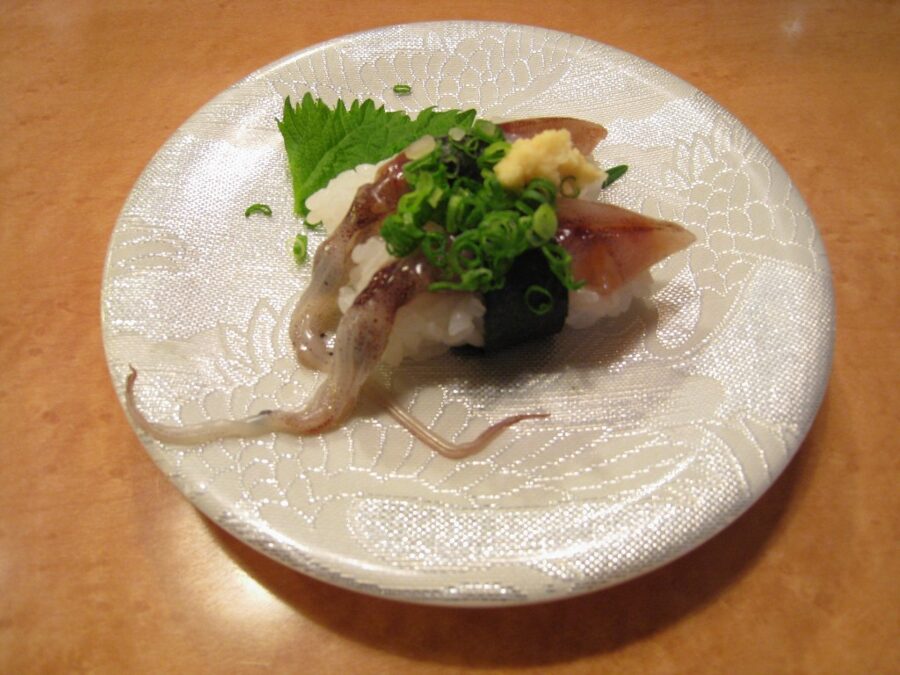
| Spring | Firefly squid (hotaru-ika), sea bream (madai), halfbeak (sayori), the first bonito (hatsu-gatsuo) |
| Summer | Shinko (baby kohada), horse mackerel (aji), conger eel (anago), Hokkaido sea urchin |
| Autumn | Pacific saury (sanma), mackerel (saba), returning bonito (modori-gatsuo), fresh salmon roe |
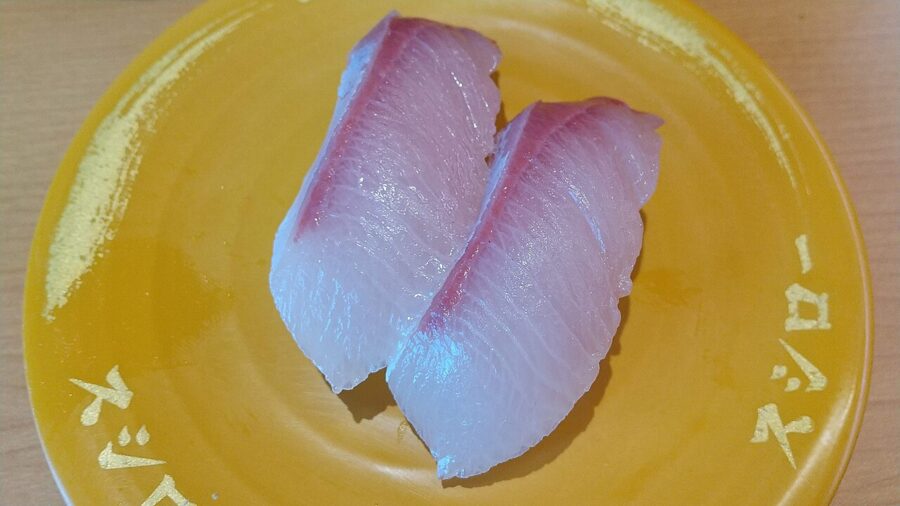
| Winter | Winter yellowtail (kan-buri), flounder (hirame), bluefin tuna, monkfish liver, kohada |
Shinko, the first tiny gizzard shad of summer, is so small that several go on one piece. In winter the 寒 (kan, “cold”) fish take over: a December 2025 Weathernews report named winter yellowtail, Spanish mackerel and flounder, with bluefin tuna in season and prices high.

How to eat it
Most sushi etiquette is common sense once you see it as protecting the piece. The rice is packed loosely, the fish is seasoned, and the chef has already decided how much wasabi it needs.
Hands or chopsticks
Either. A reference answer from Kitakyushu’s central library sums up the Japanese etiquette books: hands and chopsticks are both fine today, with chopsticks for platters and formal meals. It also records an Edo habit of rinsing your fingers in the last of the tea and wiping them on the shop curtain on the way out.
With fingers, hold the piece by its sides between thumb and middle finger and tip it so the fish faces down. With chopsticks, pick it up from the sides rather than pinching from the top, which squashes the rice.
Soy on the fish, and the wasabi is already there
Dip the fish, not the rice. Tip the piece on its side, touch the edge of the topping to the soy, and eat it fish side down; rice dipped in soy soaks it up and falls apart in the dish. If the chef has brushed the piece with 煮切り (nikiri, soy simmered with sake or mirin) or the sweet reduction used on conger eel, it needs nothing.
At a counter the wasabi is usually already between fish and rice, so a lump stirred into your soy is redundant. At the chains, where pieces usually come without it, add what you like.

Gari, agari and the drink
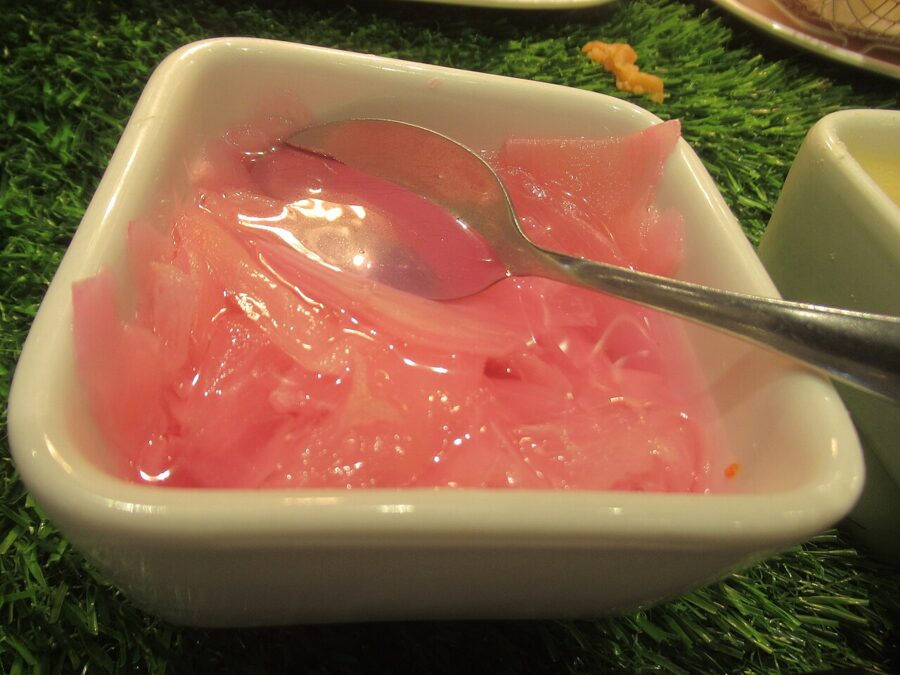
ガリ (gari) is sweet pickled ginger, named, so the story goes, for its crunch. Eat a slice between pieces, not on top of the sushi. あがり (agari) is sushi-bar language for green tea, served hot to cut the fat of the fish; at the chains it is usually powdered tea you make yourself with hot water at the seat, nothing like the whisked matcha of a tea room.
Beer is normal, and so is sake. The idea that rice wine should not be drunk with rice is a myth; I would order a cold, dry one with white fish.

The order of a meal
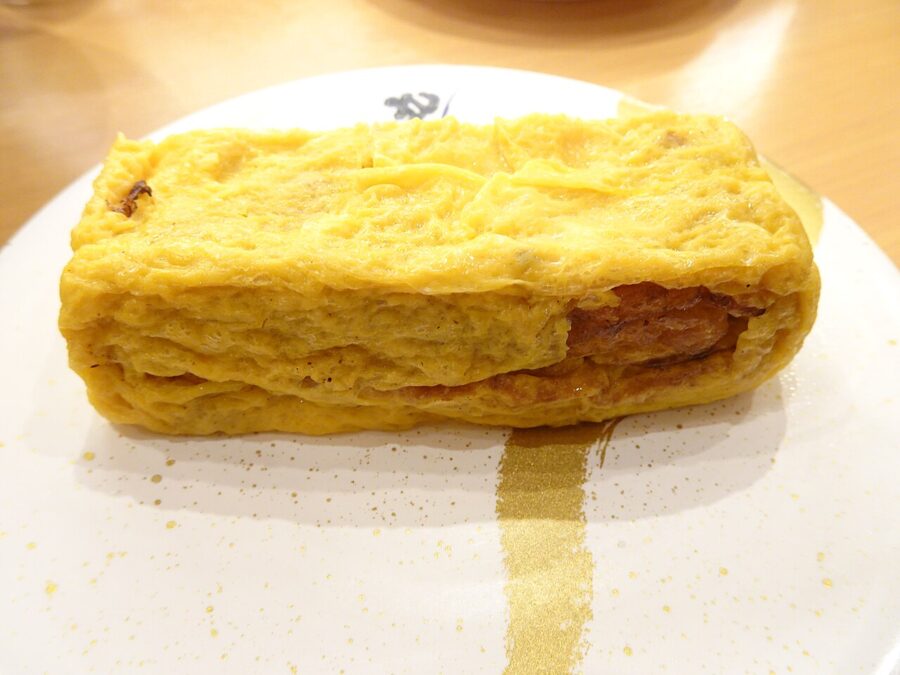
There is no rule, but there is a sensible order: light to rich. Start with white fish and squid, move to vinegared silver fish such as kohada, then lean tuna, then the fatty cuts and shellfish, and finish with sweet-sauced conger eel, a roll and the omelet. Eat the fatty tuna first and the sea bream after it tastes of very little.
If a piece is too big for one bite, ask at the start for smaller rice: シャリ小さめで (shari chiisame de). Any counter will do it, and it beats biting a piece in half and watching the rice fall on the board.

Words at the counter
| Word | Meaning |
|---|---|
| シャリ (shari) / ネタ (neta) | The rice / the topping |
| ゲタ (geta) | The wooden board the sushi is set on, named for its likeness to a wooden sandal |
| むらさき (murasaki) | Soy sauce, in the shop’s own slang |
| あがり (agari) | Tea |
| おまかせ (omakase) / お好み (okonomi) | Chef’s choice / ordering piece by piece yourself |
| お会計 (okaikei) | The bill; ask for it this way |
Manners that matter, and myths that do not
The things that matter at a counter are few. Arrive on time: at an omakase counter everyone is served together, and Ginza’s Hakkoku treats a booking as canceled, with the fee charged, once a guest is 30 minutes late without warning. Skip the perfume and cologne, which counters like Hakkoku ask for when you book. Eat each piece when it is set down, and ask before photographing the chef or other diners.
The myths are more numerous. You may use your hands, drink sake and order the same fish twice. You do not tip, though expensive counters often add a 10 percent service charge. At a chain, the one manner that matters most is simple: never put anything back on the belt.
The chains: Sushiro, Kura and Hama Sushi
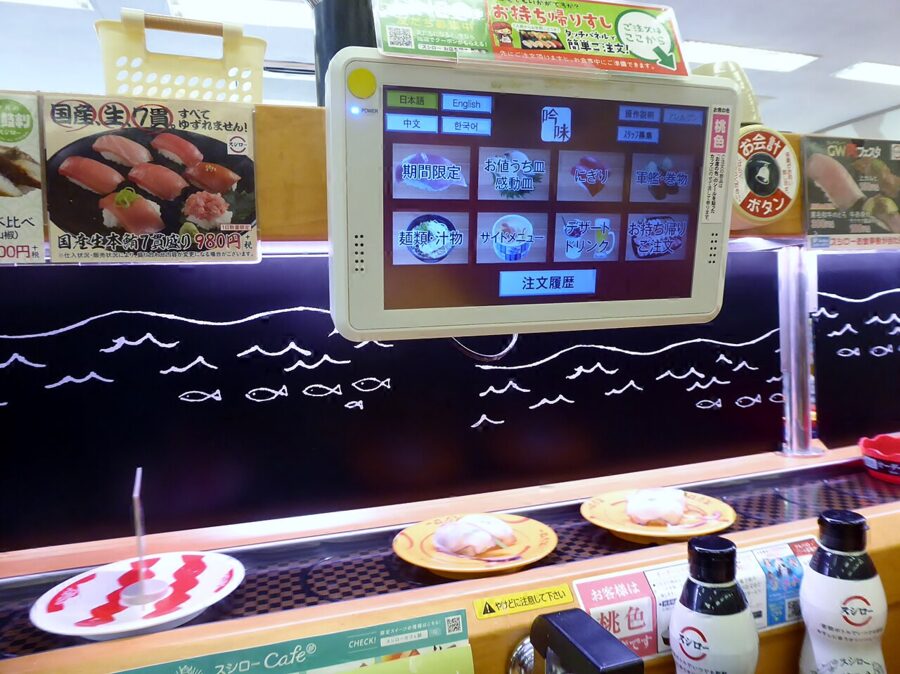
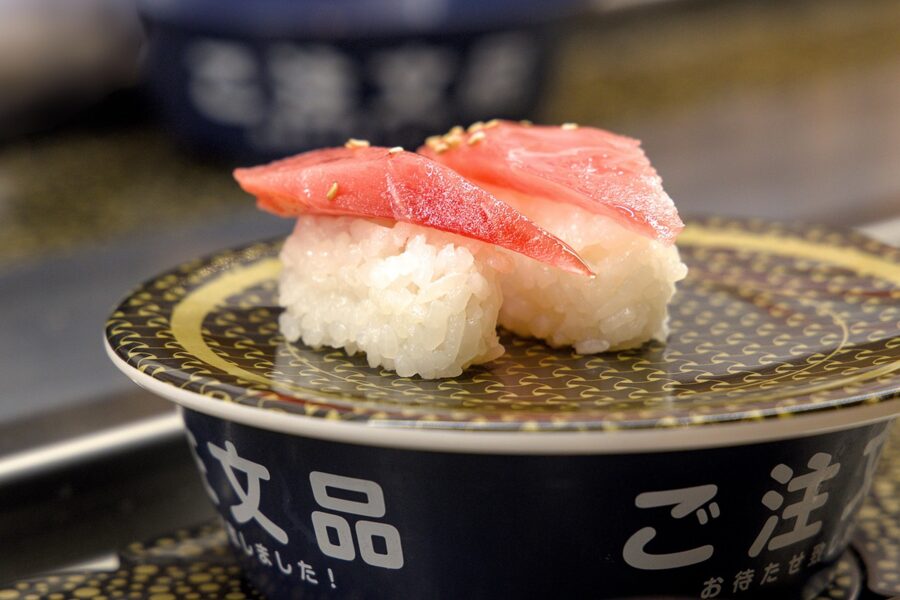
The three biggest chains work much the same way. Take a ticket from the machine at the door or book a time on the chain’s app, sit where the screen sends you, and order on the tablet at the table. Most tablets have an English mode, and the dish photos make pointing easy.


Ordering and paying
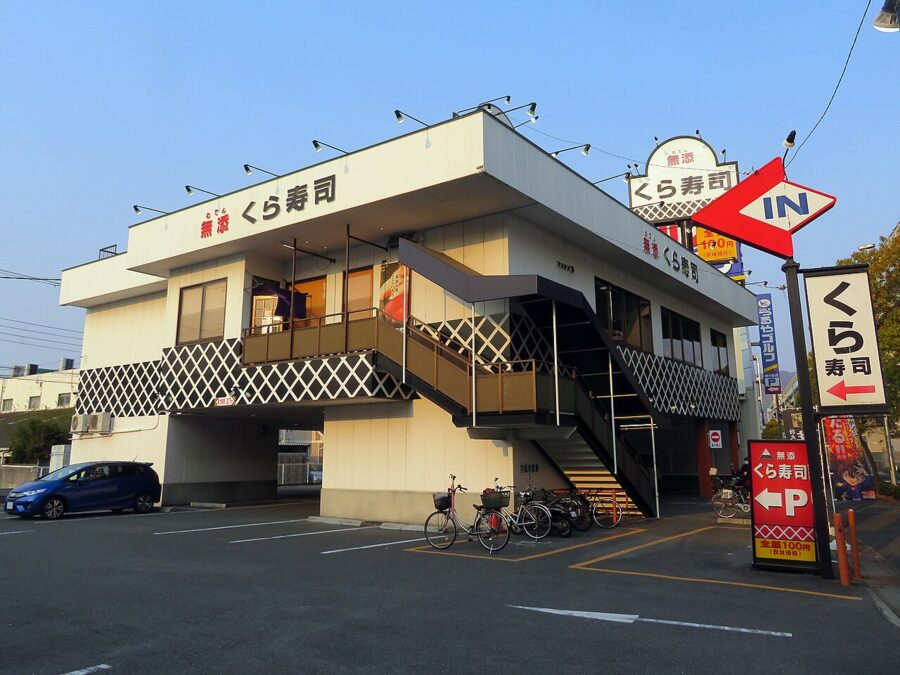
At Kura Sushi you drop empty plates into a slot at the table, which counts them for the bill, and every five plates sets off a short game on the screen, ビッくらポン (Bikkura Pon), that sometimes drops a capsule toy. Sushiro is replacing the belt at some renovated branches with Digiro, large touch displays that recreate the passing belt on screen.
All three sell side dishes, from miso soup and ramen to desserts, and you pay by machine or at a counter on the way out.
The 2023 incidents and what changed
In late January 2023 a video spread online of a teenager at a Sushiro in Gifu licking a soy sauce bottle and a teacup from the shared table supplies, then touching passing sushi with a licked finger. Copycat clips followed, including one of a customer putting wasabi on other people’s sushi at a Hama Sushi, which filed a damage report with the police. Japanese media called it 寿司テロ (sushi tero, “sushi terrorism”).
On February 3, 2023, Sushiro announced that its lanes would carry only ordered plates, that staff would bring condiments and utensils on request, and that clear panels would go up between seats and belt. Kura Sushi, whose plates travel under domed covers, put AI cameras that detect tampering with the covers into every branch from March 2, 2023. Sushiro sued the teenager for about ¥67 million (about US$430,000); the case ended in a mediated settlement on July 31, 2023, with the suit withdrawn and the terms undisclosed.
Omakase: booking and prices, as of 2026
The best-known counters fill their books as soon as they open them, but the range of prices is wide. A January 2026 roundup of Tokyo counters bookable through Ikyu, with prices as of December 2025, listed omakase courses from about ¥8,250 to ¥11,000 (about US$53 to US$70) including tax and service.
At the top end, Hakkoku in Ginza lists its 20-piece course from ¥25,000 and its 25-piece course from ¥36,300 (about US$230), tax and service included, on its booking page. It is a fair model of how these counters work: bookings open up to two months ahead, card payment only, a ¥390 (about US$2) fee per seat, allergies declared when you book, and cancellation charges of 5 percent once booked, 50 percent from seven days before and 100 percent from two days before.

- Booking sites. OMAKASE (omakase.in) and TableCheck take card-guaranteed bookings in English for many counters. Each counter sets its own booking window.
- Your hotel. A concierge can phone the counters that take bookings in Japanese only.
- Lunch. Some omakase counters serve a shorter lunch course for less, and those seats are often easier to get.
Fish markets
A market is the best place to see what sushi is made of, and to eat it fresh and cheaply. Go early and hungry.
Tsukiji Outer Market, Tokyo
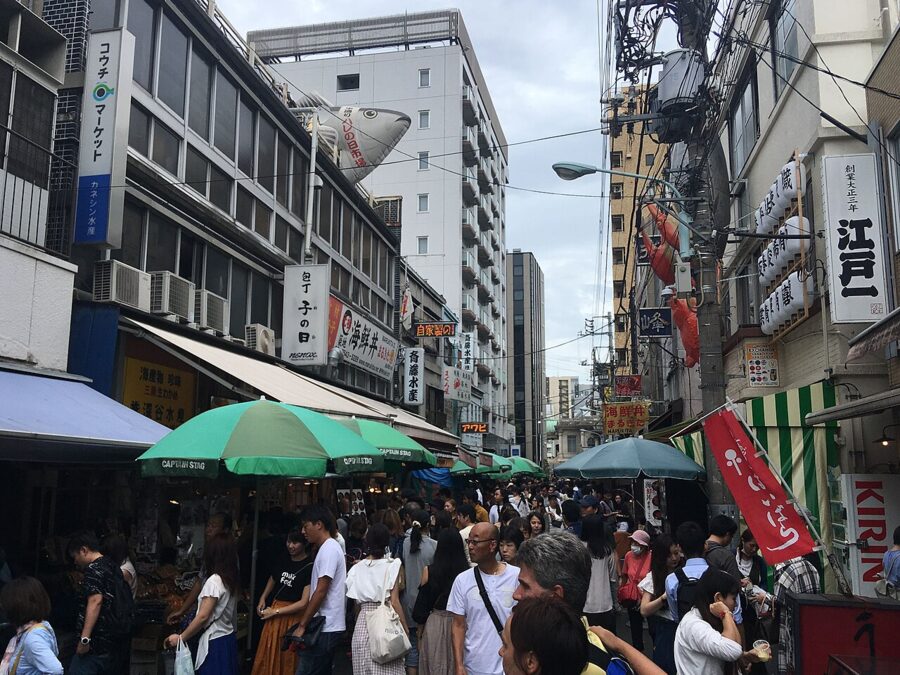
The wholesale market left Tsukiji for Toyosu in 2018, but the outer market of shops and restaurants stayed: fishmongers, omelet makers, knife and kelp sellers, and sushi counters. Its calendar sets aside 6:00 to 9:00 for professional buyers and 9:00 to 14:00 for everyone else, and its visitor advice warns that many shops close on Sundays and some Wednesdays.
The market’s manners list asks you to eat inside or in front of the shop rather than walking, keep groups small, not touch the food and not bargain. It is a minute’s walk from Tsukiji Station on the Hibiya Line and Tsukijishijo Station on the Oedo Line.

Toyosu Market and the tuna auction
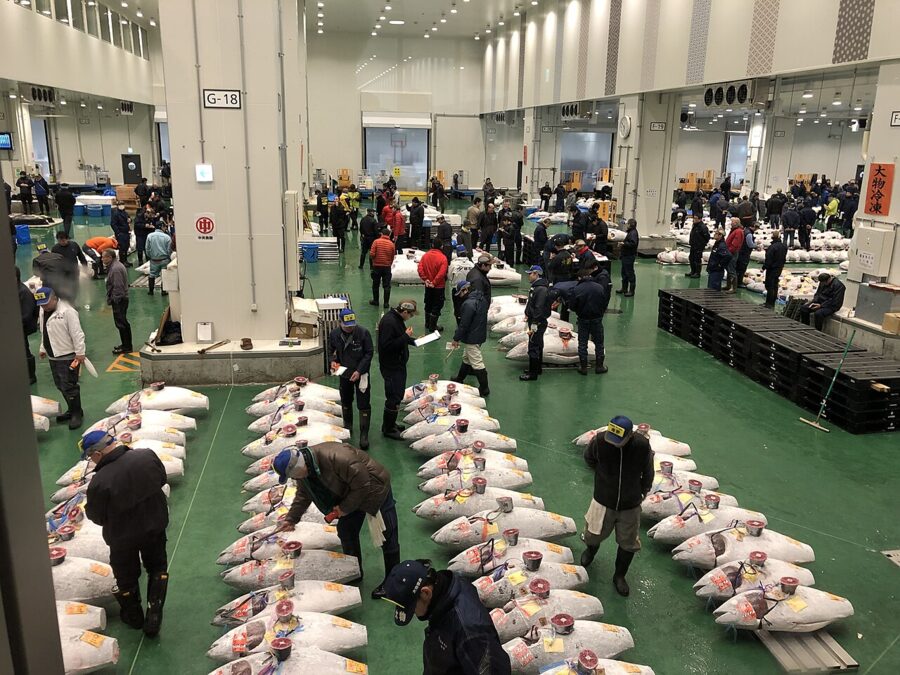
Toyosu is the wholesale market itself. Tokyo’s metropolitan government opens it to visitors from 5:00 to 17:00 on market days, which excludes Sundays, public holidays and other market holidays. The station is Shijo-mae on the Yurikamome line, and the market’s restaurants, sushi counters among them, keep their own hours.
You can watch the tuna auction two ways. The second-floor visitor walkway, behind glass, needs no booking. The closer observation deck is by free monthly lottery: up to five people per application, three preferred dates, 100 people a day, and a tour from 5:45 to 6:25 a.m. For December 2026, entries closed on November 10 and results went out on November 19, so apply about a month ahead.

Omicho Market, Kanazawa
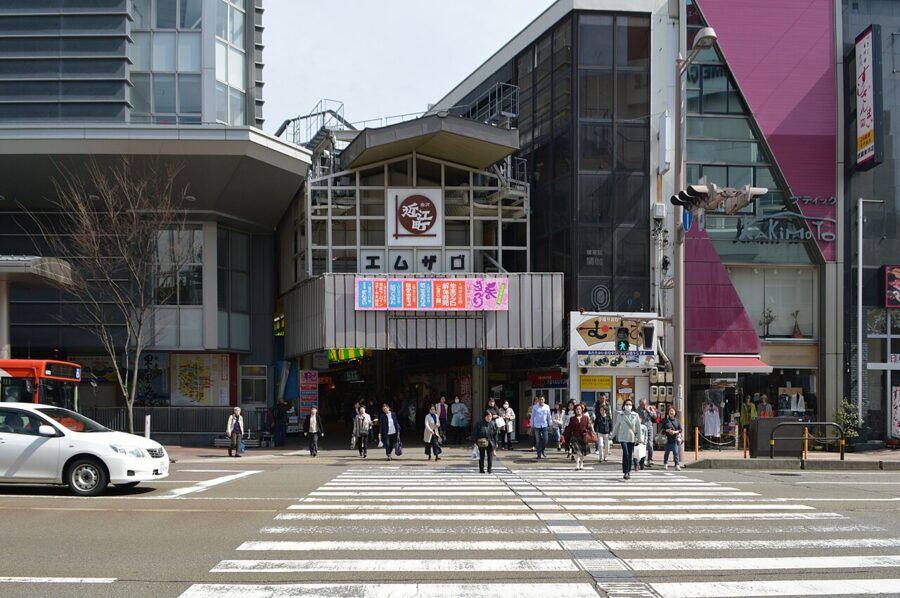
Omicho Market has fed Kanazawa for around three hundred years. By most counts about 170 shops line its covered lanes, selling crab, sweet shrimp and vegetables, with small restaurants serving kaisendon and sushi. Hours and closing days vary by shop, and lunch is the crush, so I would go mid-morning.

Nijo Market, Sapporo
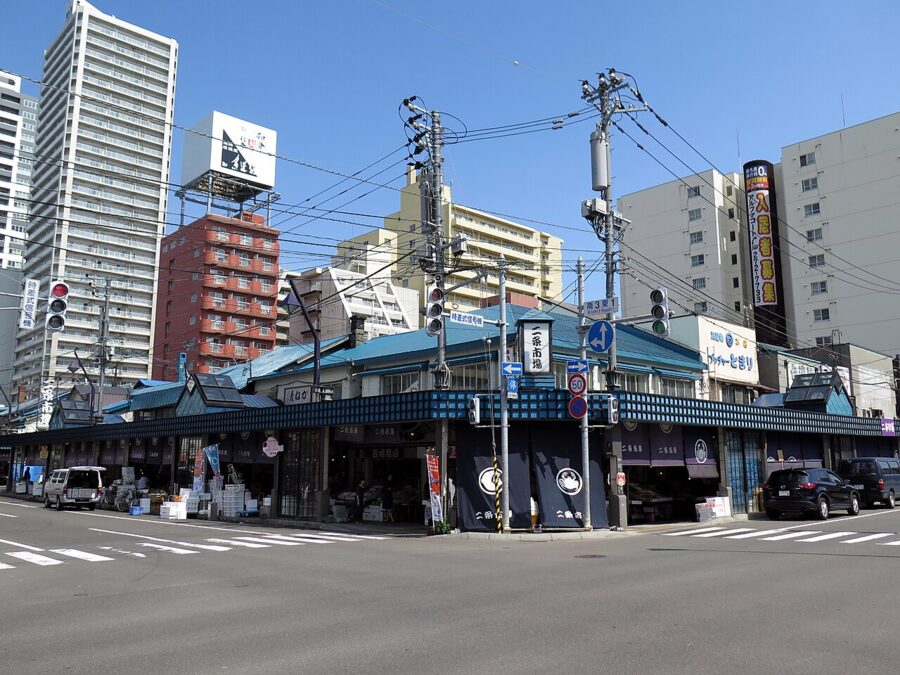
Nijo is the small market in central Sapporo, a five-minute walk from Bus Center-mae Station. Sapporo’s tourism site gives its hours as about 7:00 to 17:00, with the restaurant lane open until about 21:00 and no fixed closing day. Come early for crab, salmon roe and a seafood bowl.
Allergies and non-fish sushi
Japan’s allergen labeling rules apply to packaged food; a government guide to food allergies updated in February 2026 explains that restaurants and takeout shops set their own rules on what they disclose. Soy sauce is brewed with wheat, and shellfish and fish share boards and knives at any counter.
The chains are the easiest place to check. Sushiro’s allergen chart covers the 28 allergens named in Japan’s labeling rules, and warns that some seafood may contain shrimp or crab because of what the fish ate or how it was caught.
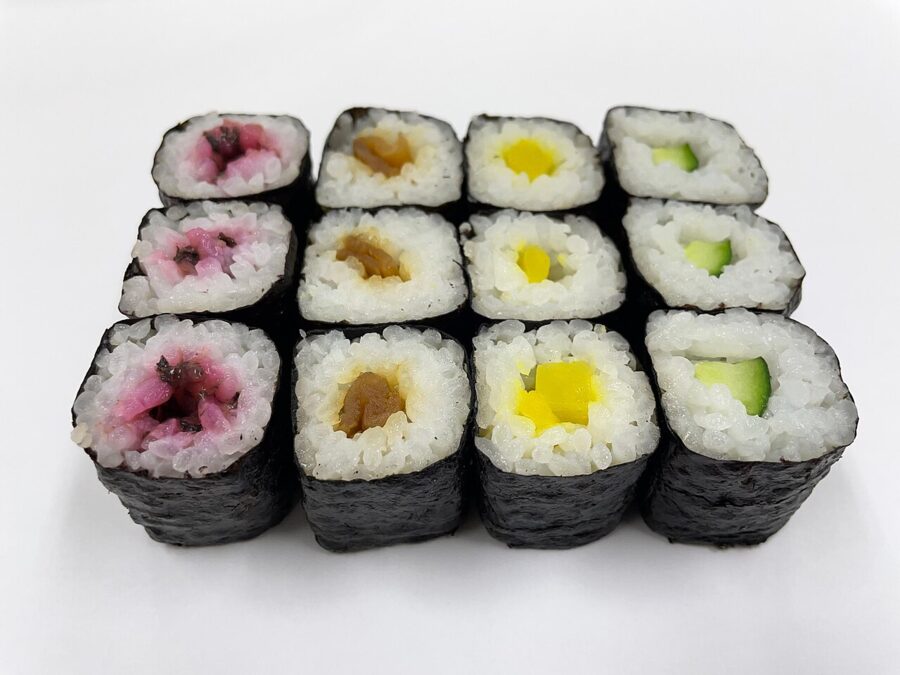
Without fish there is still plenty: cucumber roll, かっぱ巻き (kappa-maki); simmered gourd roll, かんぴょう巻き (kanpyo-maki); fermented soybean roll, 納豆巻き (natto-maki); inari; and at the chains, avocado, eggplant and corn. Vegetarians should ask, because the omelet usually contains fish stock and some shops season the rice with kelp.

Where to start this week
Start at a chain on your first night, because the tablet teaches you the menu: order kohada, mackerel and whatever the screen says is in season. The next day, eat lunch at a standing bar or a station counter and watch the chef’s hands. If the trip allows one splurge, book an omakase lunch a month or two out, or enter the Toyosu lottery.
Then go back to the counter and do the one thing the whole system is built for. When the piece is set down in front of you, pick it up and eat it, while the rice is still warm.