

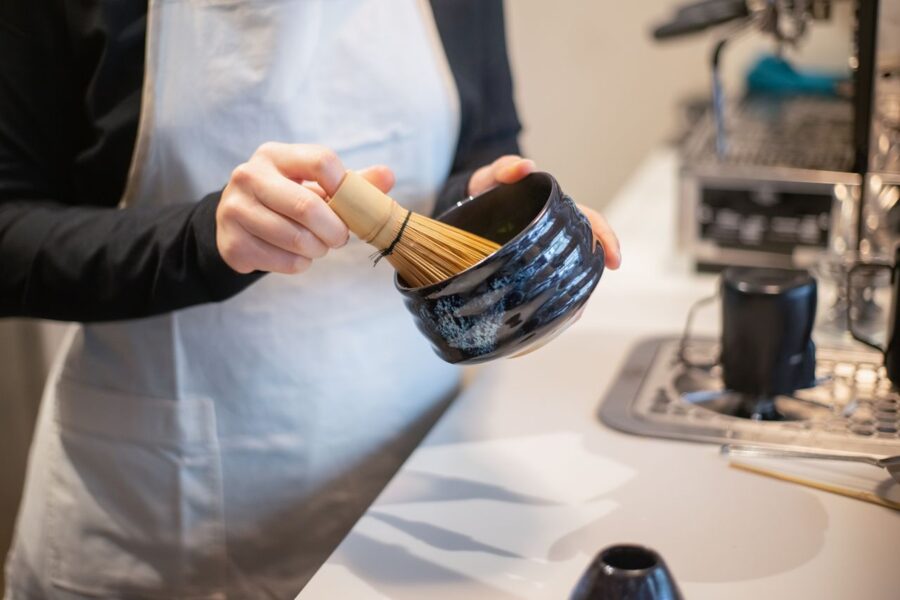
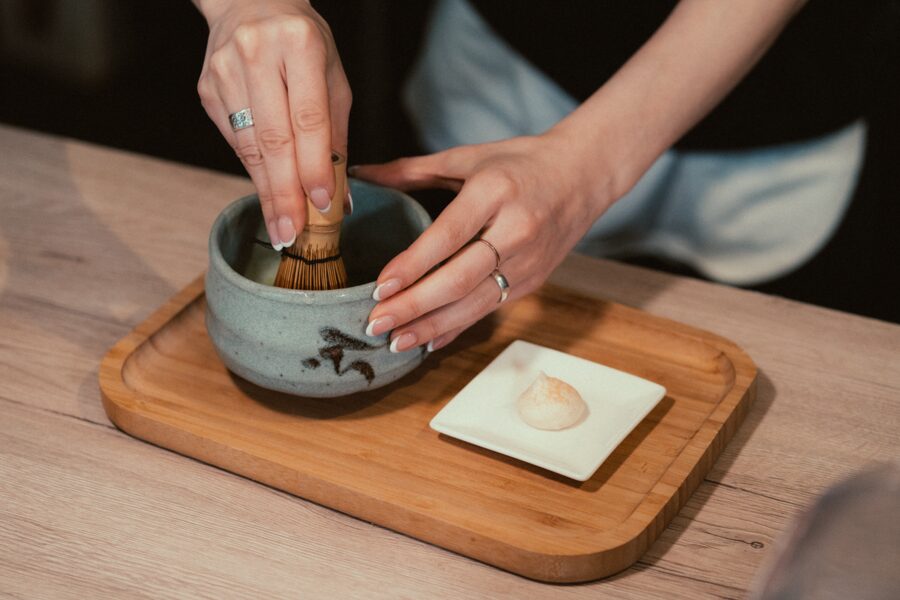
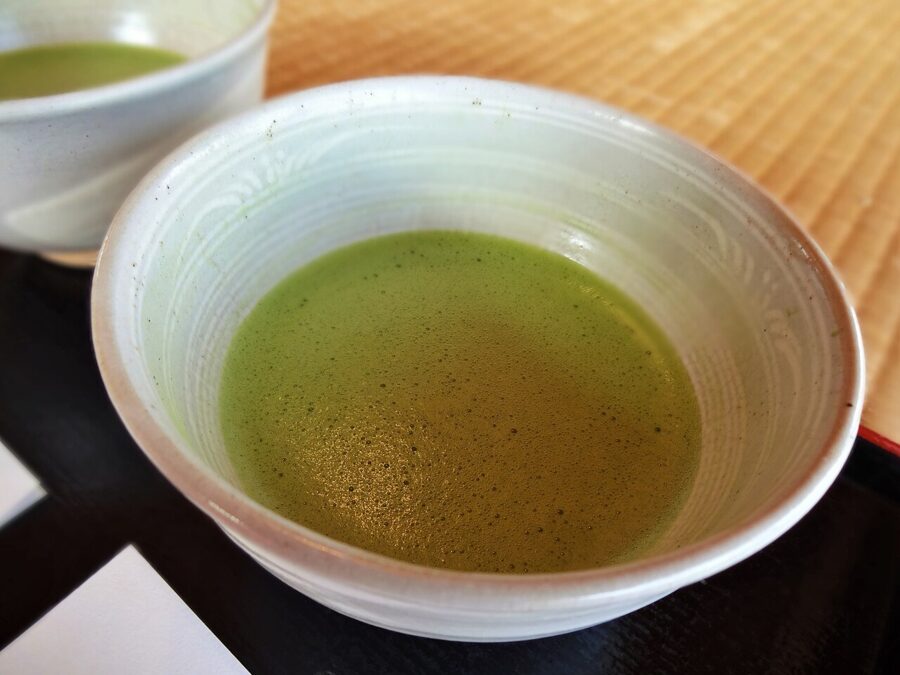
The water goes in at about 80°C, a little off the boil, and the whisk starts slow. Then the wrist takes over: quick strokes front to back, a dry rattle of bamboo against clay, and in fifteen or twenty seconds the surface turns from dark green liquid into a pale, fine foam. You lift the whisk from the center, turn the bowl and drink it in three or four sips while it is still hot.
In Japan, matcha is rarely a latte. It is two grams of powder, seventy milliliters of water and a bowl you hold in both hands, and when it is good it tastes of green seaweed, cut grass and something close to sweet milk. When it is poor it is bitter, flat and the color of a pond in August.
The difference starts weeks before harvest, in a field under black cloth, and ends at a stone mill turning at the speed of a slow clock. Everything you need to know follows from those two facts: why one box costs ¥864 (about US$5) and another ¥16,200 (about US$102), why a tea house serves the sweet first, and why Uji, a short train ride south of Kyoto, has a main street lined with tea merchants.


What matcha is, and what it is not
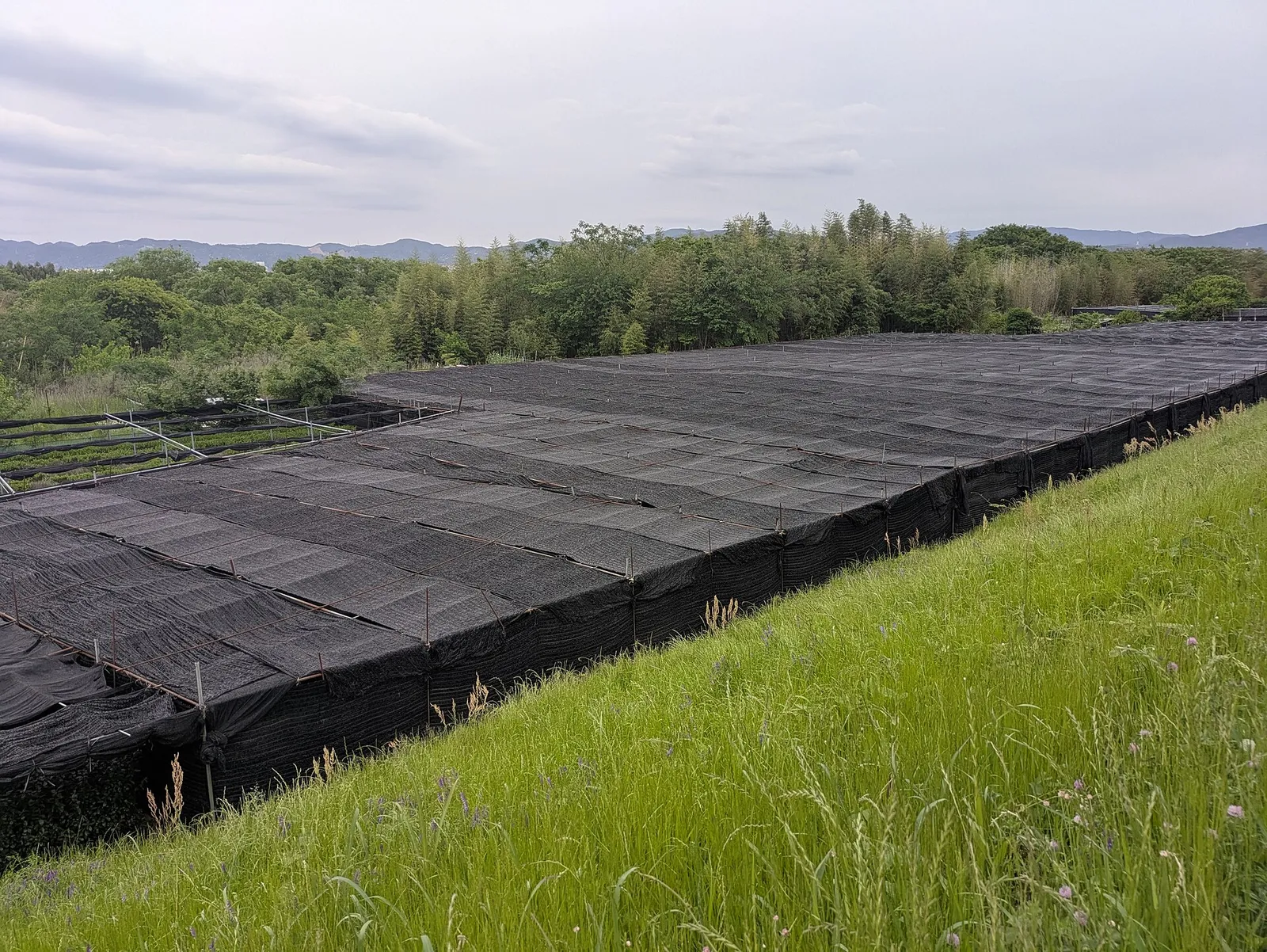
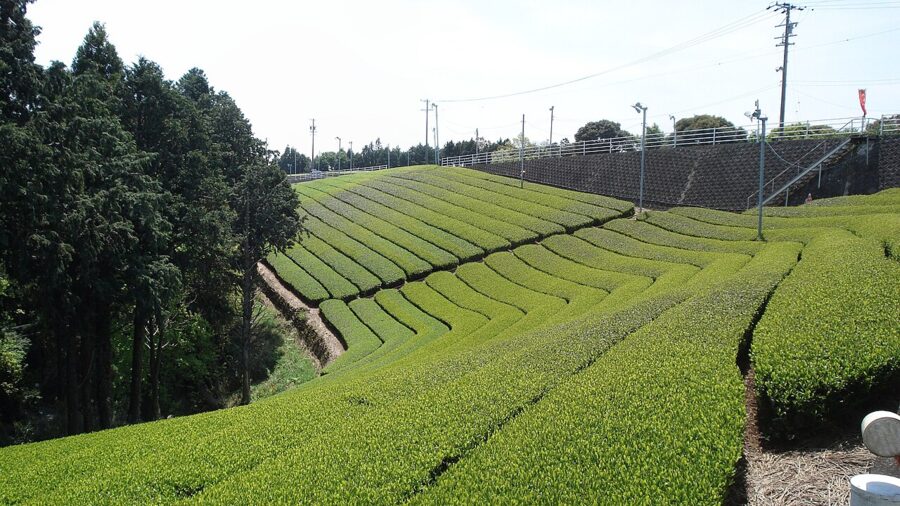
抹茶 (matcha, “ground tea”) is a powder made from one particular leaf, 碾茶 (tencha, “milled tea”). Japan’s Ministry of Agriculture sets out the process plainly in its overview of Japanese tea: the field is covered with reed screens, straw mats or shade cloth for about two to three weeks before picking, the leaves are steamed and then dried flat in a tencha oven without being rolled, and that tencha, ground fine on a stone mill or similar, is matcha.
That word, unrolled, is what separates it from the green tea most Japanese drink at home. 煎茶 (sencha) grows in full sun and is rolled into needles so it gives up its flavor to hot water in a pot. 玉露 (gyokuro) is shaded like tencha but rolled like sencha, so you steep it rather than whisk it. Tencha keeps the leaf open and brittle, with stems and veins picked out, so it can be milled to a powder you swallow whole.
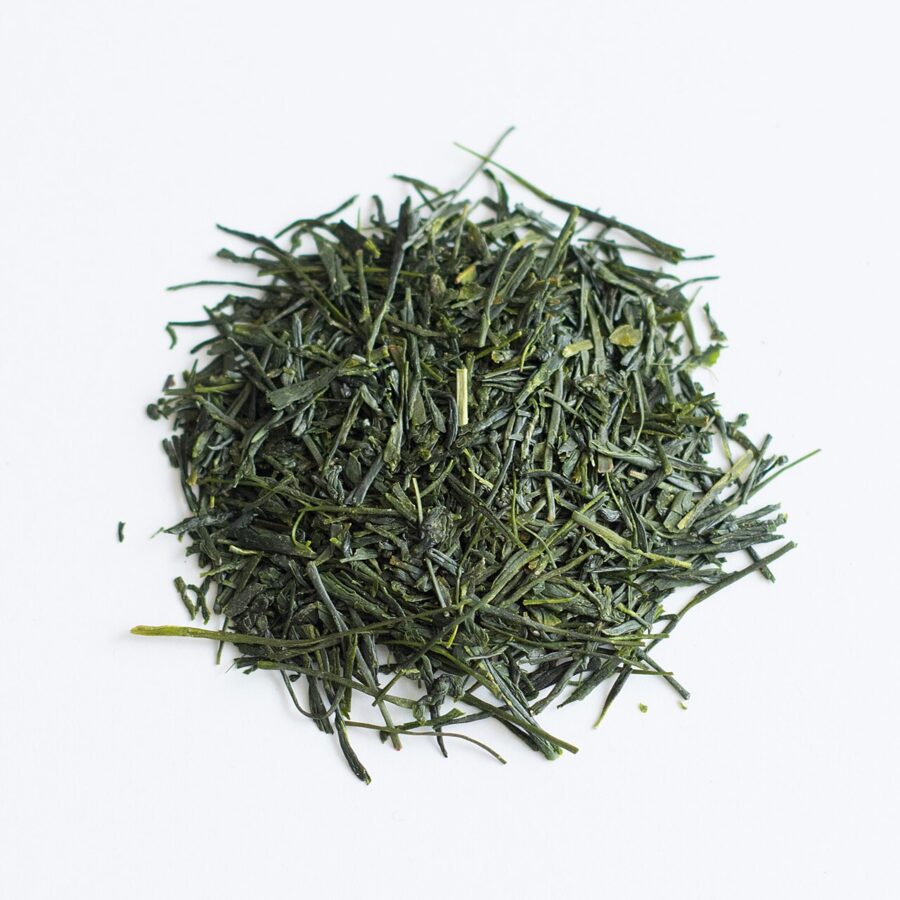

Shade changes the leaf. With less light the plant builds more chlorophyll, which deepens the green, and holds on to amino acids such as theanine that taste savory and sweet, while making fewer of the catechins that taste bitter. That is why good matcha tastes rich rather than sharp. It also explains the price: shade frames, extra fertilizer and labor make shaded tea costlier to grow than sencha.
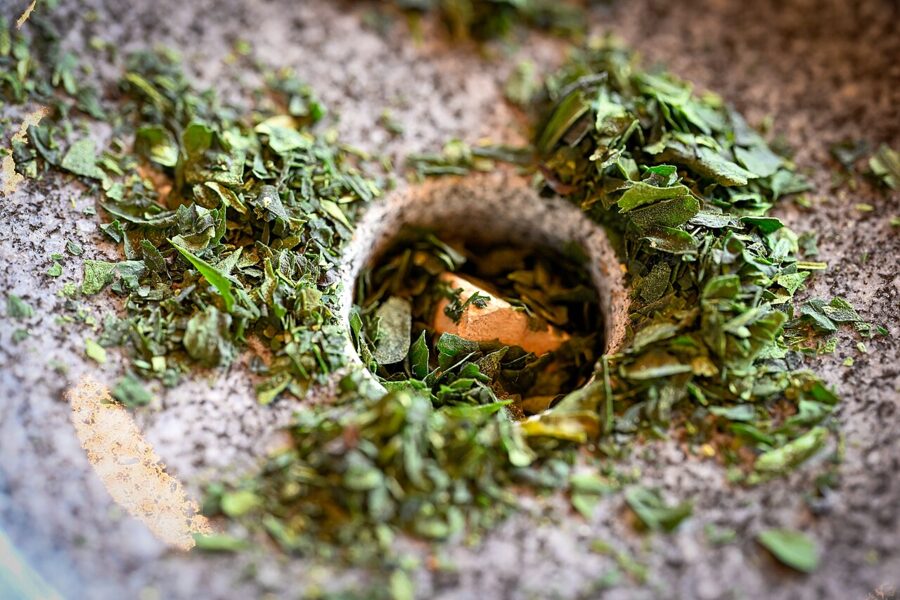

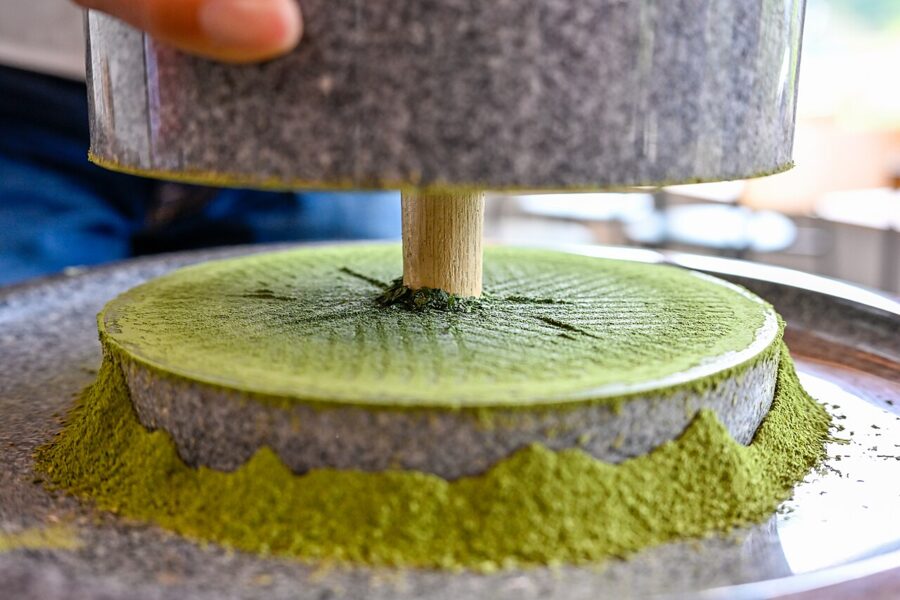
The mill is the second half of the story. A granite tea mill turns slowly so the leaf does not heat up and lose its aroma, and a single stone is commonly said to grind only around 40 grams an hour. In 1913 the Uji merchant Nakamura Tokichi succeeded in running the mill on electricity and patented the method, according to the company’s own history, one step in matcha’s move from a luxury to something a tea shop could sell by the box.

Not every green powder is matcha. Japan’s tea industry body separates matcha from 粉末茶 (funmatsu-cha, “powdered tea”), which is sencha or other unshaded tea pulverized in a machine, and it keeps a separate category of tencha made for food processing, often from autumn leaves. Those cheaper powders color most matcha-flavored candy and many lattes. Other green powders sold beside it, moringa among them, come from different plants altogether.
How it is grown: shade, first flush and the regions

The harvest that matters is the first. 一番茶 (ichibancha, “first tea”) is picked in spring, April or May in Kyoto, after the plant has stored up flavor over winter; the second flush in summer is lighter, and autumn leaves lighter still. The better matcha grades are made mostly from first-flush tencha, and the cheaper ones blend in later harvests.
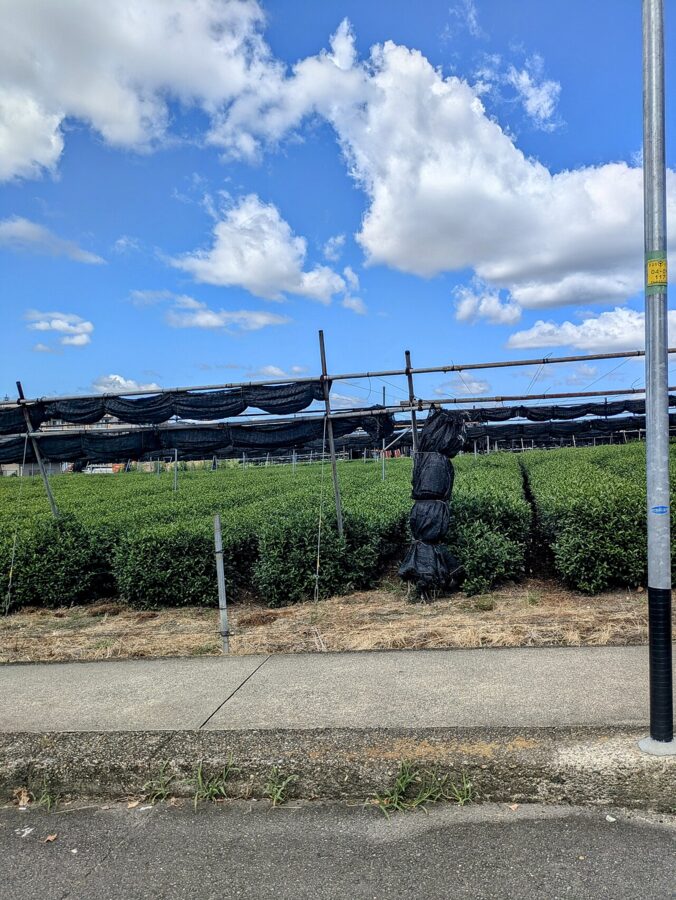
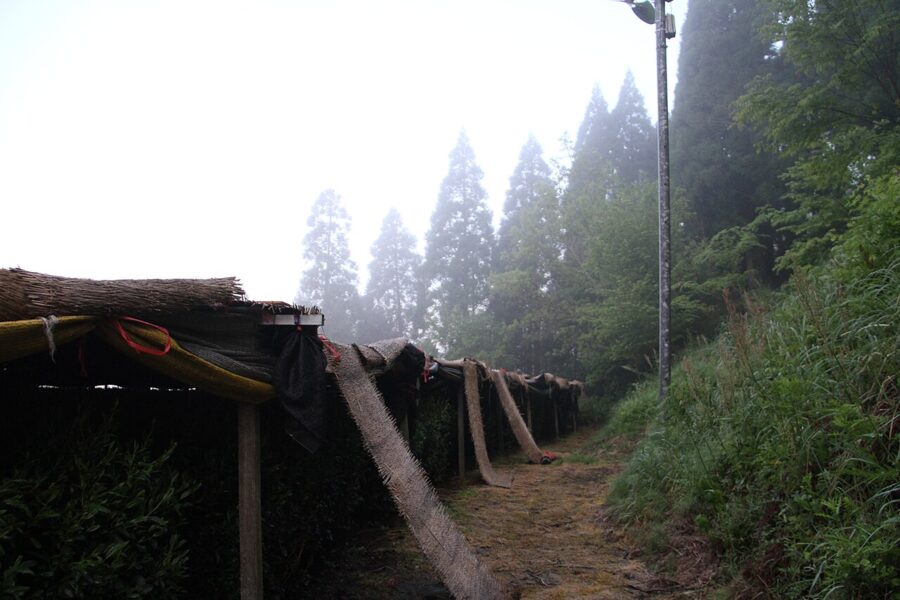
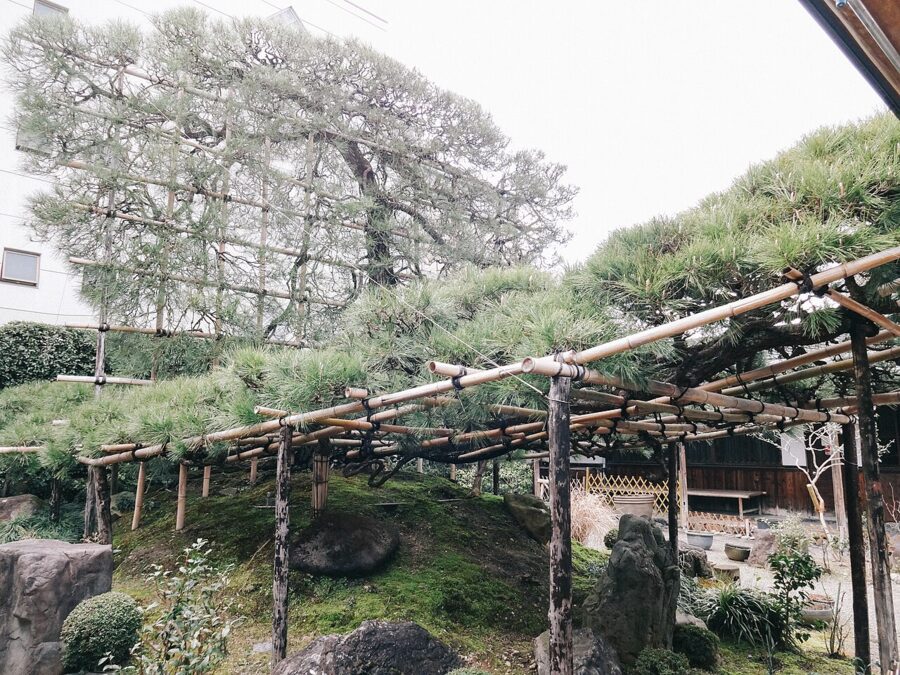
How the shade goes on matters too. The old Uji method builds a frame of wood or bamboo over the bushes, lays reed screens on top and spreads rice straw over them, blocking nearly all the light. Most farms now use steel frames and synthetic cloth, and some drape the cloth directly on the bushes, which is cheaper and lets more light through.
Uji and Kyoto’s tea country
Uji tea has been the benchmark since the Ashikaga shoguns made it their tea at the end of the 1300s. Shaded cultivation was being described in Uji by the late 1500s, and soil studies suggest it began earlier still. Today 宇治茶 (Uji-cha) is defined by origin and processing rather than city limits: tea grown in Kyoto, Nara, Shiga and Mie prefectures and finished in Kyoto Prefecture by Kyoto firms, using methods that come from Uji.
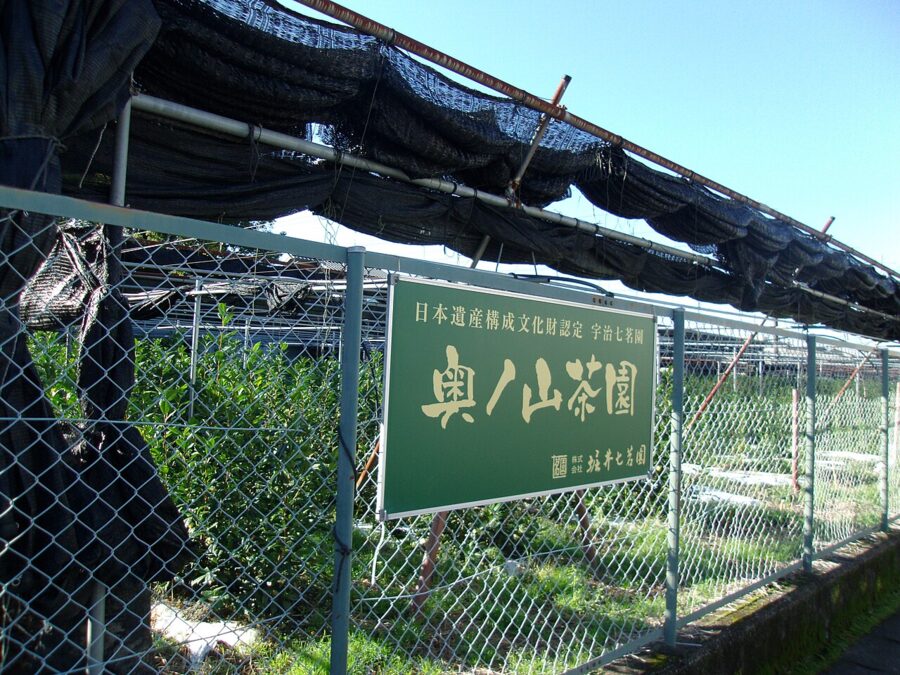

Much of Kyoto’s tencha now comes from the hill towns to the south, such as Wazuka, Ujitawara and Kizugawa, and from riverside fields like the covered rows at Kozuya on the Kizu River. Kyoto produced 989 metric tons of tencha in 2025, second in Japan, out of 6,278 tons nationwide, according to growers’ association figures published by Aichi Prefecture. That makes tencha about 9 percent of all the tea Japan produced that year.
Nishio
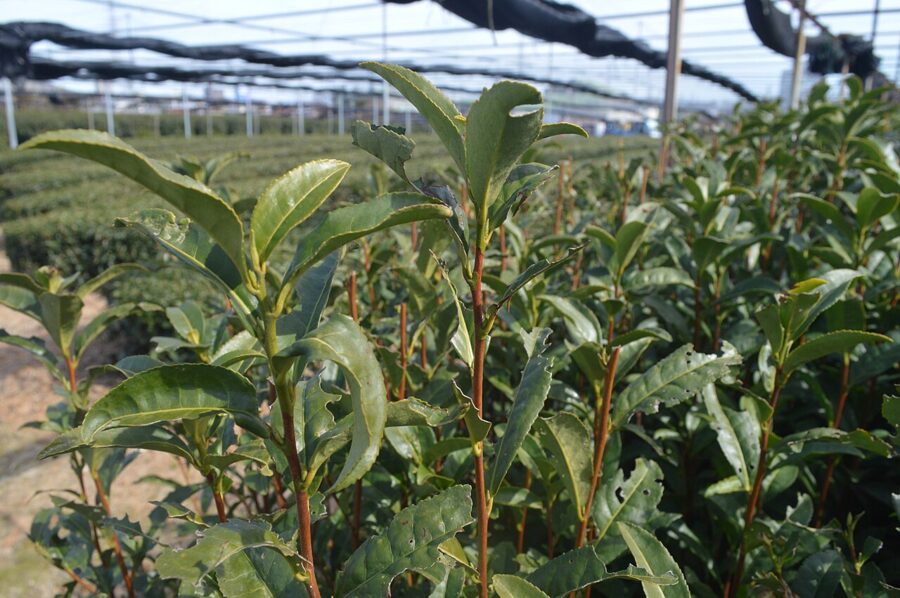
Nishio, in Aichi Prefecture between Nagoya and the sea, is the other old matcha town. Aichi made 463 tons of tencha in 2025, fourth in the country, grown mostly around Nishio and Toyota, and the prefecture says its tencha has a high share of first-flush leaf. Tencha is 463 of the 561 tons of tea Aichi makes, which turns the whole prefecture into a matcha specialist.

Kagoshima, Yame and Shizuoka
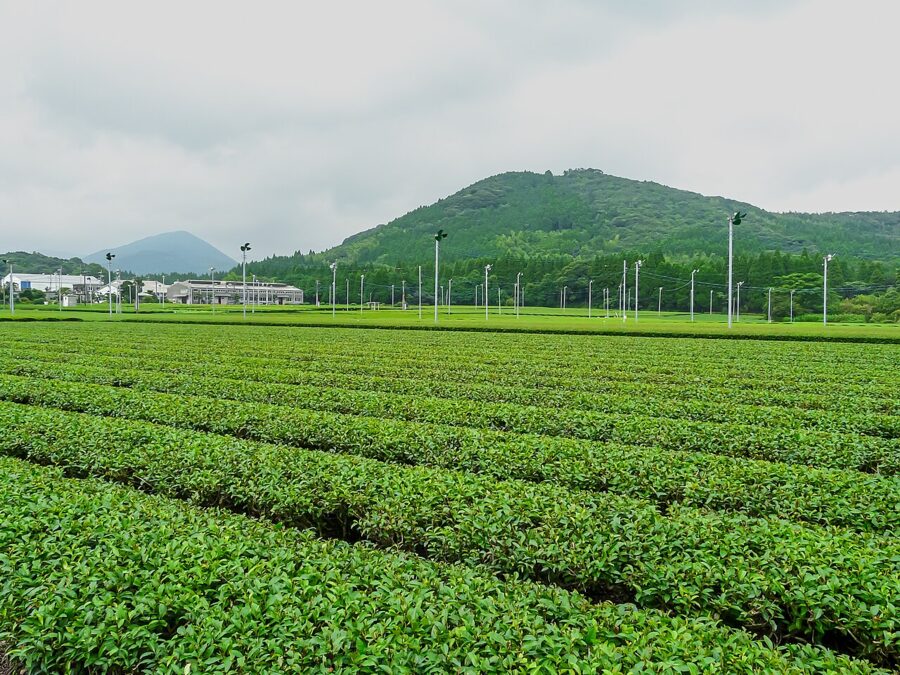
The surprise for most people is the top of the table. Kagoshima, at the southern tip of Kyushu, grew 2,670 tons of tencha in 2025, more than twice Kyoto’s crop and the most of any prefecture. It also overtook Shizuoka in total tea production in 2024, the first time since records began, according to the Ministry of Agriculture.

Shizuoka, the biggest sencha region, made 875 tons of tencha in 2025, third in Japan. Fukuoka made 280, much of it around Yame, better known for gyokuro, including Yame Dento Hon Gyokuro, a protected name since 2015. A box that names its prefecture, or better its town, is telling you something; one that only says “Japan” is usually a blend.


Grades, and how to read a tin
“Ceremonial” and “culinary” are export words. There is no official Japanese grade behind either, and the old Kyoto tea merchants do not sort their matcha that way. What a Japanese tea merchant sells you instead is a name, an origin, a harvest and a price, and the price tracks the other three closely.
The names are old. Uji tea merchants have given their matcha poetic 茶銘 (chamei, “tea names”) since around 1600, and some, like Hatsu-mukashi, are still on shelves. A long-established shop sells a ladder of them, and the ladder is the grading system. Here is Ippodo’s for a 20-gram box, as listed in its Japanese online shop in November 2026, tax included:
| Name | Price (20 g) |
|---|---|
| Hatsu-mukashi | ¥864 (about US$5) |
| Wakaki-shiro | ¥1,080 (about US$7) |
| Ikuyo-no-mukashi | ¥1,512 (about US$10) |
| Kan-no-shiro | ¥2,160 (about US$14) |
| Sayaka-no-mukashi | ¥3,024 (about US$19) |
| Shoin-no-mukashi | ¥4,320 (about US$27) |
| Ummon-no-mukashi | ¥5,400 (about US$34) |
| Kuon | ¥9,720 (about US$61) |
| Kanza | ¥16,200 (about US$102) |
The bottom of the ladder is perfectly good for a daily bowl of thin tea. The middle is where the flavor gets noticeably sweeter and the foam finer. The top is for thick tea, where any bitterness in the leaf would have nowhere to hide.
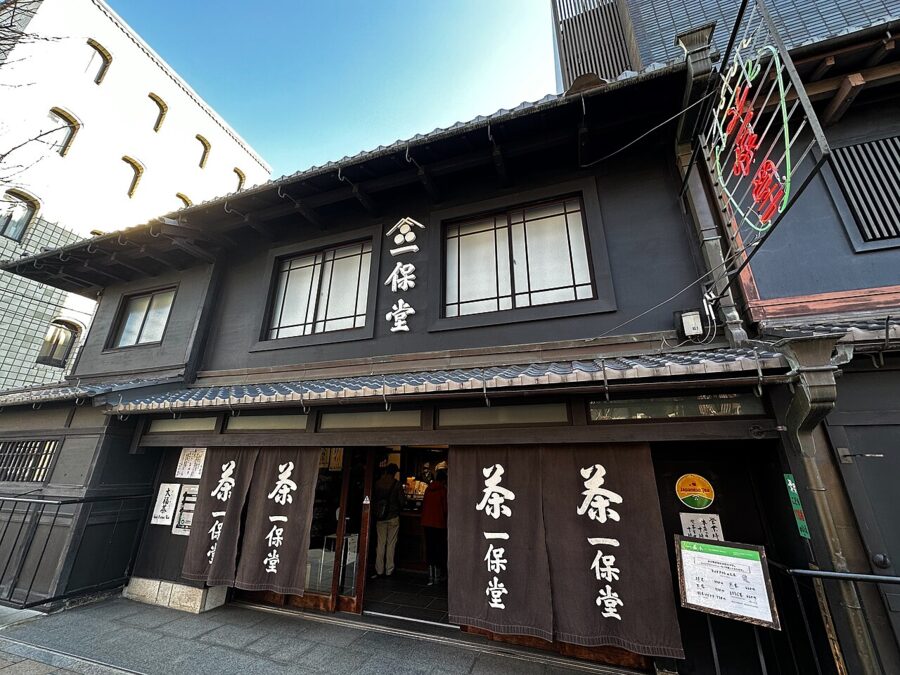

The label tells you the rest. 名称 (meisho, the product name) should read 抹茶. If it says 粉末茶 or carries a word like 加工用 (kakoyo, “for processing”), it is an ingredient, not a drinking tea. 原材料名 (genzairyomei, ingredients) should be green tea only, ideally with a prefecture, and 賞味期限 (shomi kigen) is the best-before date, which you want as far away as possible.
Prices have moved. Global demand pushed the average price of tencha to ¥8,562 a kilo in 2025 (about US$54), more than double the year before. In a notice to customers in February 2026, Ippodo expected 2026 prices to hold near 2025 levels as farmers moved fields to tencha, though new plants take at least five years to reach a first harvest. The squeeze now runs the other way: from March 2026 Ippodo limited purchases of some hojicha and genmaicha, because fewer fields grow them.
Usucha and koicha
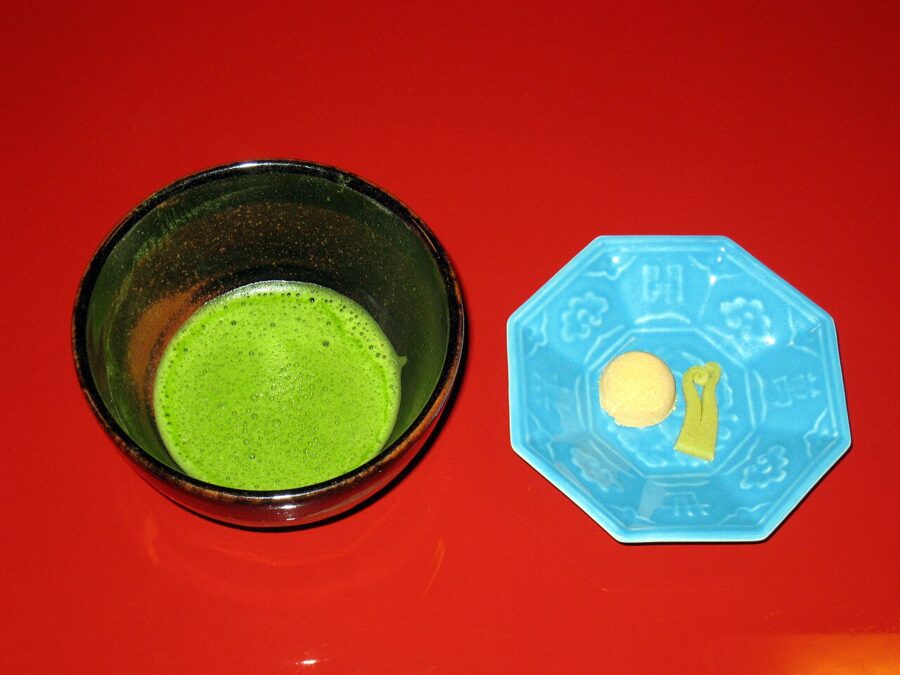
There are two ways to drink it. 薄茶 (usucha, “thin tea”) is what nearly every tea house and class serves: about two grams of matcha whisked into about 70 milliliters of water until it foams. 濃茶 (koicha, “thick tea”) uses two to three times the powder in a little over half the water, and it is kneaded rather than whisked into a glossy paste the thickness of melted chocolate.
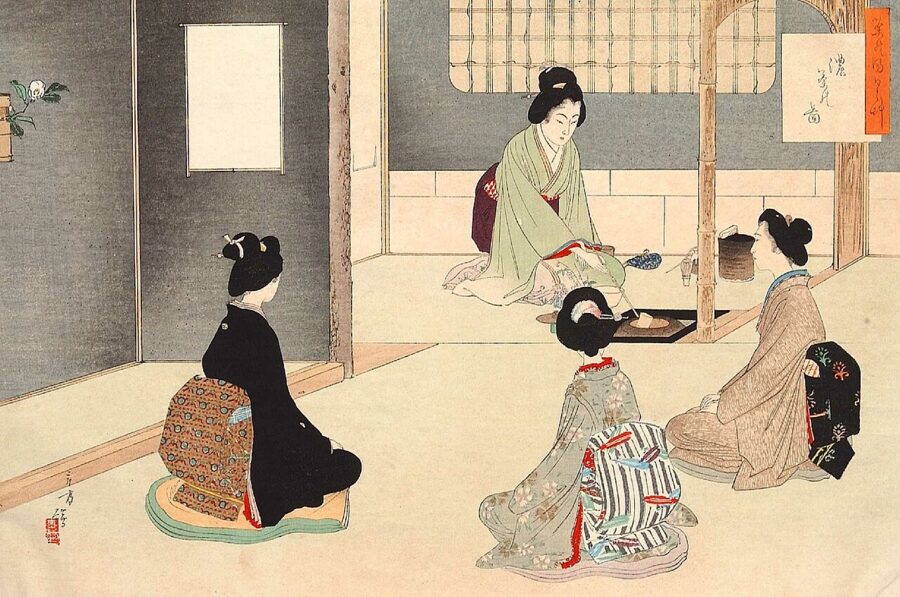
In formal tea, koicha is the center of the gathering, and one bowl is shared by all the guests, each taking a few sips and wiping the rim. It needs the best leaf, because concentrated matcha magnifies everything. If you see a koicha set on a menu with the shop’s top tea behind it, order it once; nothing else shows so clearly what the leaf tastes like.
Thin tea is foamed on purpose. The foam softens the bitterness, and the schools differ on how much to make: Urasenke whisks a fine foam over the whole surface, while Omotesenke leaves less, with a patch of clear tea showing like a moon. Neither is wrong, and a teacher in a class will show you their school’s way.
How to whisk a bowl
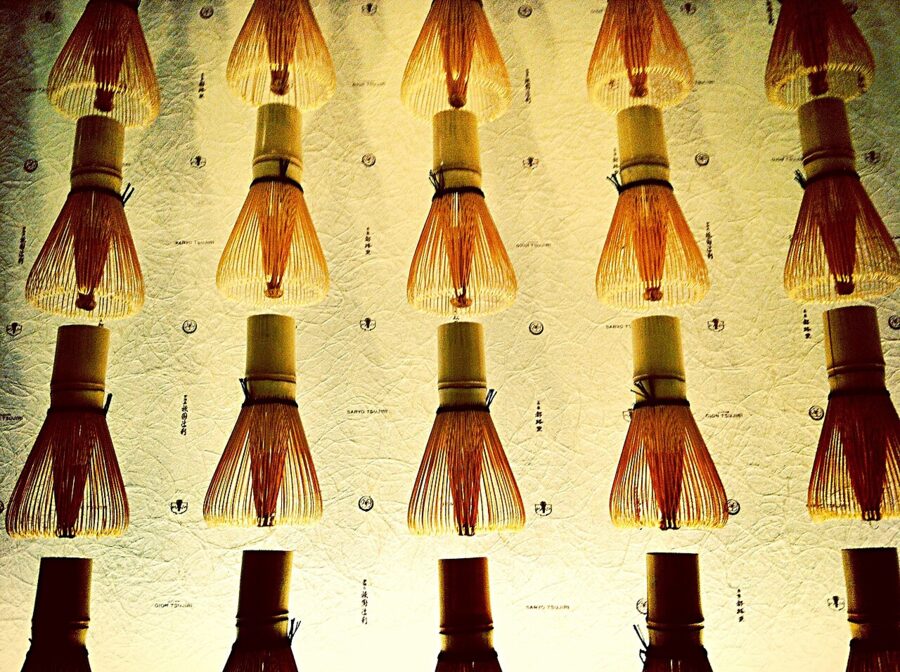

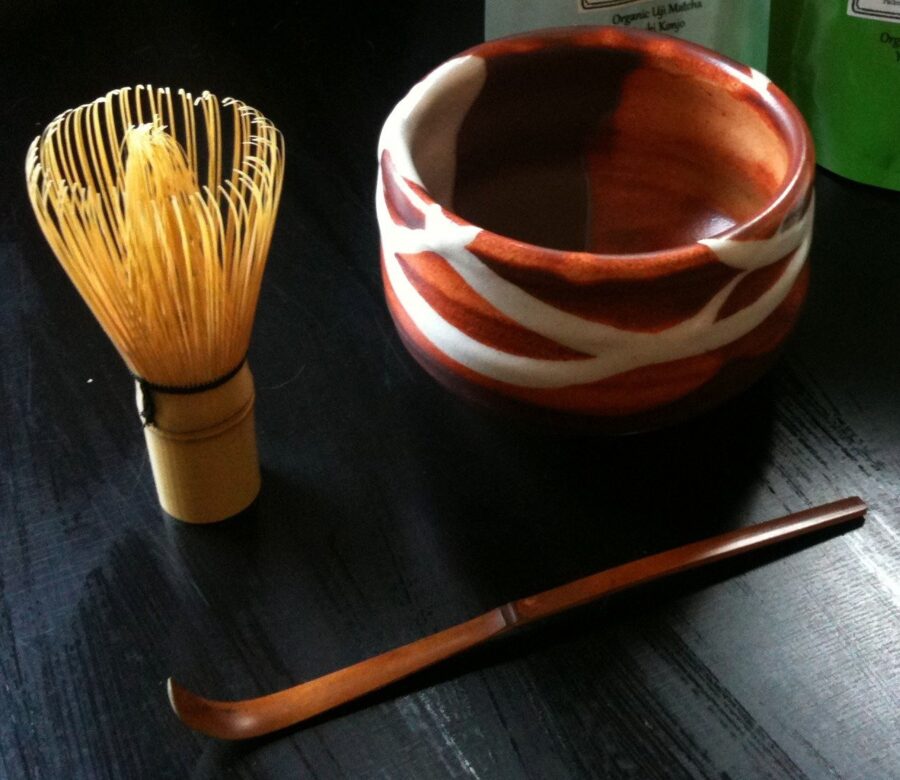
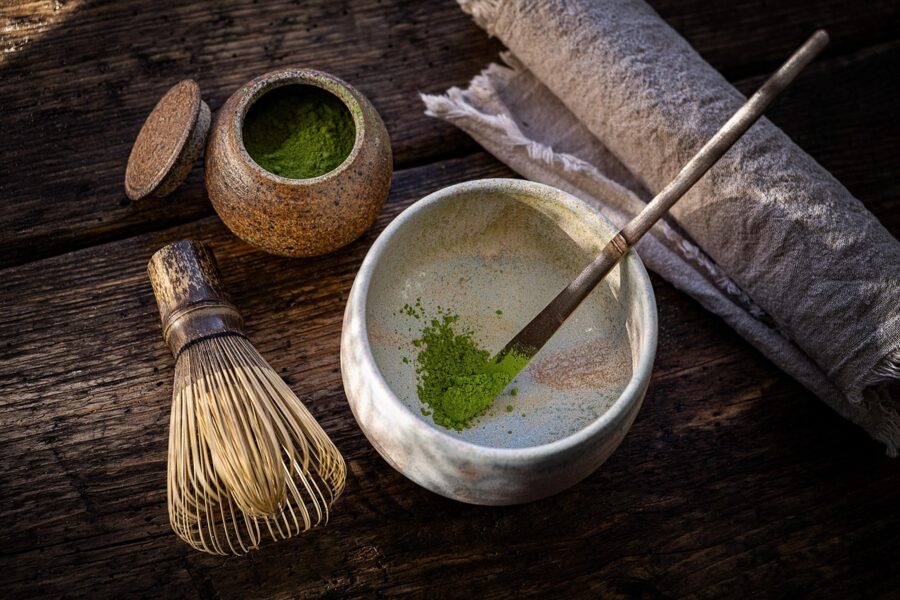
You need a bowl wide enough to whisk in, a bamboo chasen, a scoop or measuring spoon, a small sieve and a kettle. Water from the kettle, left a minute or two to cool, is about right. Nakamura Tokichi’s brewing guide gives these numbers, and I follow them:
- Usucha: 2 grams of matcha (two scoops), 70 milliliters of water at 80°C, whisked well.
- Koicha: 4 grams (four scoops), 40 milliliters at 80°C, added in small splashes and kneaded, not whipped.
Sift the powder into a warmed, dried bowl. Matcha clumps as soon as it meets air, and lumps never whisk out. Pour in the water, steady the bowl with one hand and whisk with the other in fast, short strokes front to back, keeping the tines just off the bottom. When the large bubbles are gone, skim the surface lightly for a few seconds, then lift the whisk out from the middle.
Skip the circular stirring you would use for cocoa: it makes a flat, bitter cup. Skip boiling water too, which scorches the flavor. And skip the electric milk frother if you care about taste; it is fine for a latte, but bamboo makes a finer, longer-lasting foam.
The tea ceremony, and how to take part properly
茶の湯 (chanoyu, “hot water for tea”), also called 茶道 (sado or chado, “the way of tea”), is a hosted meal of tea with a fixed sequence of movements, utensils chosen for the season and guests who know their part. A full gathering with a meal and both thick and thin tea can last four hours. A visitor joins a short version: thin tea and a sweet, often followed by a chance to whisk your own.
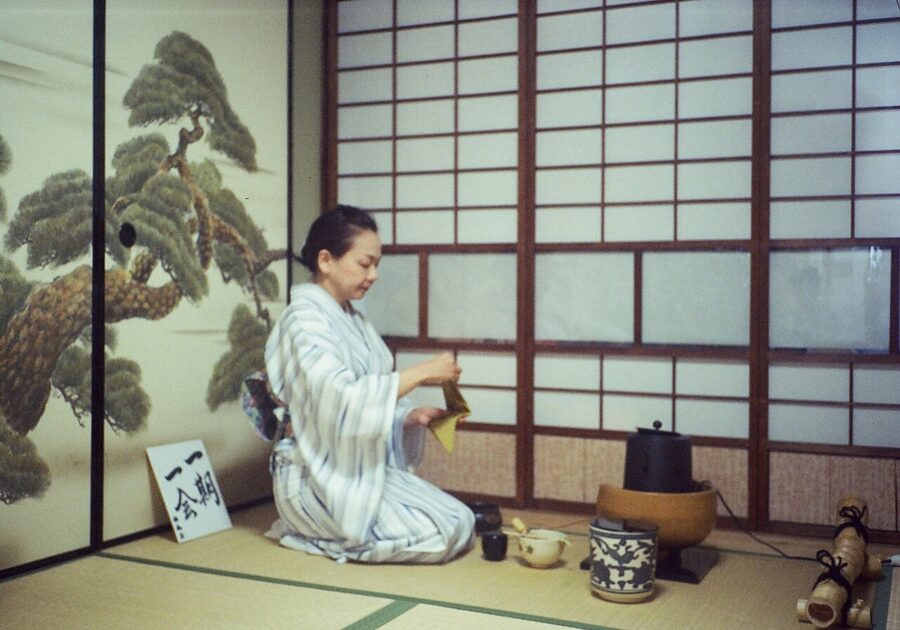

The guest’s part fits in a paragraph, and Urasenke’s guide for beginners sets it out step by step. When your sweet arrives, eat it before the tea. When the tea is set down in front of you, bow slightly to the guest after you and say “osaki ni” (“before you”), then to the host, “otemae chodai shimasu” (“I gratefully receive your tea”).
Pick the bowl up with your right hand, rest it on your left palm and raise it slightly in thanks. Turn it twice with your right hand so you do not drink from its front, which was facing you, and drink in a few sips. Wipe the rim where your lips touched with your thumb and finger, turn the bowl back and set it down, then look at it. Admiring the bowl is part of the meal.
The rules that matter are few. Take off rings and bracelets, which can scratch an old bowl, and do not take photographs in the tea room unless the host says you may. Sit on your heels if you can, but nobody minds if you shift, and many classes for visitors use chairs.

Kyoto
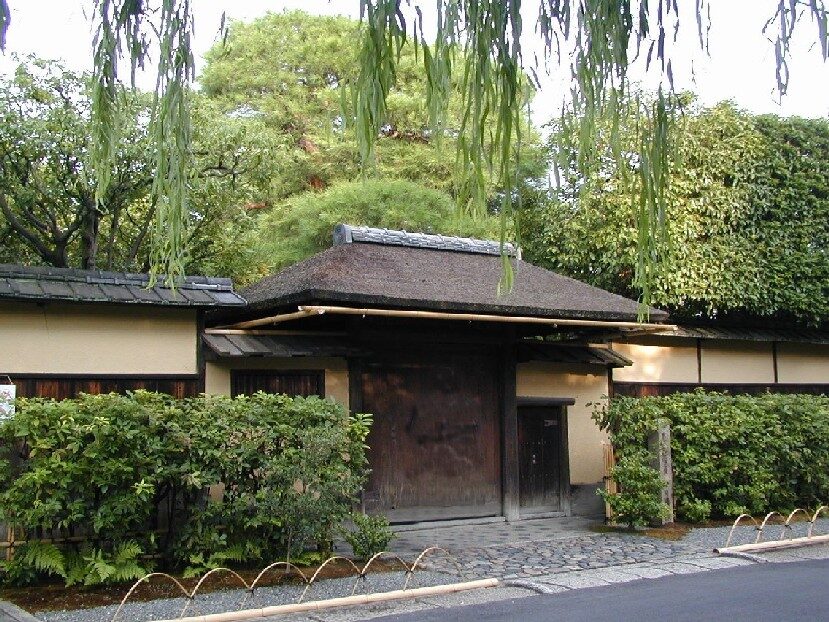
The most rewarding first bowl in Kyoto is at the Chado Research Center, Urasenke’s museum on Horikawa Street. Its tea seat serves matcha and a sweet chosen for the season or the exhibition, in a chair-seated room looking onto a courtyard garden, at 10:00, 11:00, 13:00, 14:00 and 15:00 on most exhibition days. Each seating takes 16 people and lasts about 30 minutes; bookings get priority, you pay museum admission on top, and staff will explain how to hold the bowl and eat the sweet if you ask.
For a class where you also whisk, Camellia runs shared ceremonies at its Flower Teahouse near Kiyomizu-dera from ¥4,000 (about US$25) for adults as of 2026, with private sessions from ¥8,000 (about US$50). Ippodo’s Kaboku tearoom, inside the main store on Teramachi, takes no reservations and brews the shop’s teas for you with a sweet; it is where I would go for a bowl without any ceremony at all.
Tokyo
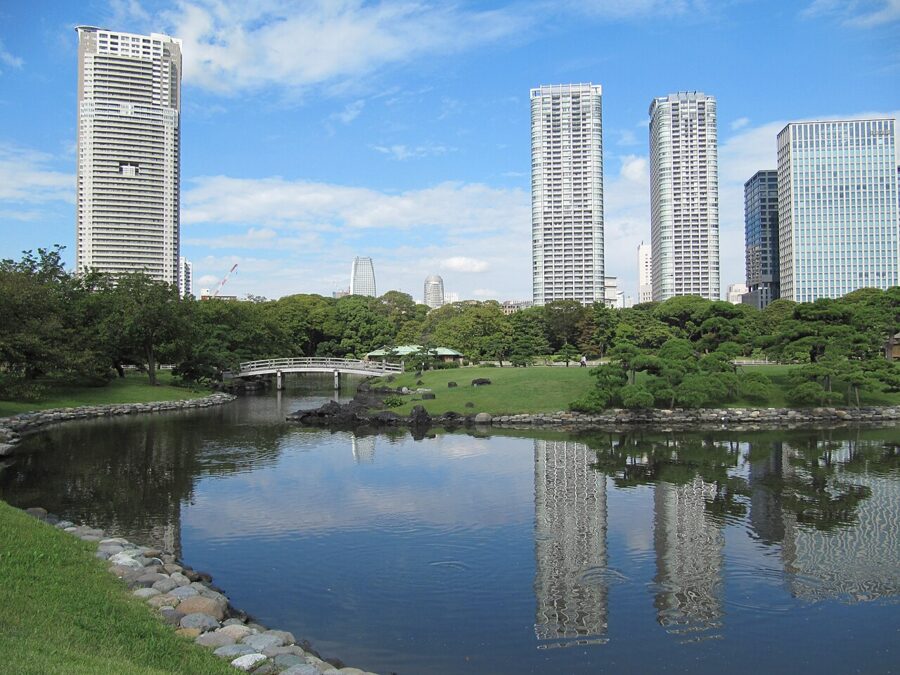
In Tokyo the easiest bowl with a view is at Hama-rikyu Gardens, beside Shiodome. The Nakajima-no-ochaya teahouse stands on an island in the garden’s tidal pond, reached by a long wooden bridge, and serves matcha; the building is a 1983 reconstruction of the Edo-period original. Garden entry is ¥300 (about US$2), and the garden opens 9:00 to 17:00, last entry 16:30.

Kanazawa
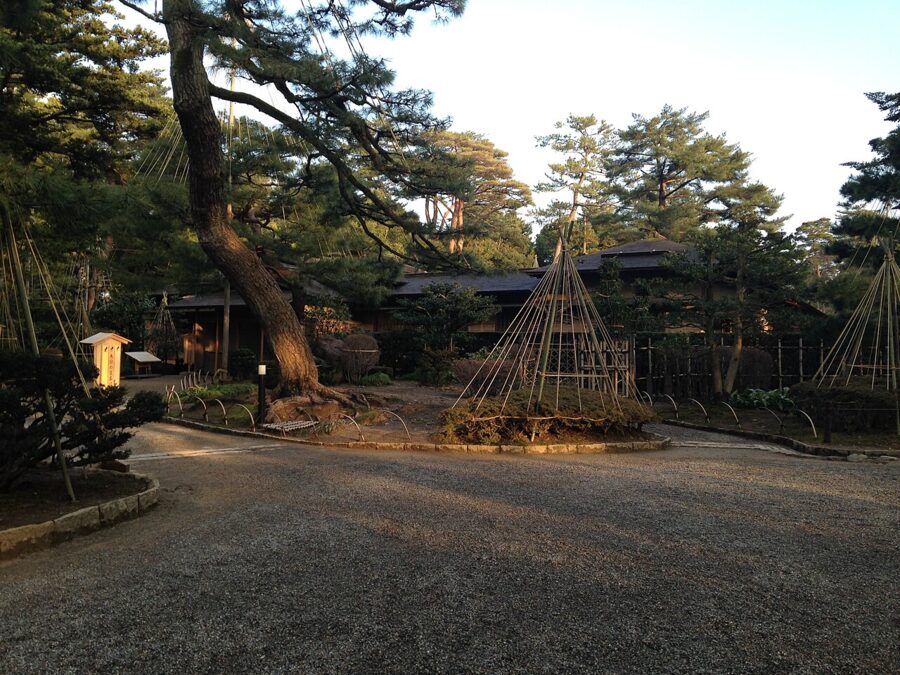
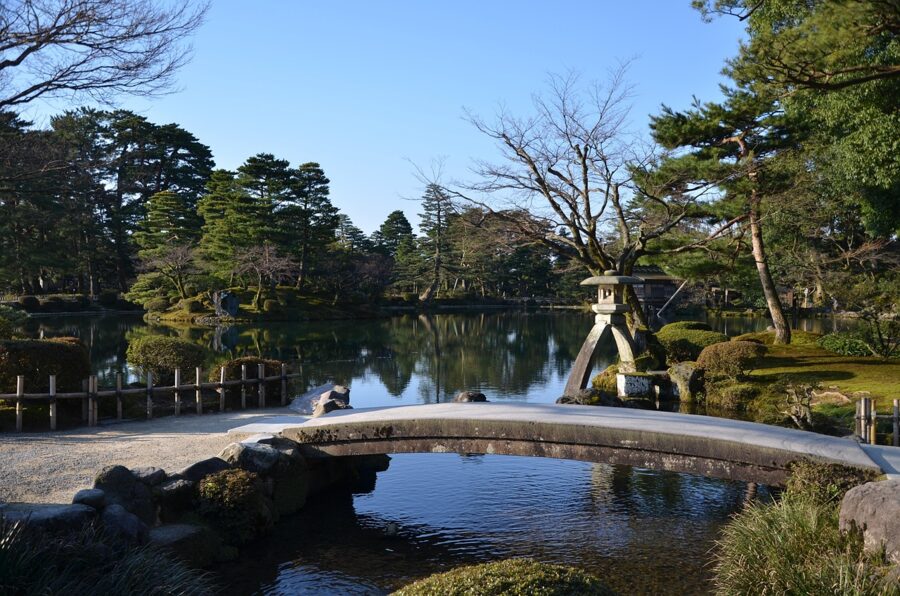
In Kanazawa the bowl to have is in Kenroku-en. Shiguretei, inside Kenroku-en garden, is a reconstruction, finished in 2000, of a lord’s pavilion that stood in the garden until the early Meiji period, and its tea service charges ¥1,000 (about US$6) for matcha with a fresh sweet made for the house, or ¥500 (about US$3) for sencha. It serves 9:00 to 16:30, last entry 16:00, closes from 12:00 to 13:00 for cleaning and offers no whisking lessons. Garden entry is ¥320 (about US$2).

Uji as a day trip
Uji sits on the JR Nara Line south of Kyoto Station and at the end of the Keihan Uji Line, and its tea district is a walk of a kilometer or so along the river. Go on a weekday, and start early.
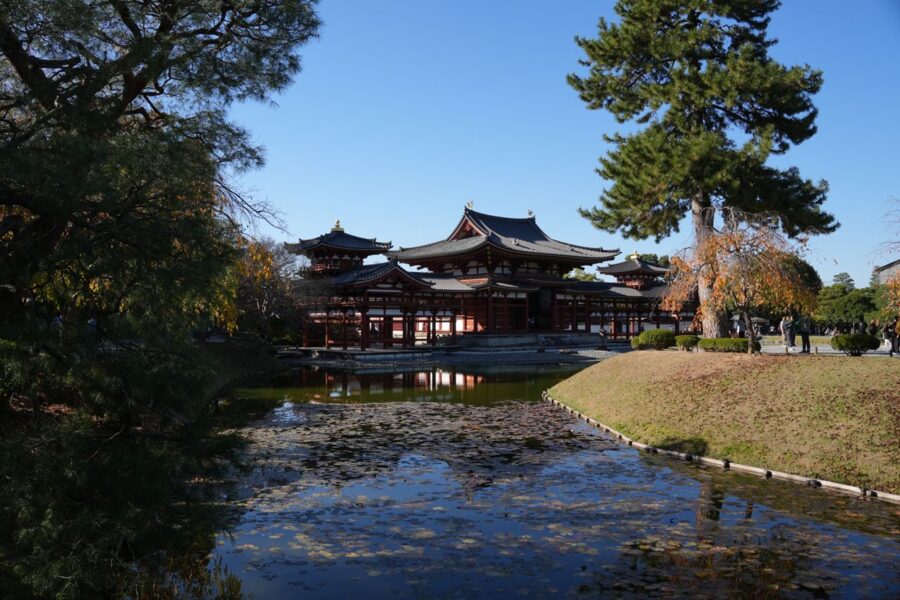
Start at Byodo-in, the temple on the ¥10 coin. The garden and the Hoshokan museum cost ¥700 (about US$4) for adults, open 8:45 to 17:30, and the inside of the Phoenix Hall costs a further ¥300, in groups of 35 every 20 minutes from 9:30, first come, first served. The street leading to the gate, Byodo-in Omotesando, is lined with tea merchants and sweet shops.
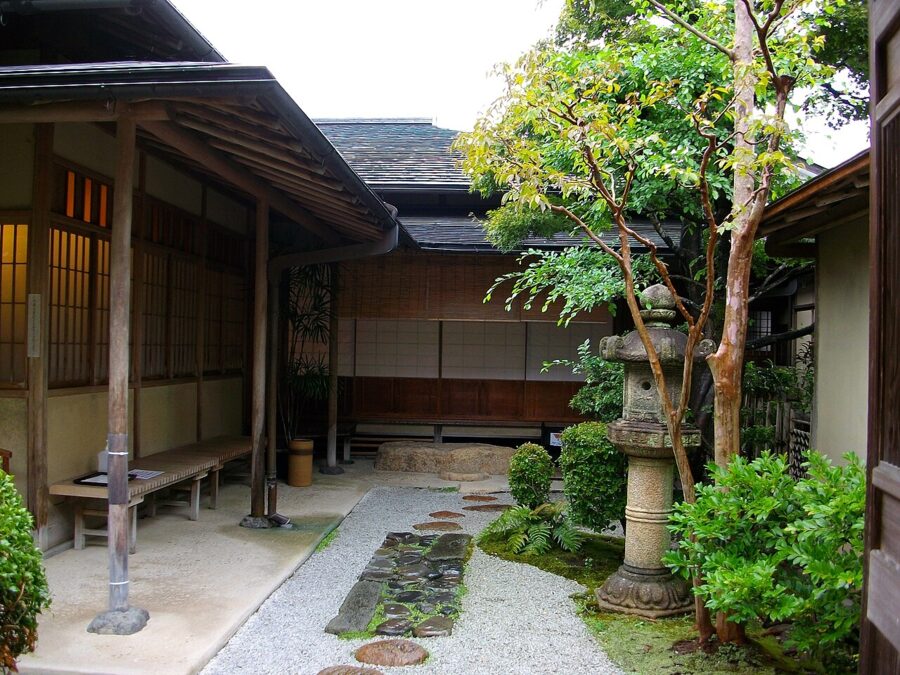
Then walk to Taiho-an, the municipal tea house, for a properly served bowl. As of April 2026, usucha with a seasonal sweet costs ¥1,500 (about US$9) and takes 20 to 30 minutes; walk-ins are accepted, and you collect the ticket at the Uji City Tourist Center opposite. The koicha and usucha set is ¥4,000 for two or more people, and the hands-on matcha lesson is ¥3,600 (about US$23); both need booking three days ahead.
Taiho-an serves from 10:00 to 16:00 between January 10 and December 20, and closes on the last day of each month, or the last weekday if that falls on a weekend or holiday. About four days a month are given to sencha instead of matcha, so check its calendar.
Cross Uji Bridge to Tsuen, at the bridge’s east end. The family has served tea to travelers here since 1160, the present building dates from 1672, and it opens daily from 10:30 to 17:30, last order 16:00. The tea room looks onto the river and serves matcha sweets, green-tea soba and sets of tea with 茶団子 (cha-dango), tea-flavored dango.
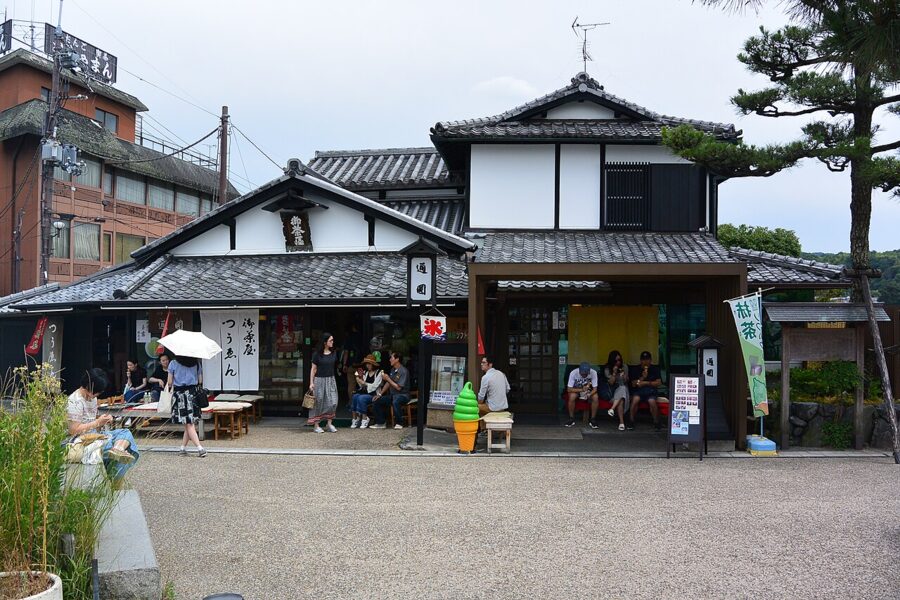

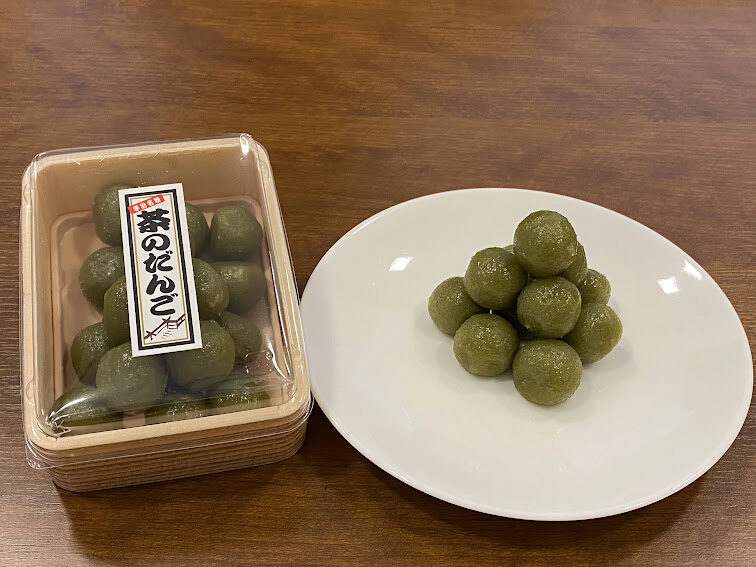
For lunch, finish at Nakamura Tokichi Honten, a minute from the south exit of JR Uji Station, on the site where the business started in 1854. The tea counter and cafe open 10:00 to 17:30 with no regular closing day, and the cafe’s last seating is at 16:00. Order the tea soba, and take home the 生茶ゼリイ (namacha jelly, tea jelly).

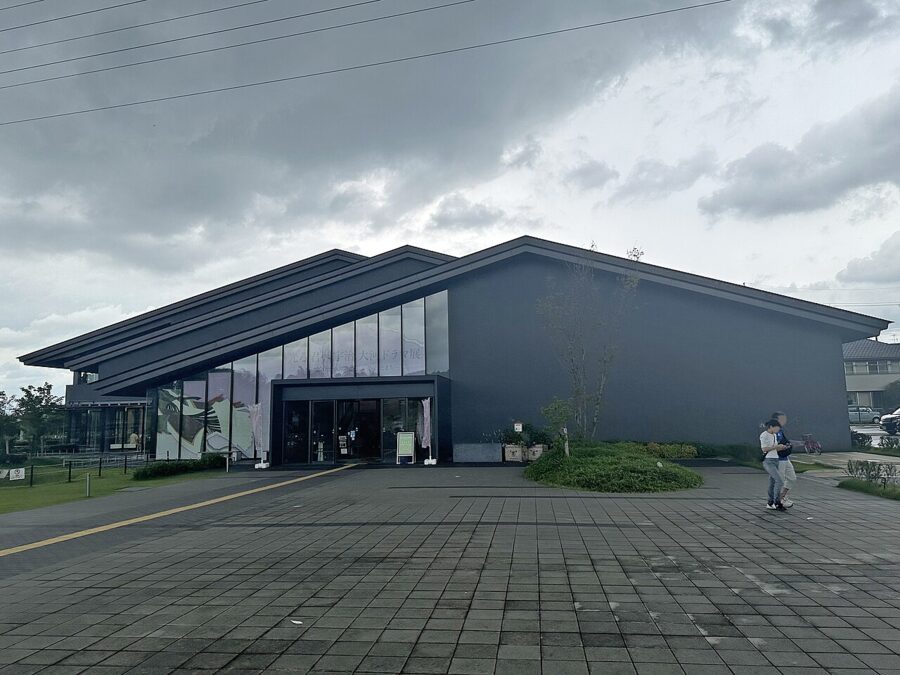
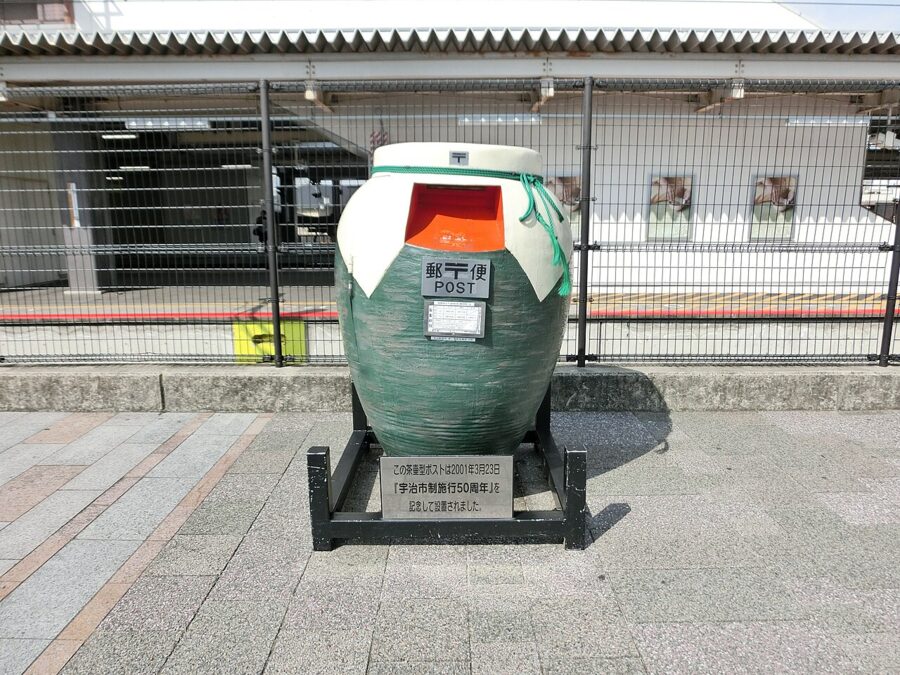
With an hour left, Uji Chazuna, a museum and park on Uji tea, opens 9:00 to 17:00 (last museum entry 16:30). On the way home, look for the mailbox outside JR Uji Station.


Matcha sweets and soft serve
Japan puts matcha in almost every kind of sweet: soft serve, shaved ice, parfaits, roll cakes, chocolate and the traditional wagashi served with tea. Most of it is made with cheaper powder, which is fine, since sugar and milk flatten the difference.
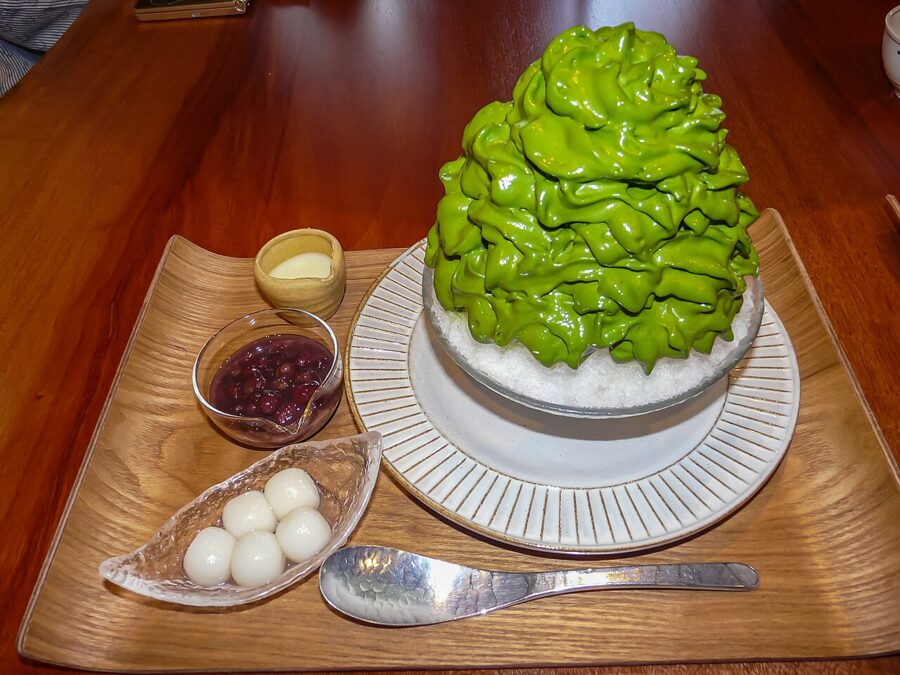

Judge a sweet by its color and its bitterness. A deep, slightly dull green with a bitter edge means real matcha in quantity; pale mint green and pure sweetness means very little. My rule in Uji: skip the matcha latte and the matcha anything-with-cream, and order the tea with a single sweet instead.
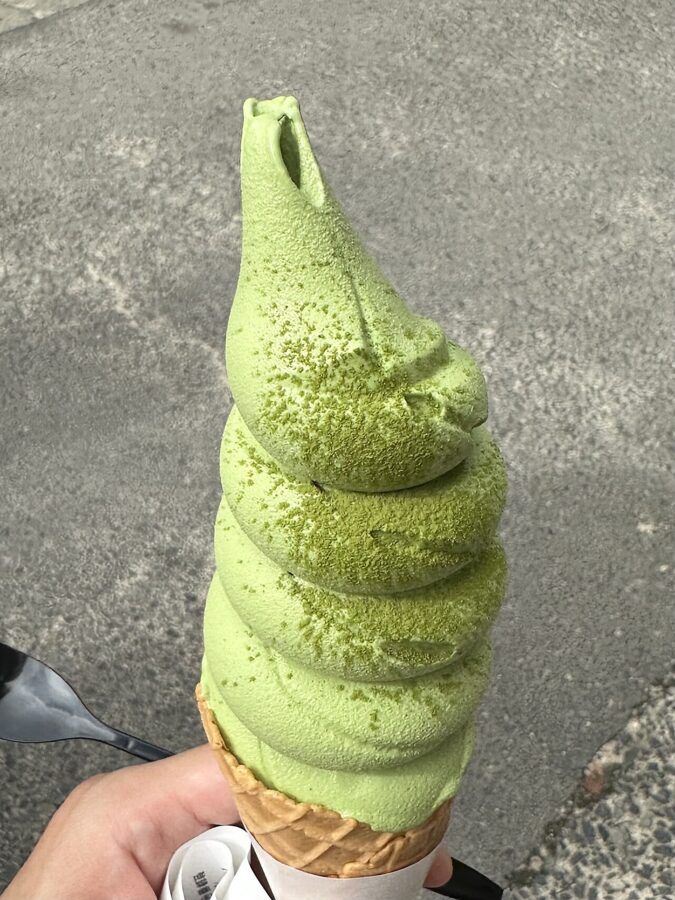

Matcha turns up in savory food too. 抹茶塩 (matcha-shio, matcha salt) is a classic dip for tempura, and it appears on izakaya menus as well as at tempura counters. Green-tea soba, with tea worked into the dough, is the standard lunch in Uji.
Buying matcha to take home
Buy small and buy fresh. A 20-gram box makes about ten bowls of usucha, and that is about how fast you want to use it. Buy from a tea merchant rather than a souvenir stall and check the best-before date. Two boxes from the middle of the ladder beat one box from the top, and the bargain 100-gram bag is for baking.
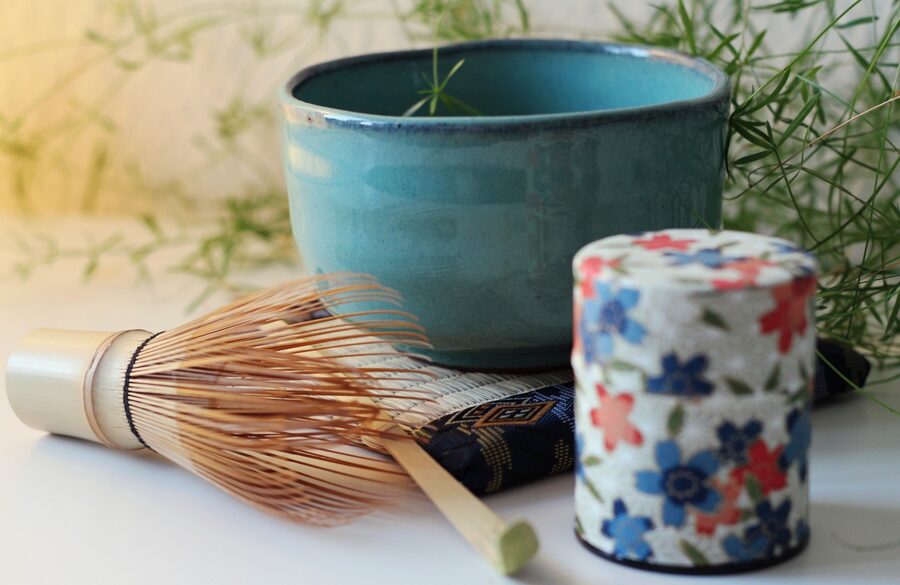
Storage is simple and strict. Nakamura Tokichi’s storage advice is to keep unopened tea in the refrigerator or freezer, let it come back to room temperature before opening so moisture does not condense on it, and then keep the opened tea sealed in a cool, dark cupboard rather than the fridge, where it picks up damp and smells. Use it within about two weeks in summer and a month in winter.
How much caffeine is in a bowl
More than a cup of sencha, less than many people think. Japan’s Food Safety Commission, in its factsheet on caffeine, gives matcha powder as 3.2 grams of caffeine per 100 grams, and a 1.5-gram bowl of usucha as about 48 milligrams. At the same rate a 2-gram bowl comes to about 64 milligrams, and a 4-gram serving of koicha to about 128.
The same factsheet puts brewed coffee at 60 milligrams per 100 milliliters, about 90 in a 150-milliliter cup, and sencha at 20. A bowl of usucha is closer to a small coffee than to a cup of green tea, and koicha late in the day will keep you awake.
Where to drink it this week
If you are in Kyoto, take the train to Uji, collect a ticket for a bowl of usucha at Taiho-an and drink it before you do anything else. If you are in Tokyo, walk out across the bridge at Hama-rikyu. If you are in Kanazawa, Shiguretei is ¥1,000 and the sweet is made for the house.
Watch whoever makes it. The sound of the whisk tells you most of what you need to know: a dry, fast rattle, a few seconds of skimming, the whisk lifted from the center. Then eat the sweet, turn the bowl twice and drink it while it is hot.